Priced at Zero: What Beijing Pays for Operating in Canada
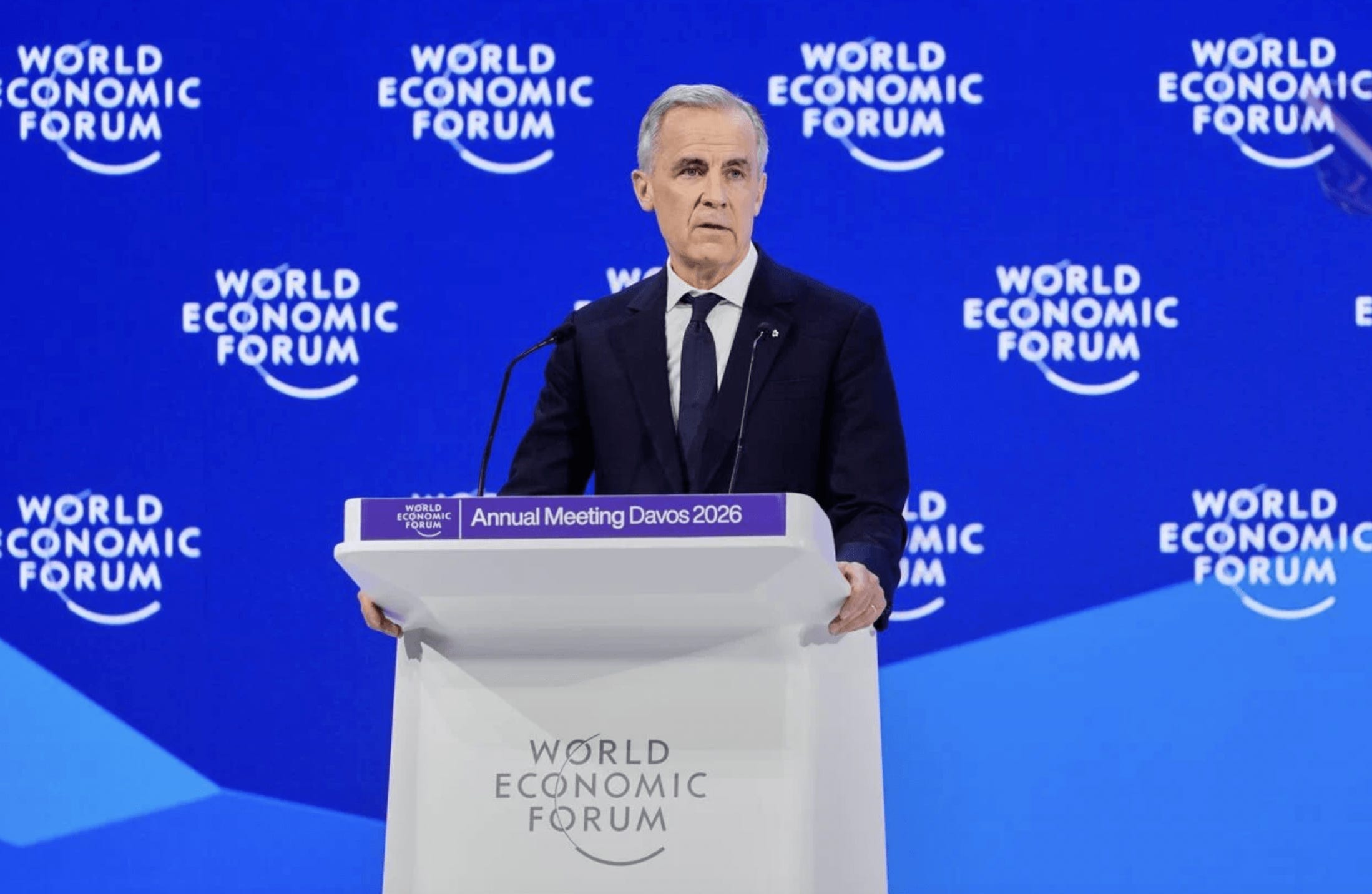
PM Carney says Canadians must deal with the world as it is. Yet on China, a former national security analyst argues, his government continues to act as if Beijing is the partner Ottawa wishes it were.
By Dennis Molinaro
OTTAWA — In late June Taiwan authorities arrested three tech executives over the alleged diversion of roughly $22 million in Nvidia AI servers bound for China. Taiwan’s President Lai Ching-te put forward new national security laws and created a new website where citizens can safely report PRC spies to authorities. Recently a Taiwan court sentenced a former spy named Lu Chi-hsien to more than 12 years in prison for leaking top-secret information to China.
Taiwan arguably faces the greatest risks and dangers in aggressively targeting PRC espionage and influence networks yet it continues to do so. So what is Canada’s excuse?
The comparison is a poignant one. A modern democracy, an ocean away from the PRC, yet neighboring the PRC’s largest target, the United States, has consistently failed at bringing forward successful prosecutions, even detecting PRC activities when compared to Taiwan, Australia or other western allies.
The conclusion as to why appears to be because Canada has outsourced its counterintelligence enforcement to the United States.
Consider even just a modicum of cases.
Su Bin, famously indicted by the United States for assisting PRC hackers in stealing the C-17 transport plane details as well as F-35 intelligence was assisting those hackers from Canada. Kevin and Julia Garrett were taken hostage by the PRC because of his arrest. He was never prosecuted by Canada for anything, arrested only because the US sought his extradition, and now lives in the PRC and resurfaced in China as the fixer who brokered the PLAAF training contract of Gerald Brown, an ex-USAF pilot charged in February 2026.
Benlin Yuan, a Canadian citizen and Mississauga resident, was arrested by the FBI in Virginia in November 2025 for his role in a PRC procurement network.
The US arrested operators of PRC overseas police stations in New York. No arrests in Canada though the RCMP was sued for defamation by a community group in Canada.
Canada’s answer to decades of this activity has been the Hogue Inquiry which regarded PRC influence as a major threat to Canadian democracy, but no prosecutions emerged from its findings. Canada has become consistent at producing findings but not consequences for PRC influence and interference. Beijing has correctly priced its cost for these activities in Canada at zero.
It’s why the Taiwan example becomes so stark an illustration of where Canada is on China, or more accurately where it isn’t. Taiwan has every reason to act carefully, every reason to walk a fine line with a neighbor convinced that it should not independently exist. Canada has no such concern from the PRC.
Still, it has consistently and repeatedly faced hostile activity from China: hacking, influence, interference. But Canada continues to lack the will to defend itself and only appears moved to act when the United States steps in. Part of the largest reason for this is not because the United States has some type of magic wand that leads to prosecutions. While valid arguments can be made for Canada lacking political will, at the working level structural impediments are built into Canada’s law enforcement and intelligence ecosystem. CSIS collects intelligence but can’t arrest, the RCMP arrests but can’t use intelligence.
The country lives with a structural flaw more than 40 years old: the removal of all domestic security intelligence collection from the federal police service, introduced by the McDonald Commission. Research I coauthored demonstrated this may have had more to do with the government of the day saving face for conduct it tacitly approved, rather than being solely the result of RCMP misdeeds.
The fixes are there, and known, but lack any political will to address them.
What is needed, is a rebuilt federal police service that handles domestic threats like counterintelligence and counterterrorism, and the creation of a Canadian foreign intelligence service. It is this structural flaw, introduced by the McDonald Commission, that surfaces most sharply in Canada’s counterintelligence handling.
The question now is whether anything on the horizon looks to counter and mitigate PRC influence. But that doesn’t appear to be the case. There have been no successful prosecutions since new laws were created in 2024.
The long delayed foreign registry, also first introduced back in 2024 is apparently set to launch August 4. But much like a long awaited film or video game that has been in development for ages, so far it looks to be ready to disappoint.
Recent press has stated it won’t cover attempts to influence Indigenous communities. Why? Given their importance to subnational governance, and in geographically strategic areas like the Arctic, why is this omitted? How much cash individuals received from foreign principals would also be withheld because it would be too “sensitive.”
The government in its regulations had stated it could assist individuals with registering, and there is much uncertainty as to how all of this is going to be enforced. There are signs the registry will normalize foreign influence, reducing it to a regulated bureaucratic function, not something to deter and repel in order to safeguard a nation’s sovereignty.
Prime Minister Carney had claimed that Canadians should deal with the world as it is and yet the main thesis of my book Under Assault is that when it comes to China, Canada has consistently done the opposite. It has viewed China in the way it wants to see it, not how it actually is.
Where does this leave Canadians as China continues to harass communities, and challenge the west by siphoning technology, in the AI race and geopolitically by funding Russia and Iran? Sadly, it leaves them with little protection.
For while the government wants to follow the nationalist trend and talk about defending Canadian sovereignty, thus far it seems to lack the ability or the will to adequately protect it from the real threats.
DENNIS MOLINARO is a former national security analyst and policy advisor. An author and an academic, he earned his PhD from the University of Toronto in 2015 and studies the history of security, counterintelligence and foreign influence. His most recent book is Under Assault: Interference and Espionage in China’s Secret War Against Canada.


Carney and the liberals are just following the Trudeau’s family love fest with China. Keep electing liberals and nothing will ever be done with China until the U.S. has to save you. Better hope there’s a president with the stomach to actually do it.
Carney isn't dumb enough to think China is a good partner. He knows they will want to siphon money and resources out of Canada, to slaughter dissidents in Canada, and to use Canada as a base in a war with the US. He is rich beyond most of our wildest dreams, but could always use a little more.