World Lawmakers Demand Action on New Xinjiang Torture and Slavery Testimony, Raising Stakes on Carney's Majority Government China EV Deal

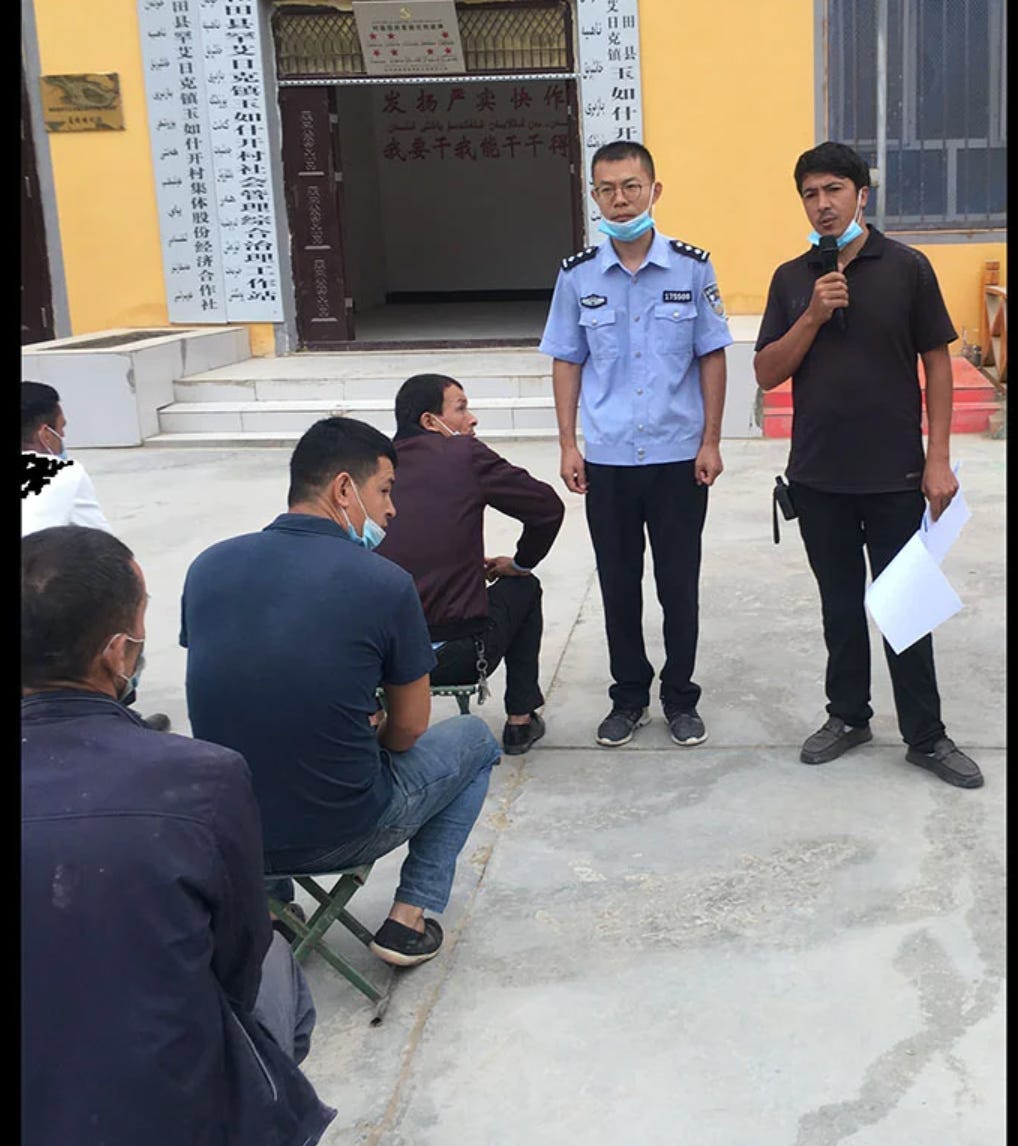
LONDON/OTTAWA — A coalition of 68 legislators representing 29 countries has issued an urgent call for international action following testimony from Zhang Yabo, a former police officer working within China’s Xinjiang slave labour system, whose explosive allegations have undermined Beijing’s claims that its campaign against the Uyghur people has concluded.
The Inter-Parliamentary Alliance on China, known as IPAC, said Zhang’s disclosure represents a pivotal moment in the international effort to hold Beijing accountable. His evidence confirms that the repression of Uyghurs, including torture and coerced labour, has not ended — it has evolved, growing more pervasive, more efficient, and more deliberately concealed from the global community.
The 68 lawmakers, including a number from Canada, are calling for stronger trade protections, “robust anti-forced labor import regimes to ensure our markets are not complicit in exploitation,” and mandatory supply-chain due diligence with “clear, punitive consequences for companies that fail to comply.”
They further demand that governments make direct representations to Beijing, stating “unequivocally that the global community will not subsidize Uyghur slavery.”
It is a set of demands that lands conspicuously against the policy of Canadian Prime Minister Mark Carney, who in the wake of a scandal involving his own MP questioning the reality of Xinjiang slave labour in Parliament, has refused to cite Beijing for violations in repeated questions from reporters and the opposition Conservatives. Notably, Carney’s government, when pressed in Parliament on whether Uyghur forced labor continues, did not utter the words Uyghur, Xinjiang, or China in response.
The testimony lands at a moment when Beijing has been conducting carefully stage-managed tours of Xinjiang for foreign business delegations. But Zhang, who has fled the region and is now giving testimony on what he witnessed inside the torture prisons, alleges that under Ma Xingrui — Xinjiang’s Communist Party Secretary from 2021 to 2025 — highly visible mass internment was deliberately abandoned in favor of highly concealed coercion.
Zhang has told German anthropologist Adrian Zenz that around 25 percent of the adult population in Hotan, the village where he was stationed, was interned in re-education camps as recently as 2023 — excluding those separately transferred to formal prisons.
Zhang’s biography, as documented by Zenz, gives his testimony unusual weight.
A Han Chinese citizen who moved to Xinjiang in 2006, Zhang worked as a schoolteacher before joining the police in 2014 and being deployed to the Uyghur heartland region of Hotan. Between 2014 and 2016, serving as a detention center correctional officer, he witnessed the routine beating and torture of Uyghur detainees, including victims suspended from ceilings for 24 hours.
A colleague raped a female detainee during interrogation. Zhang saw detainees die from the abuses. In 2017, during a two-week deployment at a detention center at the height of the mass internment campaign, he witnessed severe overcrowding, conditions he described as abysmal, and fatalities occurring with alarming frequency. Between late 2016 and 2023, working as a village police officer, Zhang transferred Uyghurs released from re-education camps to detention centers, the majority of whom were subsequently sentenced to long prison terms. He estimates that half or more of the released camp detainees in his jurisdiction ended up in prison.
In January 2026, Carney traveled to Beijing and announced what he called a “landmark” agreement to allow up to 49,000 Chinese electric vehicles into Canada annually at a tariff of 6.1 percent — down from the 100 percent rate imposed in 2024.
When asked directly on March 30 whether forced labor exists in China, he told reporters that “there are parts of China that are higher risk” — a formulation Human Rights Watch said ignores extensive documentation of state-imposed forced labor in Uyghur cotton, automotive, solar, and critical minerals supply chains.
The phrasing was notable for what it omitted.
In 2021, Canada’s minority Parliament had voted to formally recognize China’s treatment of the Uyghurs as genocide, a motion supported by opposition parties and a number of Liberal members.
On March 26, Liberal MP Michael Ma used a committee session examining electric vehicle import policy to challenge career China analyst Margaret McCuaig-Johnston’s testimony on Uyghur forced labor, telling her: “I don’t believe reports, I only believe in things that I can see with my own eyes.” McCuaig-Johnston later commented publicly that Ma’s rapid-fire questioning appeared designed to produce footage usable by Chinese state media showing him confronting a critic of the regime.
Ma eventually apologized, claiming his remarks had referred to the southern Chinese city of Shenzhen rather than Xinjiang — an explanation IPAC co-director Luke de Pulford called “the most ludicrous and transparently false bit of political backtracking I’ve seen in a while.” When asked by CBC News whether he believes forced labor exists in China, Ma said “I believe there is forced labour around the world,” and declined to say it happens in China specifically.
Conservative MP Michael Chong subsequently demanded the government answer a simple question in Parliament: does it still believe that Uyghur forced labor took place, and continues to take place? The response, delivered by MP Yasir Naqvi, did not mention Uyghurs, Xinjiang, or China.
Since taking office, Carney has secured a functional majority through a sustained campaign of cross-party defections that has fundamentally altered the balance of power in the House of Commons. Chong — one of Canada’s most persistent voices on Chinese foreign interference and the human rights dimensions of trade with Beijing — now operates in a chamber where the procedural weight behind his challenges has been materially reduced. The government can afford, in the arithmetic of the new House, to not answer.
Among the IPAC signatories are five Canadians who sharpen the domestic stakes of the international call. Three are sitting members of Parliament: Conservative MP James Bezan, a long-standing voice on national security and foreign interference; and Liberal MPs Judy Sgro and Sameer Zuberi — whose signatures carry weight given that their party leader has declined to state plainly whether forced labor exists in China.
Two further signatories appear under the IPAC Alumni Council designation: John McKay, a former Liberal MP and veteran of Canada’s human rights and foreign policy committees; and Kevin Vuong, the former independent member of Parliament for Spadina-Fort York whose own parliamentary career as a Liberal candidate was shaped by what he has alleged are Chinese interference operations targeting his candidacy.


Carney only cares about Carney and Brookfield! When it comes to human rights issues he only cares about the monetary benefit not the human cost. Canadians need to be aware that if you purchase a Chinese EV you will have blood on your hands. Canada is going down a very deep dark hole and we best wake up from our slumber before it’s too late.
"When asked directly on March 30 whether forced labor exists in China, he told reporters that “there are parts of China that are higher risk” — a formulation Human Rights Watch said ignores extensive documentation of state-imposed forced labor in Uyghur cotton, automotive, solar, and critical minerals supply chains.
The phrasing was notable for what it omitted."
Convenient omission is the Liberal party strategy that started with Trudeau. I hope these world wide lawmakers continue to push this issue (with the help of good investigative journalists) until Carney is better seen as the 'wolf in sheep's clothing' that he is.