U.S. Judge Fines Chinese Telecom Firm Hytera $50 Million for Trade-Secret Theft — Case Recalls Longstanding Canada-U.S. Security Tensions
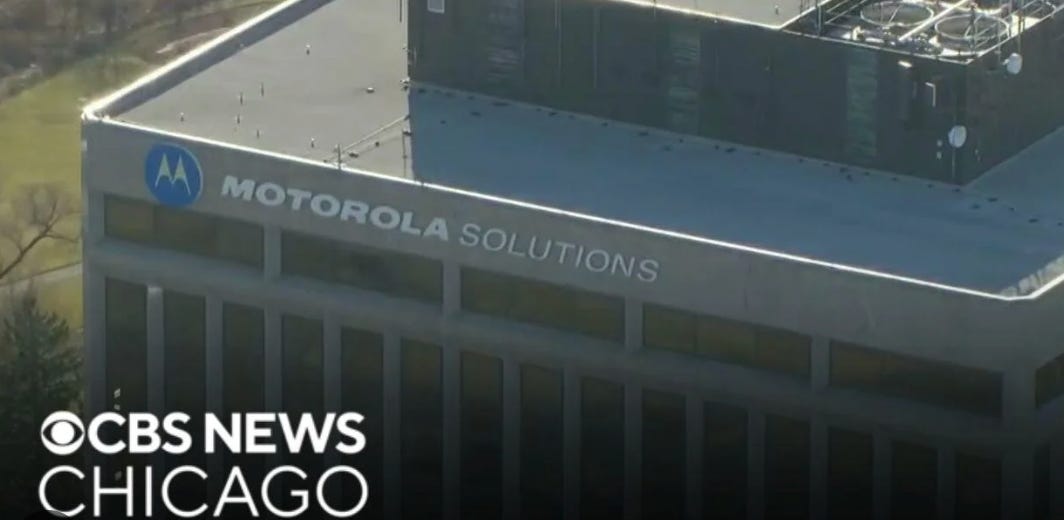
CHICAGO — A U.S. federal judge has fined Chinese telecommunications giant Hytera Communications Corp. $50 million after the company admitted to conspiring to steal proprietary radio technology from Illinois-based Motorola Solutions — a criminal conviction that arrives at a moment of acute strain between Washington and Ottawa, and that may renew scrutiny of Hytera’s unresolved corporate presence in Canada.
Judge John Tharp Jr. sentenced Hytera to five years of probation and ordered approximately $214 million in restitution — offset against civil payments Hytera had already made — following the company’s sentencing on March 5, after a guilty plea entered earlier this year.
According to U.S. prosecutors, the scheme dates back to 2006, when Hytera recruited Motorola employees and directed them to remove proprietary and trade-secret information related to Motorola’s digital mobile radio technology. Investigators say the stolen material — including source code — allowed Hytera engineers to develop competing products at a fraction of the cost it took Motorola to develop the technology after years of research and engineering.
Seven Hytera employees were indicted in 2021 in Chicago for their alleged roles in the theft. One of them, Gee Siong Kok, pleaded guilty in 2022 and agreed to cooperate with investigators. Arrest warrants remain outstanding for six additional defendants.
The criminal case follows years of parallel civil litigation. In 2020, a U.S. jury awarded Motorola $764.6 million in damages for trade-secret theft and copyright infringement, one of the largest intellectual-property verdicts in American history.
But beyond the courtroom, Hytera has been at the center of geopolitical disputes over Chinese telecom firms’ access to Western communications infrastructure — disputes that have repeatedly placed Canada between U.S. security concerns and economic ties with China.
Those tensions first exploded in 2017 when Canada approved Hytera’s takeover of Vancouver-based Norsat International, a high-tech communications firm that manufactures satellite-communication systems used by the U.S. military.
The U.S.–China Economic and Security Review Commission told The Globe and Mail that the deal could jeopardize American national security.
“Canada’s approval of the sale of Norsat to a Chinese entity raises significant national-security concerns for the United States,” commissioner Michael Wessel told the newspaper.
He also warned that Ottawa appeared willing to prioritize diplomatic relations with Beijing over security concerns tied to its closest ally.
“Canada may be willing to jeopardize its own security interests to gain favour with China,” Wessel said.
Despite those warnings, the Trudeau government approved the transaction in June 2017 after conducting a routine security analysis rather than launching a full national-security review.
Five years later, the issue resurfaced when Canada's national police force suspended a procurement contract with Sinclair Technologies — Hytera's Ontario-based subsidiary.
In the years since, the broader threat that episode foreshadowed has only deepened.
Two Chinese state-sponsored hacking operations — Volt Typhoon and Salt Typhoon — have since been confirmed by the FBI, the National Security Agency, and allied intelligence agencies to have burrowed deeply into North American critical infrastructure. Volt Typhoon, active since at least 2021, pre-positioned itself inside American communications, energy, transportation, and water systems, with U.S. agencies finding evidence of persistent access in some victim networks spanning five years or more.
Salt Typhoon went further still: it penetrated the judicially-approved intercept systems of at least nine major American telecommunications companies — the sensitive portals used by law enforcement and intelligence agencies for court-authorized wiretapping — and reached across more than 80 countries, including, according to the FBI, an unnamed Canadian telecommunications provider breached in February 2025.
When the RCMP contract story broke in December 2022, Conservative member of Parliament Rick Perkins laid out the ownership chain in stark terms before the House of Commons Standing Committee on Industry and Technology — and turned his fire on the Liberal government’s failure to act.
“Sinclair Technologies, formerly a Canadian-owned company, became a wholly owned subsidiary of Norsat International in 2011,” Perkins told the committee. “Norsat was acquired by Hytera Communications company in 2017. Hytera is headquartered in Shenzhen, China, and is partially owned by a People’s Republic of China investment holding company. It is a major supplier of China’s public security ministry.”
Perkins noted that the acquisition had escaped the full national security review Canadian law allowed. He then invoked China's National Intelligence Law, passed the same year Hytera took over Norsat, which compels all Chinese nationals and organizations, at home and abroad, to cooperate with state intelligence on request.
“That’s all public information,” he added. “It took me about five minutes to figure this stuff out and find it, yet the Liberal government did not use its authority.”
The RCMP contract was cancelled.
But despite the criminal conviction in Chicago, Hytera retains a direct corporate presence in Canada that the federal government has never moved to unwind. Norsat remains an independently operated Canadian subsidiary of Hytera, headquartered in Richmond, B.C., with a facility in Aurora, Ontario. Sinclair Technologies, the antenna and radio-frequency conditioning firm at the center of the RCMP contract controversy, continues to operate out of Aurora as a division of Norsat.
The Trump administration has made Chinese economic and security penetration of North America a central preoccupation, pressing Canada on what Washington regards as insufficient action against Chinese state-linked firms operating within Canadian infrastructure, supply chains, and research institutions.
Straying from the diplomatic language used by his negotiators, Trump fired off a post to Truth Social on January 24 — about a week after Carney's Beijing trade deal, and directly in response to Carney's speech at the World Economic Forum in Davos: "China will eat Canada alive, completely devour it, including the destruction of their businesses, social fabric, and general way of life. The last thing the World needs is to have China take over Canada. It's NOT going to happen, or even come close to happening!"


What a royal treasure it would be to watch President Trump dismantle the Beijing hierarchy in Ottawa, to facilitate a “Maduro” arrest of an equally corrupt, slick operator of Canada, trader of state secrets with Beijing…….called Marxist Carney!!
It WILL come about - truth always prevails in the end! Just a long, bumpy ride to get there!!
There is a long history of China destroying Canada. Nortel and Huawei. GE Hydro and the three Gorges dam. Noranda.
Boy Justin stood up for China and the CCP, but never for Canada......what a disaster. Carney is following the boy PM.
Thanks again Sam for connecting the dots and telling it as it is.