U.S. and Canada Are Stronger Together Against Global Narco Networks
Op-Ed: DEA-style Special Operations Division partnership is urgently needed to confront the Chinese, Mexican, and Canadian criminal architecture driving continental fentanyl money laundering.
COEUR D’ALENE, Idaho — Today I deliver a keynote speech at the annual training of the Washington State Narcotics Investigators Association. The talk is densely packed with cases and analysis — Vancouver casino ledgers, United Front banking cells, the Six Nations–Sinaloa grow-op corridor, the Canadian encryption shops that have become the nerve endings of a hemispheric cartel network. The presentation is complicated.
In a nutshell: hostile regimes in China and Iran are attacking North America in partnership with Latin American cartels that operate with state-like capacities in technology and intelligence, and they are using Canadian cities as a “center of gravity” for transnational operations.
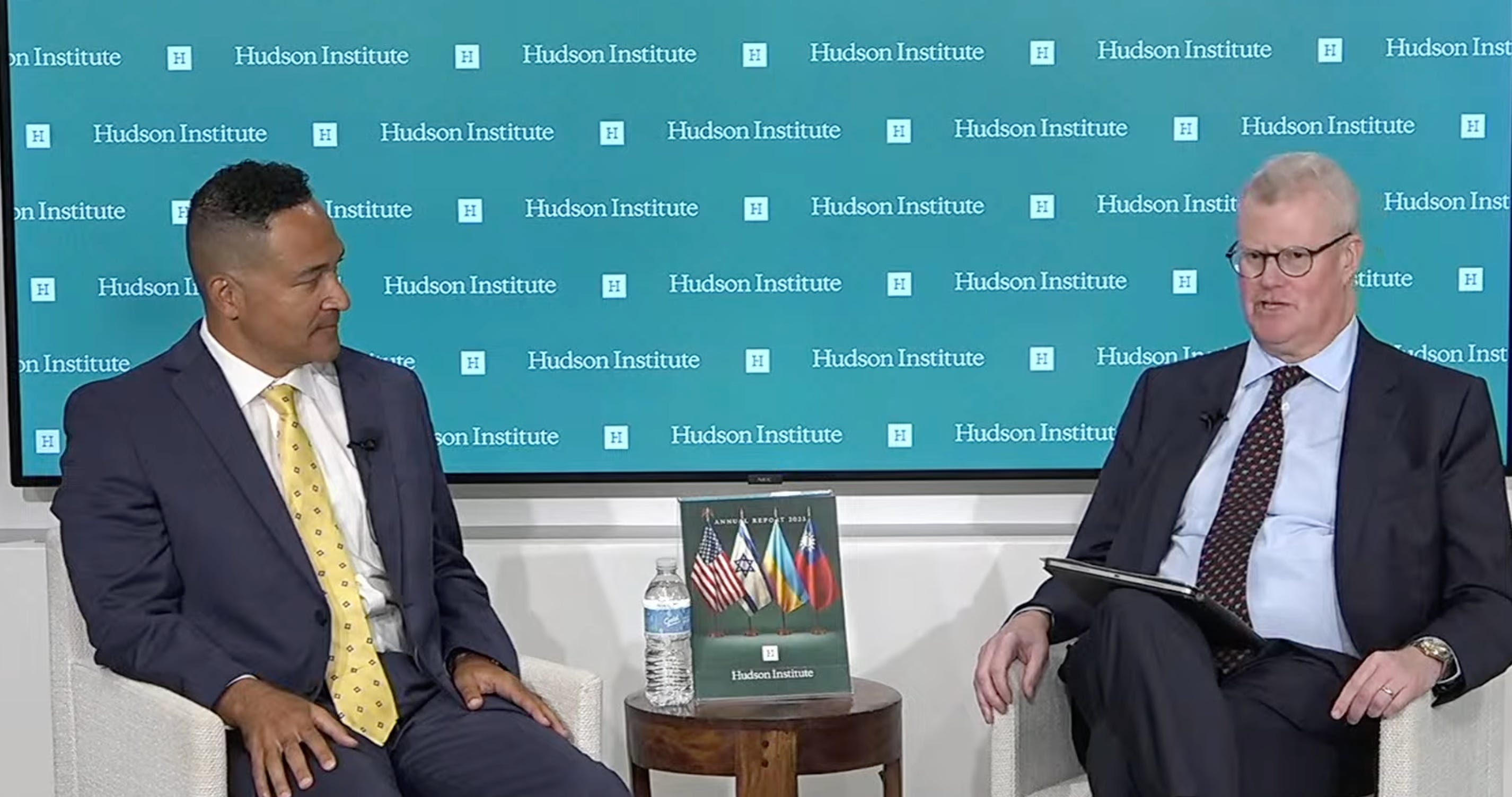
Weak laws and a lack of political will in Ottawa are the source of Canada’s vulnerabilities. As daunting as the threats and challenges are, there are solutions. And they are relatively simple. That message was expressed with clarity in Washington, D.C., in the fall of 2024, on the Hudson Institute stage.
David Asher, the former State Department investigator whose team used racketeering tools to dismantle Hezbollah’s Lebanese Canadian Bank laundering machine, was on stage that afternoon with Ray Donovan, the former chief of the Drug Enforcement Administration’s Special Operations Division.
Asher wanted Donovan to walk the audience through how he had led perhaps the most consequential global investigation of the modern era: the patient, international operation that mapped Joaquín “El Chapo” Guzmán’s Sinaloa Cartel end to end, took down the command and control, and finally took Chapo himself. The cartel’s financial command, Ismael “El Mayo” Zambada, arrested in El Paso in July 2024, fell later.
Few people yet understand how much of Chapo’s operation ran through Canada. The server stacks that routed the cartel’s encrypted phone platform — the same handsets that synchronized loads, assassinations, and laundering instructions from Sinaloa to Sydney — were hosted in Canadian jurisdictions. The corporate fronts that moved the money were opened here. The Chinese cannabis and methamphetamine brokerage houses that laundered the proceeds sat in British Columbia and Ontario, inside cells led by the very Chinese triad alliance American prosecutors now call Sam Gor. This is the story The Bureau has been telling, one document and one interview at a time, for a decade.
Ray Donovan is the operator who led the Drug Enforcement Administration’s coordinating cell — the one that turned fragmented American, Mexican, Colombian, and European intelligence into a single operating picture against the Sinaloa Cartel. His explanation of how a global manhunt succeeds where national investigations fail can be boiled down to five disciplines.
The first is the table itself. Donovan’s Special Operations Division was the table — roughly fifteen agencies, legally cleared to share sensitive intelligence with America’s allies worldwide. The partnership and the intelligence sharing are everything. The enemy must be seen and understood to be countered.
But Canada has nothing like it. The single most important structural reform, for Canada and for the shared continent, is to stand up that table at home and to take a seat at the American one. It is from that table that global threats are wound up.
Describing the operation that brought down El Chapo, Donovan credited the Special Operations Division’s whole-of-government architecture.
“It was the first, in my experience, whole of government operation where 15 agencies put aside Egos, put aside their mission focus to really share information to go after this organization,” he said. He then explained the broader role of the SOD system in partnership with Western allies: “Special Operations Division is really the global hub. The vast majority of drug investigations will flow through SOD from the United States into SOD, globally, into SOD. And the goal from SOD perspective is to share that with 35 other partners, other agencies, 5-Eye partners, military partners, and really the goal is to take down these criminal networks throughout the world.”
The second is lawful access. Chapo’s network, and now the fentanyl networks that replaced it, ride on encrypted communications and on the blended narco-cyber platforms that Canadian prosecutors still cannot lawfully touch. The answer is not mass surveillance. It is a Canadian racketeering-style interception regime, targeted at this new one-stop transnational crime platform, with the same judicial oversight that drove the Sinaloa takedown in the United States.
The third is financial intelligence that actually moves.
The Financial Transactions and Reports Analysis Centre of Canada, the Department of Finance, the Royal Canadian Mounted Police, the Ontario Provincial Police, and Alberta’s integrated law enforcement response teams must be empowered to charge directly from financial intelligence. Today they are not. Canada’s financial intelligence unit produces some of the best suspicious-transaction analysis in the Western world and then watches it die in a prosecutorial vacuum. The intelligence unit itself should be able to move.
The fourth is disclosure reform. In Canada, transnational crime prosecutions collapse with depressing regularity under our own disclosure rules — the pipeline that has turned the Stinchcombe doctrine into a cartel’s best friend. The Crown must be properly resourced, and the rules tightened, so that cases against hostile-state proxies and cartel command figures reach verdict rather than quiet withdrawal.
The fifth is the hardest and costs the least. It is to name the pattern. Political leadership in Ottawa has to say, on the record, what the public record already establishes: that the People’s Republic of China supplies precursor chemicals that are killing our children; that its United Front networks have helped architect durable criminal money-laundering systems while cultivating Canadian politicians, banks, and real estate; that the Mexican cartels partner with those networks on our soil; and that the sum of this is a national security problem, not merely a policing problem.
My message to the Washington State narcotics investigators today is simple. More than a million North Americans have died in the synthetic opioid era. Chinese Communist Party-linked precursor firms supply the chemicals. Latin American cartels handle distribution. And Canada, increasingly, provides the platform: what I have come to call the Snow Cartel — a proxy architecture of domestic gangs, diaspora underground banking, encryption shops, broker houses, port exposure, and political access, fused into a one-stop service for hostile-state illicit finance.
The solutions, on a continent this integrated, are surprisingly simple.
Canada and the United States are stronger together.
That is the opposite of the political signal emanating from Prime Minister Mark Carney’s government, which reads as a managed separation from American supply chain concerns at the moment the enforcement target is continental.
Canada must stand up the Special Operations Division-style table, pass a lawful-access regime fit for narco-cyber, empower its financial intelligence agencies to charge, reform disclosure, and name the pattern — or it will continue to be, as Drug Enforcement Administration and State Department investigators have told me for three years, the platform of choice for the hemisphere’s most dangerous networks.
To get to those solutions, you first have to identify the problem, which brings me to the deck I will present to Washington State investigators. It walks through the Vancouver casino cages where the original billion-dollar laundering picture emerged; the underground banking cells moving money from Macau and Hong Kong to Mexico, Sydney, Peru, and through British Columbia back to China; the United Front-linked drug and money brokerage houses in Richmond and Markham; the Sam Gor alliance’s cannabis and fentanyl production platform; the Six Nations corridor, where Mexican cartels and Chinese triads together exploit Indigenous territory; and the Toronto-Dominion Bank pipeline that moved cartel proceeds on an industrial scale until American prosecutors, not Canadian ones, called time.
It is a lot. And it is, at bottom, one story.
Which is why I keep returning to the Hudson Institute stage in 2024, and to what Donovan was saying to Asher that afternoon. The lesson of the Chapo operation is that a hemispheric cartel is not dismantled by any single agency or any single country. It is dismantled when a group of serious people, legally cleared to talk to each other, decide that the lives of their citizens matter more than the reputational convenience of their institutions, and sit down at the same table long enough to finish the job.
Canada has not, yet, sat down at that table.
It must.


Chinese narco operations are used as a weapon in Chinese foreign policy. Given Canada's strategic partnership with China, and the influence China has in the Liberal Party, real action is unlikely against domestic and trans national Chinese narco operations, and their partners, including Mexican cartel, Iranian sponsored Hezbollah and Hamas drug manufacturing, distribution, and money laundering operations in Canada. Canada is a failed state and refuge for terrorists and their organized crime operations, ripe for pillaging and plundering. This is reflected in Carney's decision to double down on his net zero agenda, strengthen the Canada-Chinese strategic partnership and abandon trade and co-operation with the USA.
Thank you yet again Sam for another thorough, lucid, and telling report.
It pushes me to wonder if this single issue is the actual reason that Carny is doing everything in his power to move us away from the US. And not the "Trump and his tariffs are bad" excuse that he uses to explain and forgive all Liberal shortcomings - a very long list.