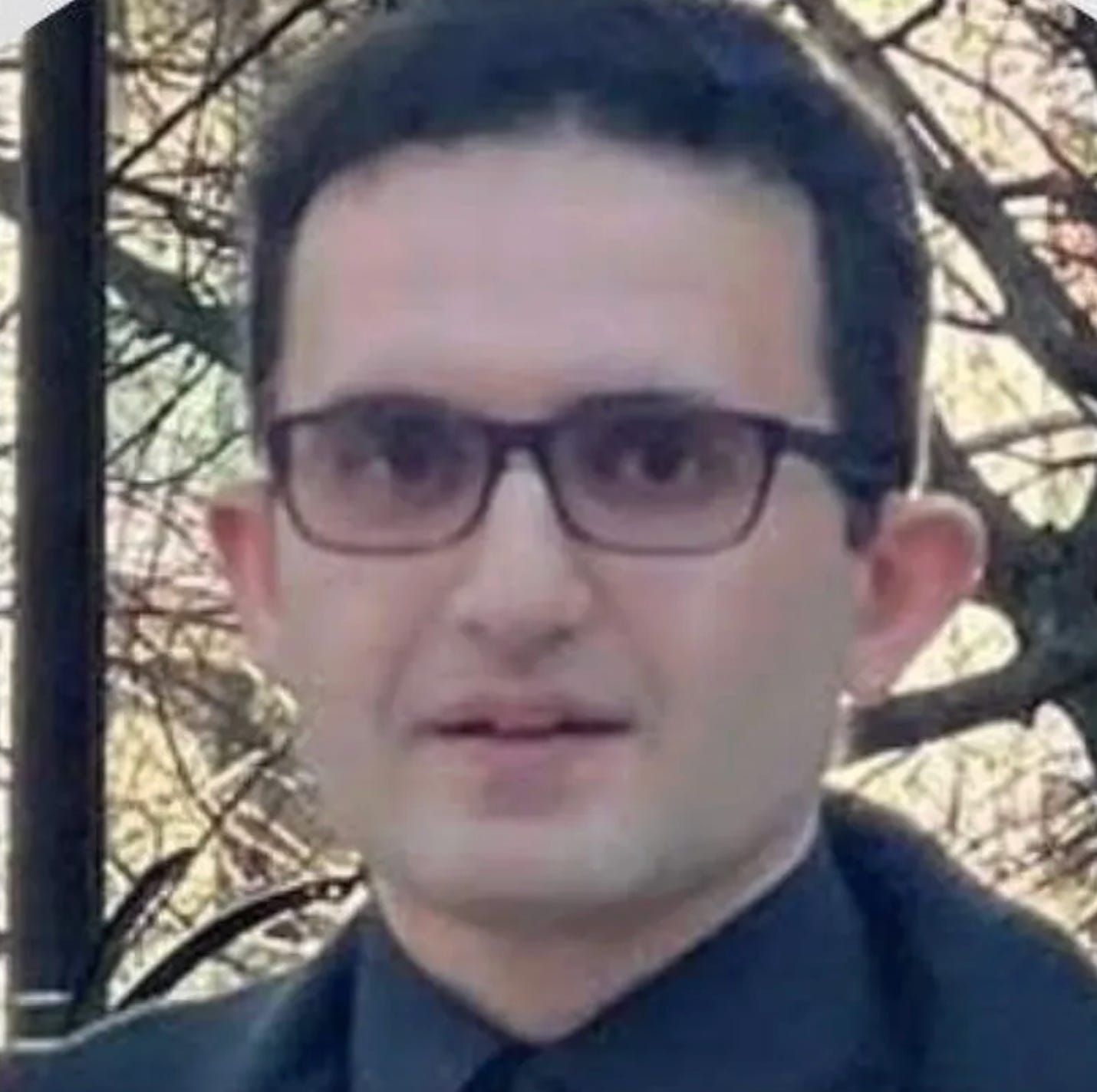
Two Charged in Killing of Iranian-Canadian Activist Masood Masjoody as Community Calls for Broader Investigation
VANCOUVER — The killing of Iranian-Canadian activist and mathematician Masood Masjoody has triggered alarm across Canada’s Iranian diaspora, with prominent community voices warning that the case raises broader concerns about intimidation and possible transnational repression linked to Iran’s regime.
Police have charged Arezou Soltani of North Vancouver and Mehdi Ahmadzadeh Razavi of Maple Ridge with first-degree murder in connection with Masjoody’s death. The two accused are scheduled to appear in court Monday.
Masjoody disappeared earlier this year in Metro Vancouver. Homicide investigators later located his body near Mission, British Columbia, on March 6.
Masjoody was widely known among Iranian-Canadian activists as a longtime critic of the Islamic Republic of Iran, and particularly the feared security apparatus of the Islamic Revolutionary Guard Corps, a force that Masjoody and other community leaders have warned maintains agents and influence networks in Canada.
Also a critic of exiled Prince Reza Pahlavi, Masjoody had engaged in multiple legal disputes, including litigation involving Pahlavi.
As previously reported by The Bureau, Masjoody, who obtained his doctorate in mathematics from Simon Fraser University in 2019 and worked as a sessional instructor until 2020, sent an open letter to Prime Minister Justin Trudeau in April 2021 detailing what he described as “alarming infiltration in Canadian public bodies of the Islamist regime in Iran.”
In the letter, Masjoody claimed to have reported to SFU’s president in April 2019 about individuals he alleged had connections to Iranian regime programs and were involved in sensitive engineering and technology fields. Citing broader warnings from then–Canadian Security Intelligence Service director David Vigneault, Masjoody raised concerns about potential technology transfer and the use of Canadian university resources in ways he believed could benefit hostile state networks.
Masjoody’s letter stated that “there is no question that the most significant security threats from foreign states come out of Communist China, Putin’s Russia, and the Islamist regime in Iran.”
Prominent Iranian-Canadian community leader Nazanin Afshin-Jam MacKay, a human rights activist and the wife of former Canadian justice minister Peter MacKay, said the news has reverberated deeply among activists.
Afshin-Jam MacKay wrote in a public statement: “Today is a painful day for Iranian-Canadians upon learning about the murder of long-time opponent of the Islamic Republic regime and mathematician Masood Masjoody.”
She added that Masjoody had been preparing to appear in court shortly before his disappearance.
“The day before his trial was scheduled to begin, where he was expected to expose what he had learned about connections to the IRGC, he suspiciously disappeared,” Afshin-Jam MacKay wrote.
According to Afshin-Jam MacKay, Masjoody had previously warned authorities that he feared for his safety.
“Masjoody had previously reported to police that he believed his life was in danger from these two suspects,” she wrote, adding that investigators should determine whether others may have been involved.
“Investigators should continue their work to determine who else may be linked and a danger to Canadians.”
Afshin-Jam MacKay said Masjoody’s death has intensified fears within Canada’s Iranian diaspora.
“As an Iranian Canadian activist, I can say that many of us have never felt safe, and this tragedy only deepens those fears,” she wrote.
“For years, we have been warning Canadian officials to wake up to the export of the regime’s Islamist extremist ideology here in Canada.”
She also called for stronger scrutiny of alleged Iranian financial and influence networks operating in Canada.
Her statement urged Canadian officials — including Prime Minister Mark Carney, the Canadian Security Intelligence Service, the Royal Canadian Mounted Police, and the Department of Public Safety — to take the concerns seriously.
Police have not publicly linked the homicide investigation to Iranian state activity. Authorities say the case remains under investigation.
The charges against Soltani and Razavi have not yet been proven in court.


