

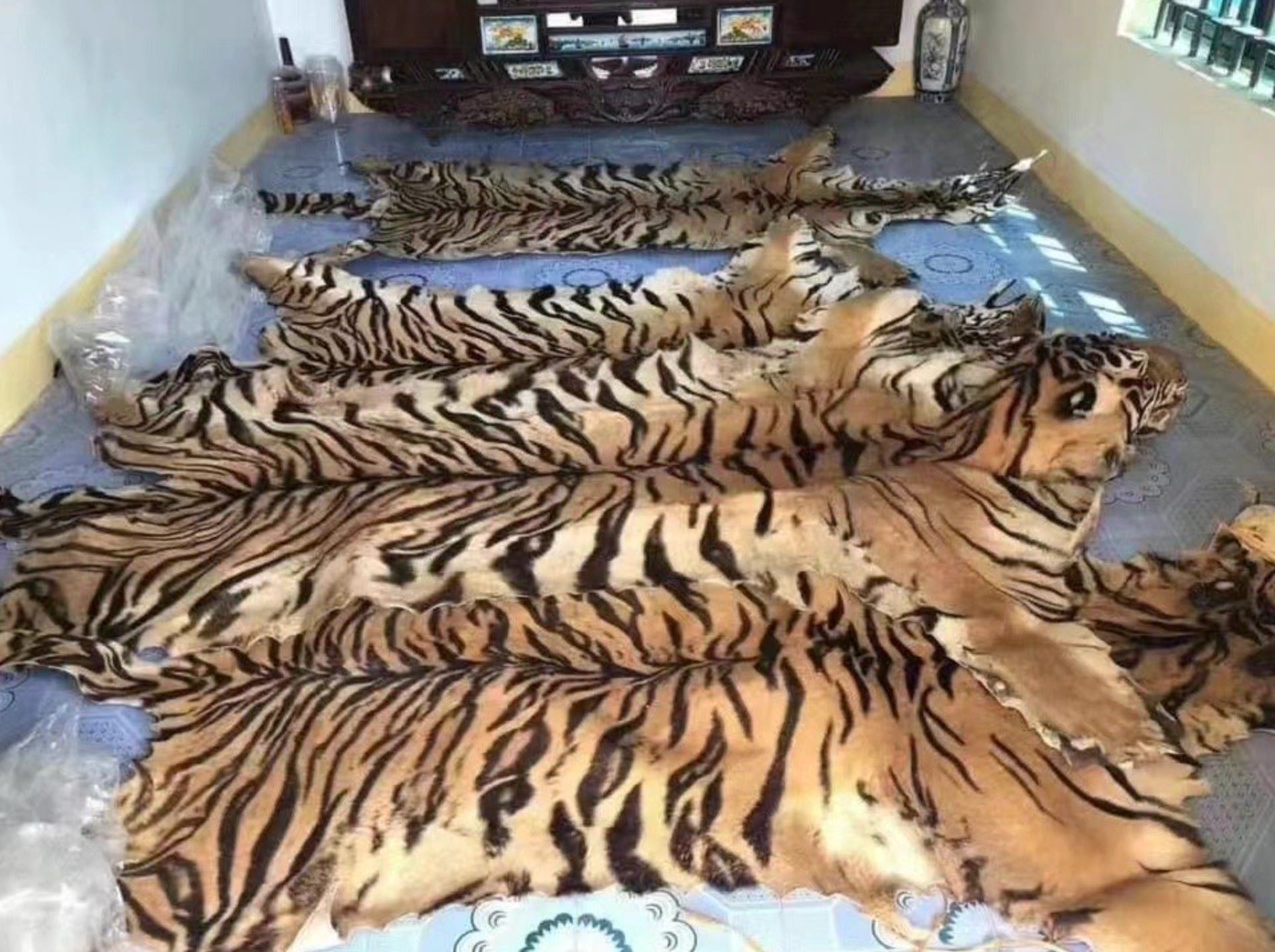
PHNOM PENH — A new undercover investigation that set out to map Cambodia’s illegal wildlife trade has instead opened a window onto a far larger criminal ecosystem — one in which industrial scam compounds linked to Chinese transnational criminal networks, China-to-Mexico fentanyl and precursor-linked routes, elite Cambodian corruption, global money laundering and the sale of purported vitality products like “tiger penis wine” to Chinese officials converge inside the same casino, port and special-economic-zone corridors.
The report, released by Earth League International, an investigative nonprofit that says it uses intelligence methods more commonly associated with national-security and organized-crime investigations, is titled Operation Sandokan.
The group says its investigators spent more than a year infiltrating active trafficking networks in Cambodia, Laos and the Lower Mekong, documenting how traffickers moved endangered species through ports, airports and border crossings while openly naming their political protectors. The same networks, the report says, intersected with drug trafficking, prostitution, counterfeit goods, money laundering and the scam-compound industry that until late 2025 poured vast profits into Cambodia’s illicit economy.
The convergence reaches into the Chinese state through its customers, according to the traffickers quoted in the report. The buyers for the most expensive contraband — rhino horn, ivory, tiger wine — were, by the traffickers’ repeated account, Chinese government officials and employees of state-owned enterprises. “They all work for the Chinese government,” one kingpin said of a buying group. “We help them to smuggle into China after they pay the money here.” A trafficker the report identifies only as “Cam11” said Chinese Embassy officials were major consumers of his tiger-penis wine, “which as of 2025 retailed for $1200 a bottle, often sold in sets of three.”
The goods are smuggled home to be “gifted,” the report notes, with traffickers saying such contraband is attractive because, unlike cash, it can help corrupt officials evade the Chinese Communist Party’s own anti-corruption surveillance.
The traffickers the group investigated were not specialists, but part of a criminal ecosystem tied, in the report’s framing, to Chinese elite and governmental figures. The same people moving rhino horn and tiger bone were, by the report’s account, also moving drugs, drug-precursor chemicals, timber, counterfeit goods, and proceeds from prostitution, and laundering the proceeds.
One network chart flags “Fentanyl (China to Mexico)” alongside container ships operating between Cambodia and China.
Another person of interest was described as a smuggler of drugs and precursor chemicals “between China, SE Asia, and the Western Hemisphere.” The same warehouses in Cambodia’s special economic zones, the investigators found, were used to store wildlife, timber and methamphetamine; the same casinos used to wash money sold endangered species over the counter.
What bankrolled it, until recently, were the scam compounds — the industrial fraud parks, primarily owned and operated by Chinese nationals, where trafficked workers run the online swindles that have stolen billions from victims across the world, and that have recently become the subject of whole-of-government investigations and lawmaker attention in Washington. ELI’s report argues that those scam compounds were not a separate underworld, but the financial engine for other illicit markets around them.
Even as Earth League International’s sources reach toward Cambodia’s ruling family — alleging that relatives of the country’s leadership invested in the scam compounds and directed the regional drug trade — the figure the investigation’s threads keep returning to is Chen Zhi, the Fujian-born chairman of the Cambodia-based Prince Group. The scam compounds his conglomerate is accused of running were a central engine of the illicit economy, described as “the biggest money laundering entity in Southeast Asia.”