Repost: A Secret Intelligence Report Warned Ottawa That Indian Diplomats Were Targeting Sikh Canadians. The Government Chose Trade. Now Carney Is Making the Same Calculation
NSICOP 2019 "Draft Final Report" concluded Ottawa values trade with PRC and India over security.

Editor’s Note
We are republishing this investigation today because the questions it raised on June 15, 2023, regarding Indian government targeting of Sikh community leaders in Vancouver, remain unanswered — and the man who must now answer them just returned from New Delhi without facing the press.
When The Bureau published this story, we had exclusive access to a secret June 2019 report by NSICOP, Parliament’s own intelligence oversight body. That document — based on more than 4,300 pages of intelligence records and secret testimony from the director of CSIS — found that Indian consular officials were running covert surveillance networks against Sikh Canadians, especially in Vancouver, while financing preferred political candidates through intermediaries, and maintaining blacklists of community dissidents. CSIS wanted to act. The Trudeau government told the service to scale down its threat-reduction interventions in Vancouver, in favor of trade considerations, not wanting to upset Indian officials ahead of an upcoming trip to New Delhi.
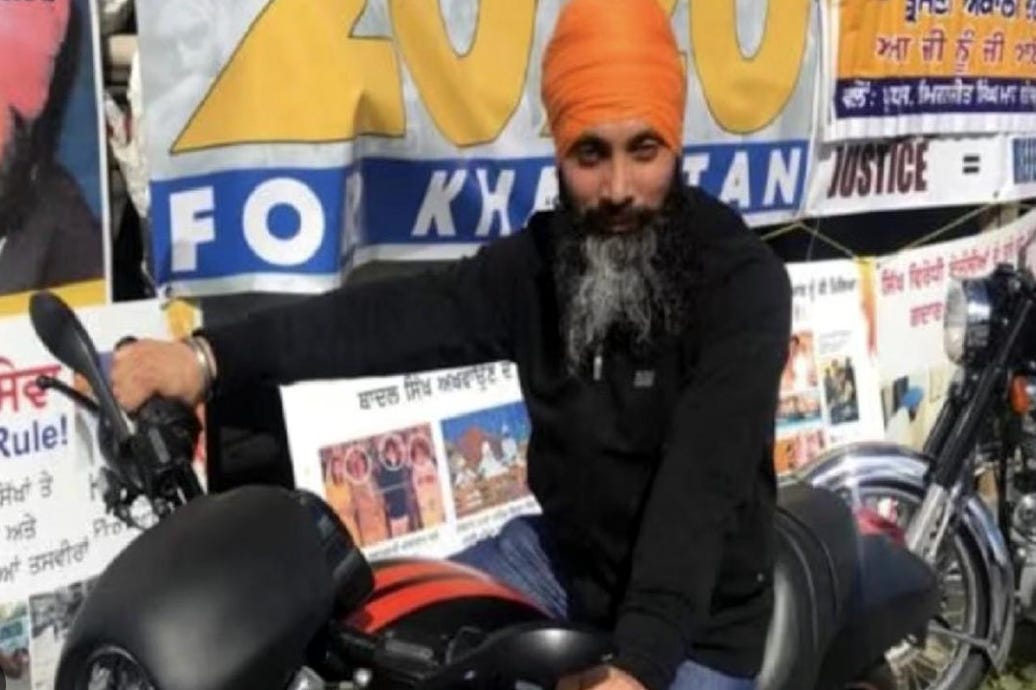
Hardeep Singh Nijjar was murdered outside his gurdwara in Surrey on June 18, 2023 — three days after this investigation’s publication. And where are we today?
After The Bureau led the way on reporting on China and India’s deep interference in Canada over the past three years, on Sunday, the Globe and Mail, citing anonymous security officials, added granular details to claims already made by the RCMP and Ottawa — that is, that Canadian security had evidence of India’s involvement in the Nijjar murder. The Globe reported on an alleged kill chain that ran directly through the Vancouver consulate, that our reporting had already identified as a hub of covert Indian intelligence targeting the Sikh community. The surveillance apparatus CSIS reportedly wanted to dismantle in 2017 — and was blocked from dismantling by the Liberal government, according to NSICOP — was apparently still operational in 2023. And according to The Bureau’s security sources, it is operational today, through the same Bishnoi transnational mafia now targeting the Indian diaspora with threats, harassment, and shootings.
This week, Prime Minister Mark Carney traveled to India, signed agreements worth billions, and had his senior official brief reporters that Indian foreign interference is no longer a concern.
Late Monday, Conservative MP Garnett Genuis cited our June 2023 reporting, asking precisely the question this Liberal government has never satisfactorily answered: when Canadian security has repeatedly been subordinated to Canadian trade ambitions, in every case driven by political considerations, who is actually putting the safety of Canadians first?
The Bureau’s reporting on this question was based on intelligence no other news organization had access to. The reporting adds important layers beyond what the Globe reported on Sunday, most importantly, that the Liberal government cancelled a CSIS intervention into Indian officials’ interference in the Sikh community in Vancouver. It happened before the Nijjar murder, and before the present alleged extortion crisis involving Indian mafias with alleged Indian intelligence backing, occurring now across Canada — nowhere more than Surrey, B.C., where Nijjar was killed, Brampton, Ontario, where mayor Patrick Brown has reportedly faced serious threats, and in other Indian diaspora communities in Canada. We believe our June 2023 report should inform what journalists ask the Prime Minister when he finally faces them.
OTTAWA — Intelligence officials repeatedly warned Justin Trudeau’s government that China views Canada as a “permissive environment to pursue its interference activities” and Beijing’s incursions wouldn’t diminish unless Ottawa pushed back, according to a secret June 2019 report drafted by NSICOP, Parliament’s intelligence review body.
But four years later, an investigation by The Bureau – including exclusive access to the June 2019 document – finds the Trudeau Government has not only failed to counter a stunning scale of interference involving Chinese diplomats in Canada, but also similar alleged election-meddling from Indian officials “interfering and influencing voting in favour of … pro-India candidates.”
The Bureau’s analysis of NSICOP’s June 2019 “Draft Final Report” also suggests that Ottawa’s passivity to interference from the world’s two most populous nations is because a conflicted government has ignored urgent intelligence – even advised CSIS to scale down sensitive “threat reduction” interventions focusing on Indian diplomats and Canadian politicians – because Ottawa’s decision-makers valued trade and political objectives over security concerns.
“India and China are two powerful examples,” the NSICOP report says.
“Foreign policy considerations, which are often clear and immediate (e.g. India will not import pulses [seeds] from Canada), will take precedence over considerations of domestic harms, which are often vague and long-term (e.g. China’s activities undermine free speech).”
The June 2019 document quotes from many intelligence memos circulated within Trudeau’s government since 2015, including warnings specifically for Trudeau and his former public safety minister Bill Blair. The records also provide evidence supporting NSICOP’s recommendation for new Canadian laws including a foreign agent registry.
For example, in 2017, CSIS distributed reports saying China was the “most active and far-reaching perpetrator” of influence operations and “PRC diplomatic staff are identified as active and persistent perpetrators of foreign interference in Canada.”
Again, in 2018, CSIS “clearly stated that Canada faces the same prevalence and gravity of threats as countries that have more publicly addressed it, such as Australia,” NSICOP says.
And so, Trudeau’s Privy Council Office briefed him on measures Canberra took to counter “the threat posed by Chinese authorities and their affiliates to the integrity of Australia’s sovereignty,” the NSICOP report says.
In that brief – Memorandum for the Prime Minister: New Legislation Proposed by Australian Government to Counter Foreign Interference – the Privy Council Office explained Australia was tackling “a problem that many critics have long argued has been exacerbated by willful blindness on the part of current and former politicians [and] senior government officials.”
Canberra moved forward with these laws in 2018, NSICOP reported, including new criminal offences for interference and treason that “provide a high degree of specificity on offences and threat activities.”
But as of June 2023 — 31 weeks after intelligence leaks exposed allegations of Chinese diplomats interfering in Canada’s 2019 and 2021 federal elections — the Trudeau Government has not followed Australia’s example.
Canadian Uyghur-rights activist Mehmet Tohti — who has reported to CSIS his own complaints of being threatened by Chinese agents in Greater Toronto — said senior officials in Ottawa too, can be accused of blindness.
“Chinese officials have been infiltrating our system, funding candidates and putting people in all three levels of government for many years,” Tohti said, of findings from The Bureau’s investigation. “The problem is from the top of our government, that was willfully blinded, and allowed this to happen.”
Trudeau swept to power in October 2015 promising to renew friendly relations initiated with Beijing by his father Pierre, reversed some of the Harper Government’s caution about investment from China, and continued to press for a Sino-Canadian free trade deal even after signs of Beijing’s hostility increased.
David Mulroney, Canada’s former ambassador to China, said Canada is paying the price for Trudeau’s policies.
“What shakes me to the core is that I don’t believe the Prime Minister’s approach to China was based on miscalculation or misunderstanding,” Mulroney toldThe Bureau. “I attribute it instead to his shocking ignorance about the nature of the Chinese state and the threat it poses to our country.”
The Prime Minister’s Office has not responded to questions for this story.
Vancouver Consul General controlled over 100 community groups
For its review of Ottawa’s response to foreign interference, NSICOP accessed over 620 intelligence documents – representing 4,300 pages worth of records – from departments including CSIS, RCMP, the Privy Council Office and Global Affairs Canada.
But there were “important gaps in the documents” disclosed by the Privy Council Office, NSICOP said.
In 2019, the bipartisan panel also questioned 17 officials, including CSIS director David Vigneault, in several months of secret hearings. Their final report for Trudeau was submitted in August 2019, two months before the fall election. A redacted version of the report was posted online in 2020.
While China and Russia are named in the public version, for unknown reasons, CSIS’s growing concerns about India are completely redacted.
But the 2019 draft report reviewed by The Bureau says NSICOP found “ample evidence to support CSIS’s assertion that Canada is the target of significant and sustained foreign interference.”
“The PRC, Russia and India are the most prolific offenders,” the document says.
“In recent years, CSIS observed an increase in Indian threat related activity targeting the Indo-Canadian diaspora [and] government institutions.”
The case of India, a massive democracy and trade partner that perhaps could balance Canada’s reliance on China’s supply chains, clearly raises sensitive contrasts for Ottawa.
While India enjoys “close diplomatic, trade and interpersonal ties with Canada,” NSICOP says that CSIS believes numerous Indian diplomats have been covertly active in Canada since the 1980s.
According to NSICOP Indian Consular officials are maintaining “black lists” of dissidents, controlling travel visas to India as a means to manipulate the diaspora, and recruiting community sources that are “engaging MPs and political candidates to advance Indian objectives.”
Like Russia, India uses the same interference methods – “leveraging certain community groups and local media to exert influence and support for candidates” – that China employs on a much grander scale, according to NSICOP.
Support for candidates, according to NSICOP, can include covert financing disguised by intermediaries that are controlled by Consular officials.
“Foreign states clandestinely direct contributions to and support for the campaigns and political parties of preferred candidates,” the NSICOP document asserts.
It cites CSIS’s findings, including:
a People’s Republic of China Commercial Consul who “urged particular business leaders to donate” to Canadian politicians;
a Chinese embassy proxy that directed community leaders to “hand pick” election candidates and promote them within the “greater Chinese community”;
an Indian Consul in Vancouver that promoted an unidentified politician in the 2015 federal election, and “made a financial contribution to the preferred candidate through a local contact.”
India’s motive for interference, according to NSICOP, is national security, and specifically the belief that Canada isn’t doing enough to address dangers of Sikh extremism — a problem that rocked both nations in the 1985 Air India bombing, “a conspiracy conceived, planned, and executed in Canada,” according to Public Safety Canada.
Grievances were further inflamed by Trudeau’s 2018 visit to India, and the scandal surrounding an alleged Sikh separatist from Vancouver, who was seen traveling with the prime minister’s entourage, even though he possessed a criminal record for attempting to assassinate an Indian politician.
In another jarring finding, NSICOP reports that Pakistan is also running intelligence operations in Canada, for various reasons, “chief among them, to counter India’s influence activities with Canadian decision-makers.”
But the scale, sophistication and pervasiveness of Chinese diplomatic networks and their leverage on diaspora groups concerns CSIS above all other interference threats, according to NSICOP.
Citing an undated brief from CSIS for Trudeau’s national security and intelligence advisor, NSICOP says: “foreign diplomats strive to maintain the illusion that local groups reflect the popular and freely agreed upon opinion of their membership and broader community, when in fact they are directed by officials of their home states.”
This sensitive assessment is underlined with an explosive piece of CSIS intelligence, that found “the PRC Consul General in Vancouver also boasted that she controlled over 100 community groups.”
These groups, also called United Front networks by CSIS, include “PRC businesses, cultural enterprises, the media, Chinese student associations, [and] academics,” the NSICOP report says.
They are managed through China’s vanguard of covert agents in Canada, including “security and intelligence services, the People’s Liberation Army, United Front Work units, and Chinese diplomatic missions.”
Summing up the expanding threat, CSIS reported in 2018, Beijing is targeting “all orders of government,” in Canada, by “leveraging its numerous government and non-government actors, who use overt and covert approaches including bribery, censorship, coercion and co-optation, to exert influence.”
Informed of the The Bureau’s findings, Hong Kong Canadian community leader Fenella Sung said they cast new light on the controversy of Zhao Wei – the youthful Toronto-based diplomat recently expelled from Canada for targeting Conservative MP Michael Chong and his family.
Allegations that agents from China’s Ministry of State Security conducted in-depth research on some Canadian MPs who voted in support of a motion declaring Beijing’s actions against Uyghurs a genocide, are contained in a January 2022 Privy Council Office document examined by The Bureau.
“It wouldn’t surprise me for China to have hundreds of intelligence handlers in their Consulates and these so-called Chinese police stations in Canada,” Sung said. “I think there are hundreds more Zhao Wei’s hidden in our country.”
Sung also pointed to the court testimony of former Chinese diplomat Chen Yonglin, who defected to Australia in 2005, and later testified “I am aware of 1,000 Chinese secret agents and informants in Australia.”
“I believe there will be more agents and intermediaries for the Chinese Communist Party in Canada than Australia,” Sung added.
Beijing interference rises, CSIS investigations fall
Since 2012, when Xi Jinping was elected General Secretary of the Chinese Communist Party, Beijing’s interference in Canada has “expanded significantly,” NSICOP’s June 2019 “Draft Final Report” says.
And, in “clear and consistent assessments,” CSIS has reported that Beijing is undermining Canada “in almost exactly the same manner” that Australia and New Zealand have experienced.
Putting these assessments and the Privy Council Office’s brief for the prime minister about Australia’s counteraction to Beijing in context — the NSICOP report cites the case of two “PRC-linked" tycoons that donated $6.7 million dollars to three Australian political parties, a scandal surfaced in 2017 by media reports that pressured Canberra to act.
But according to NSICOP, departments besides CSIS in Ottawa, have maintained Canada isn’t at risk like Australia. And “key organizations, notably the Privy Council Office and RCMP, appear[ed] to discount the threat facing Canada.”
Meanwhile, as Beijing’s attacks on Canadian democracy ramped up, CSIS’s capacity to investigate fell.
NSICOP cites an October 2017 note for Blair titled CSIS Budget Considerations which said: “Over the past five years, the number of [counter-intelligence] targets has decreased about 21 percent because of inadequate resourcing to these programs.”
Also in 2017, CSIS reported that Public Safety’s focus on counter-terrorism investigations was drawing officers “which would otherwise be devoted to counterintelligence investigations, leaving a significant gap in operational capabilities.”
The point was reiterated in secret testimony for the NSICOP panel in April 2019.
CSIS director David Vigneault reported the Service was seeing a “quite significant” loss of expertise needed to counter foreign interference.
NSICOP’s assessment of Canada’s lack of action on Beijing’s interference is summed up in CSIS’s 2018 alert for Blair’s Public Safety Ministry.
“The PRC views Canada as a permissive environment within which to pursue its interference activities. This point is repeatedly included in CSIS assessments and briefing material,” the June 2019 NSICOP report says, pointing to a March 2018 memo for Blair.
“China’s threat activities take advantage of Canada’s openness and perceived benign temperament to conduct foreign-influenced activities in Canada,” that CSIS memo said. “CSIS assesses that, absent any public or private admonitions from [Government of Canada] decision makers, these threat activities are unlikely to diminish.”
Charles Burton, a former diplomat at Canada’s embassy in Beijing, said revelations from NSICOP’s June 2019 report support his own estimates about the scale of covert intelligence networks run from China’s missions.
“By only expelling Mr. Zhao Wei, I am afraid it tells the People’s Republic that we will tolerate the dozens of other Ministry of State Security and United Front intelligence agents operating under cover of diplomacy in Canada,” Burton said. “I am also puzzled, as to why these briefs provided to the Prime Minister and Public Safety Minister, with serious allegations, have not been followed up on.”


THE TRUTH ABOUT THIS 4 years is the moment in Canada that ALL will be held individually accountable, which only happens when radical transparency is used. "CONSEQUENCES? NO JUSTICE ⚖️🇨🇦! Start playing this would be a great help to all Canadians
On a near weekly basis, MC makes Alberta Independence seeem more reasonable than not. There is no case for remaining in Canada. I don't love saying that, but I see that as the only possible option for people who value sovereignty and freedom.