

By Brenda Shaffer
Responding to the current global energy crisis, many Western leaders have declared that the way to remove geopolitical threats to energy security is to transition from fossil fuels to renewable energy sources. This is a grave error. It rests on the faulty assumption that renewable energy is riskless, immune to price volatility, and secure because it is produced at home.
Follow the renewable energy deals far enough, and they mostly lead back to Beijing.
Leaders including Mark Carney — Canada’s prime minister and a former central banker who became one of the world’s most prominent champions of net zero — Britain’s Ed Miliband, and officials from the United Nations to the Biden administration have argued that cutting dependence on oil and gas is itself the path to energy security.
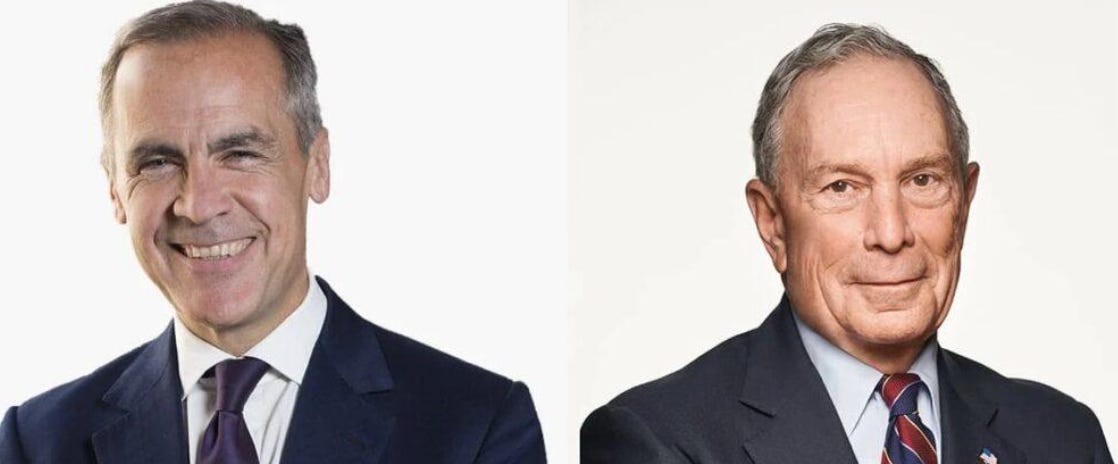
One of the most effective groups in convincing Wall Street to move away from investments in fossil fuels was the Glasgow Financial Alliance for Net Zero (GFANZ), then led by Carney and Bloomberg founder Michael Bloomberg.
“In an unstable world, the only way to guarantee our energy security and cut bills permanently is to speed up the transition away from fossil fuels and towards homegrown clean energy,” stated Miliband, now Britain’s Foreign Secretary, on his appointment as Energy Secretary in July 2024.
UN Secretary-General António Guterres wrote in June 2022, months after Russia invaded Ukraine, “Had we invested earlier and massively in renewable energy, we would not find ourselves once again at the mercy of unstable fossil fuel markets. Renewables are the peace plan of the 21st century.”
Then-White House press secretary Jen Psaki said in March 2022 that the Biden administration would continue to concentrate on clean energy since “real energy security comes from reducing our dependence on fossil fuels.”
The reality is quite the opposite.
Using large quantities of renewable energy creates dependence on China while increasing the cost of electricity production.
Heavy utilization of renewable energy sources, which rarely provide a consistent flow of power, also makes grids less stable; most grids, even with significant renewable generation, still rely on baseload power from fossil fuels, to deliver steady electricity.
Ironically, Canada, which is rich in oil and natural gas, has adopted policies to suppress their use.
In contrast to most countries, Canada faces few threats to its energy supply, and actually derives economic benefit from high oil and gas prices around the world. Yet it seems committed to throwing away its advantages for the sake of globally meaningless levels of decarbonization.
Meanwhile, China continues to use cheap electricity primarily from coal, strengthening its manufacturing edge over the West.
Renewable energy does not eliminate the geopolitics of fossil fuels; it replaces them with its own. By attempting to move from fossil fuels to renewables, the West is replacing a multipolar energy system led by the United States with one with far fewer options led by China.
Global fossil fuel production has no single center of gravity, making it less vulnerable to disruption. Renewable production, however, is heavily influenced by China, which dominates renewable energy supply chains and related hardware manufacturing.
China is the main producer of electric vehicles, and two Chinese firms alone, Huawei and Sungrow, supply more than half of the world’s solar power inverters — critical components that Beijing could easily use to disrupt Western power supplies.
Industrial electricity prices in China sit significantly below most Western countries with substantial manufacturing capacity: In 2025, the UK average industrial electricity price was $327/MWh, Germany’s average was $226/MWh, the USA average was $110/MWh while China’s average was $89/MWh.
Western states continue to outsource manufacturing to China, where cheaper energy makes for cheaper products.
Shutting down domestic factories may allow politicians to celebrate domestic decarbonization, but it actually increases emissions — China relies heavily on coal power, and the seaborne shipping that facilitates outsourcing produces more emissions and pollution.
In recent decades, Western countries have decimated their refining capacity in the name of environmentalism. China picked up a lot of that refining capacity, making Beijing far less vulnerable to the current global diesel shortage.
Though they now blame President Trump for the current high oil and gas prices, for years Western countries have been scaling back investments in oil and natural gas although consumption continued to grow.
The G-7 countries pledged in 2021 to end public finance for unabated fossil fuel projects abroad, and the World Bank stopped financing fossil fuel production and use after 2019. Neither has reversed course despite obvious evidence of the policy’s failure.
Mark Carney stood at the center of that effort, alongside Michael Bloomberg.
Carney’s partnership with Michael Bloomberg dates to 2015, when Carney, then chair of the Financial Stability Board, asked Bloomberg to lead a task force on climate-related financial disclosures. In 2023, Bloomberg named Carney chairman of the board of directors of his company.
As co-chair of GFANZ, Carney pressed companies to pledge to bring the emissions in their lending and investment portfolios to net zero by 2050. Carney and Bloomberg also encouraged insurers and banks to pull back from fossil fuel production and projects, even if they were financially sound and met concrete energy needs.
Carney also championed bringing climate considerations into central bank policies, violating their mandate to ensure the economic stability of their countries.
Clearly, promoting today’s renewables while creating administrative barriers and costs for fossil fuel production is a form of national self-harm.
Chinese President Xi Jinping has declined to follow suit, openly stating that when it comes to energy and climate policy, China is sticking to the principle of “establishing the new before destroying the old.”
Until Western countries wise up, China will continue to benefit from their myopia.
The wars in Ukraine and Iran did not cause the global energy crisis. Energy disruptions are a given, whether from wars, energy weapons, natural disasters, or technical problems. The question is how countries prepare themselves for those disruptions.
People who, like Prime Minister Carney, sold the world a story about the righteousness and viability of renewables are to blame for high fuel prices, associated inflation and the strengthening of China.
They offer a powerful case study in an ironclad geopolitical truth: when ideology and reality clash, reality wins.
Prof. Brenda Shaffer is a faculty member in the Energy Academic Group at the U.S. Naval Postgraduate School and a nonresident senior fellow at the Atlantic Council’s Global Energy Center. An international energy and foreign-policy specialist, her research focuses on energy security, Iran, the Caspian region and the relationship between energy and geopolitics.
Well said! Germany was once a powerhouse in industry but green energy and Chinese infiltration of electric cars ruined that economy. As Canada declines, the USA is energy independent and relying on fossil.
Great article - I only wish there was a way to get it in front of Carney and force him to read it. His ongoing attack on Canadian oil and gas production has greatly harmed this country and the people living in it.