


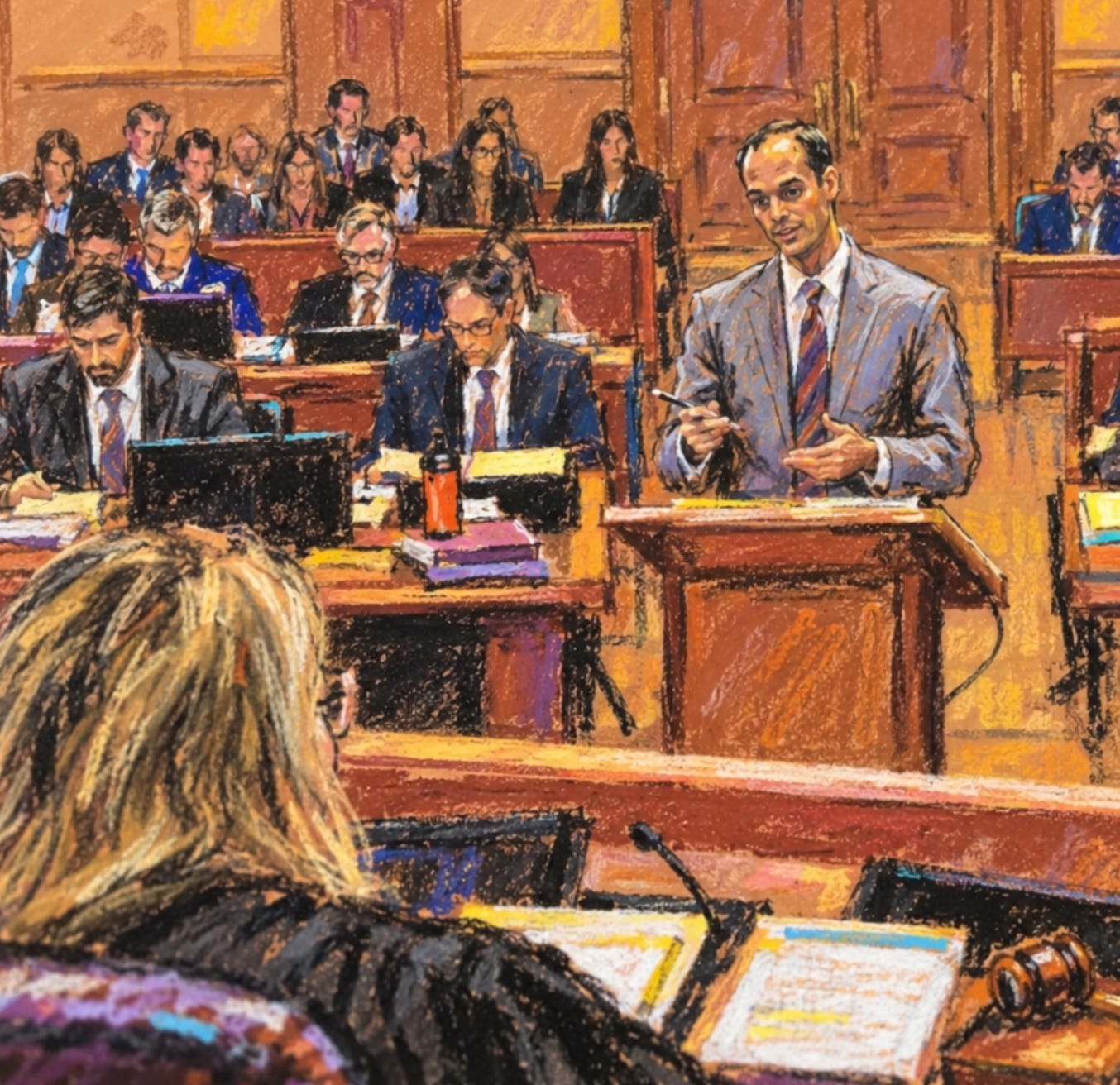
BROOKLYN, New York — Three Iranian witnesses in Huawei’s criminal trial possessed knowledge so distinctive and closely held that their testimony alone could identify them and expose them to reprisals, according to a newly filed judicial opinion obtained by The Bureau.
Prosecutors described inside access to Huawei and Skycom operations in Iran—including projects that few others knew about—and said the witnesses would expose Tehran’s efforts to suppress dissent.
Prosecutors also warned of a separate danger to witnesses: retaliation by the Chinese government, which they described as having close ties to Huawei, for cooperating with American authorities.
U.S. District Judge Ann M. Donnelly agreed that the witnesses could be identified from what they knew and found their safety concerns sufficient to justify closing the courtroom during their testimony.
“Each of the witnesses has expressed . . . significant fear of testifying due to the risk of reprisals from the Iranian government, given the Iranian government’s well-documented history of retaliation against those who try to undermine the Iranian regime, both in Iran and abroad,” prosecutors told the court, according to the opinion.
All three are Iranian nationals with close family in Iran.
The heavily redacted opinion, signed October 1 and filed publicly October 21, explains Donnelly’s September 18 decision to close the courtroom for their testimony. It describes the evidence prosecutors expected them to offer and why concealing their names would not adequately protect them.
According to the government’s submission quoted in the opinion, their testimony would “disparage the Iranian government and illuminate and publicize its efforts to suppress dissent in Iran.”
The broader prosecution alleges that Huawei secretly controlled Skycom, a Hong Kong company through which it supplied telecommunications infrastructure and services in Iran while misleading international banks about the relationship. The indictment alleges that Huawei’s Iranian business included surveillance technology used to “monitor, identify and detain protestors” during anti-government demonstrations in Tehran in 2009.
As The Bureau previously reported, Huawei’s Iranian operations have also figured in a contested effort by prosecutors to introduce bank compliance records citing alleged Chinese military and intelligence connections. The material included concerns raised by American lawmakers about reported ties to Iran’s Islamic Revolutionary Guard Corps. Huawei challenged that material as unreliable and inflammatory.
The newly filed opinion focuses on people with knowledge of the operations themselves.
One witness was expected to describe work for Skycom and Huawei in Iran. Another passage describes anticipated testimony about multiple Skycom projects and quotes prosecutors saying that “few people, if any, were aware of these projects,” had the witness’s level of access or possessed the same knowledge.
Names, portions of the witnesses’ backgrounds and descriptions of particular work are blacked out. The public opinion does not identify the specific projects.
But Donnelly’s conclusion about the identifying power of their evidence is explicit.
“The witnesses’ proffered testimony is sufficiently unique such that each of the witnesses could be identified based solely on their testimony,” she wrote.
Before trial, Donnelly had already granted the government’s request to let 11 witnesses testify under aliases or initials. For these three witnesses, prosecutors argued, the danger extended beyond recognition of their faces or names: the substance of their evidence could reveal who they were.
Donnelly accepted the safety justification, citing Iran’s targeting of critics abroad.
“Indeed, news reports substantiate the government’s claims that the Iranian government has targeted people in the United States — including in New York City — who have publicly criticized the regime,” she wrote.
She cited a May Justice Department announcement titled “Staten Island Man Sentenced for Murder-for-Hire Plot and Stalking a Journalist and Prominent Critic of the Iranian Government.” Iran, she added, “has also plotted to assassinate critics in” locations redacted from the public version.
In a separate footnote, the opinion records the government’s warning that “there is also a serious risk the PRC government — which has close ties to Huawei — may retaliate against” the three witnesses “as punishment for cooperating with the U.S. government against PRC interests.”
Donnelly recorded that warning without making a separate finding on possible Chinese retaliation. Her explanation for the closure focused on Iranian reprisals and the witnesses’ vulnerability to identification.
The prosecution’s warning about possible Chinese retaliation comes against a separate intelligence record concerning Beijing’s efforts to prevent Huawei chief financial officer Meng Wanzhou from facing American proceedings.
As The Bureau has reported, a classified June 2019 Canadian Security Intelligence Service assessment concluded that Beijing’s determination to prevent Meng’s extradition from Canada was driven partly by concern that she could cooperate with U.S. authorities and disclose privileged information.
The assessment described Ministry of State Security units receiving direction “from high levels” and competing to make the “largest possible impact.” According to CSIS, Beijing’s pressure campaign combined trade coercion, efforts to influence politically connected Canadian business leaders, clandestine interference surrounding the 2019 federal election and leverage through the detention of Michael Kovrig and Michael Spavor.
Meng, whose admissions concerned Huawei’s control of Skycom and its business in Iran, never entered American custody. In September 2021, she reached a deferred prosecution agreement, the United States withdrew its extradition request, and she returned to China. Beijing released Kovrig and Spavor within hours.
Meng’s evidence nevertheless reached the Brooklyn jury.