Former Senior Mountie: Carney’s RCMP–Chinese Police Cooperation Deal Is a Counterintelligence Danger That Risks Sovereignty
Canadian police tradecraft is valuable to a state that blends criminal, intelligence, and political objectives seamlessly.
By Garry Clement
OTTAWA — After nearly five decades in policing, intelligence, and financial-crime investigations—including professional experience working in Asia—I have learned a simple rule: who you cooperate with matters as much as what you cooperate on.
Last week, the Prime Minister’s Office announced that Canada and the People’s Republic of China will enhance law enforcement cooperation on drug trafficking, transnational and cybercrime, and money laundering. On paper, this sounds reasonable. Fentanyl is devastating communities. Cybercrime drains billions. Organized crime adapts faster than borders.
But experience teaches me that cooperation with the PRC is never just technical, never apolitical, and never insulated from the priorities of the Chinese Communist Party. Canadians deserve to understand the risks.
In Canada, policing is constrained by courts, disclosure rules, independent prosecutors, and an entrenched—if imperfect—commitment to individual rights. In the PRC, law enforcement is an extension of state security. Its primary function is not public safety as Canadians understand it, but regime stability.
During my work in Asia, this distinction was never subtle. Human rights, due process, and judicial independence were not guiding principles; they were obstacles to be managed. Criminal labels—fraud, subversion, cybercrime, economic offences—were routinely applied to political, ethnic, or commercial targets when it suited the state.
This matters because when Canada “cooperates” with such a system, we are not dealing with an equal partner operating under comparable legal and ethical constraints.
Modern law enforcement cooperation hinges on information: identifiers, financial trails, travel histories, digital footprints, investigative techniques. Even limited disclosures can be powerful when combined with the PRC’s vast domestic surveillance and data-collection apparatus.
What concerns me is not a single file transfer, but cumulative exposure. Over time, cooperation can reveal:
how Canadian agencies prioritize targets,
how we detect money laundering or cyber intrusions,
what thresholds trigger investigations.
That knowledge is valuable—not just to criminals, but to a state that blends criminal, intelligence, and political objectives seamlessly.
This is not an abstract debate. Canadians of Chinese, Uyghur, Tibetan, Hong Kong, and Taiwanese heritage have already reported intimidation, monitoring, and coercion linked to PRC interests. Cooperation frameworks risk legitimizing or facilitating such pressure under the guise of criminal enforcement.
From experience, I can say this is how it often unfolds:
Political or activist activity is reframed as fraud, extremism, or cybercrime.
Information obtained abroad is used to pressure family members back home.
Fear spreads, and communities disengage from Canadian police—making everyone less safe.
If cooperation deepens without hard safeguards, Canada risks exporting vulnerability rather than security.
Yes, China is part of global supply chains for synthetic drugs and financial flows. But cooperation cuts both ways. Sharing cybercrime or laundering typologies exposes investigative methods and blind spots. Joint cyber efforts risk blurring lines between criminal disruption and state-enabled cyber activity—lines that are already thin.
In my career, liaison relationships were among the most effective intelligence-collection tools I encountered—not because people were reckless, but because trust and “professional courtesy” erode caution over time.
I am not arguing for isolation or naïveté. International crime demands international engagement. But experience—earned the hard way—tells me that authoritarian systems do not compartmentalize. If Canada does not set firm, public, and enforceable limits, cooperation will drift toward outcomes we neither intend nor control.
Before this partnership deepens, Canadians should demand:
absolute restrictions on sharing information about Canadians and residents,
clear human-rights and transnational-repression safeguards,
independent oversight and transparency,
and a willingness to suspend cooperation when abuse risks emerge.
For nearly fifty years, I worked within systems designed—however imperfectly—to balance security and liberty. In Asia, I saw what happens when that balance does not exist. The PRC has shown repeatedly that human rights, rule of law, and individual protection are subordinate to state power.
Cooperating with Beijing may promise short-term gains against crime. The long-term cost—measured in compromised methods, intimidated communities, and eroded sovereignty—could be far higher.
Canadians should not mistake a press release for a safeguard.
Garry Clement is the author of Undercover, which he has revisited and expanded in a second edition retitled 50 Years of Dirty Money, Organized Crime and the RCMP. He also assisted in the writing of Canada Under Siege: How PEI Became a Forward Operating Base for the PRC.


We seriously need a press release once again from Garry Clement and Sam Cooper explaining the dangers of this cooperation with China. Canadians are sleeping we are allies to the U.S not China who abuses their own citizens. Carney is proving to be as I predicted the intelligent Trudeau the most dangerous Prime Minister Canada has ever had. Wake Up Canada!
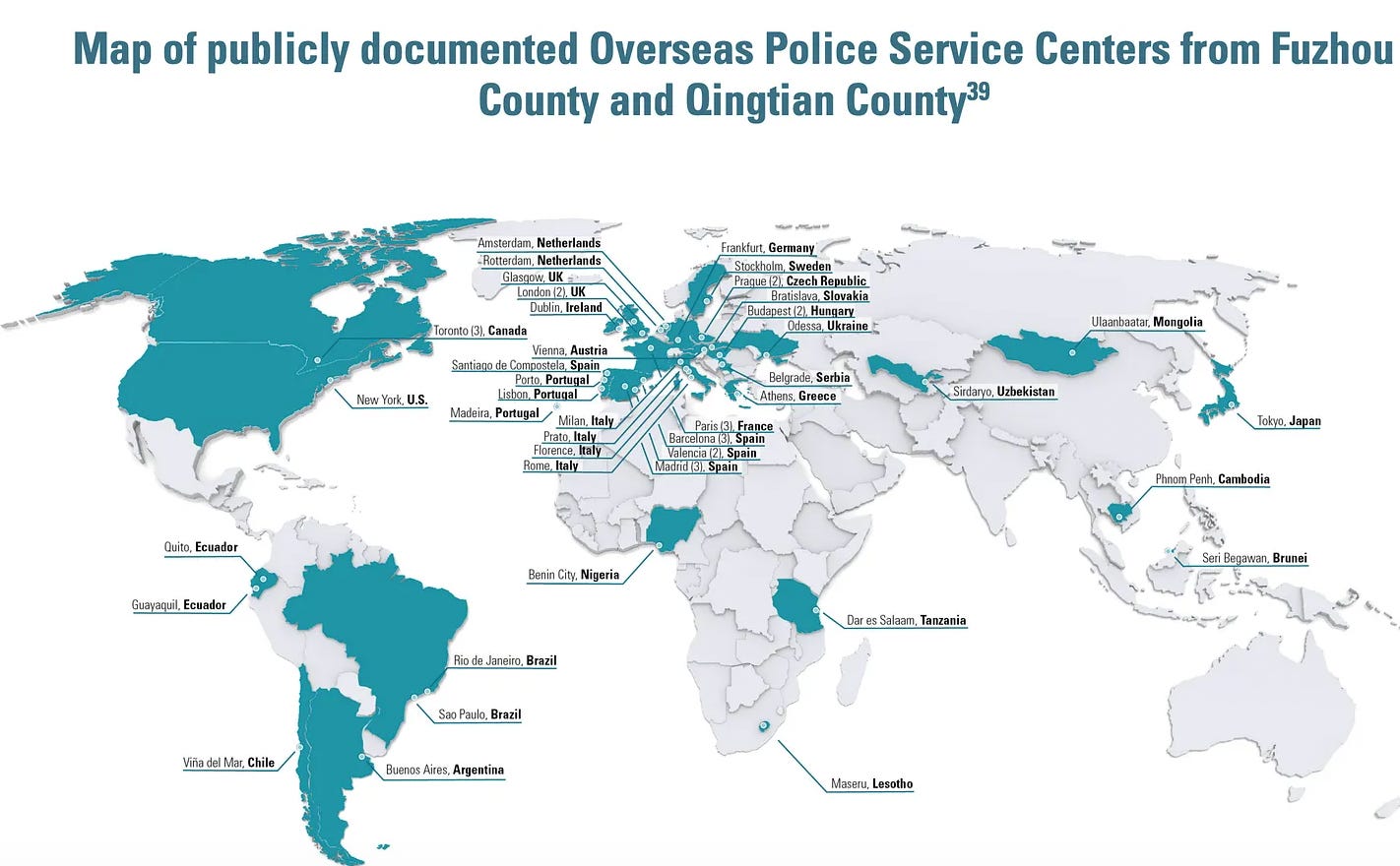
Canada just wants to be even more forefront in Trump’s crosshairs. What benefits can seriously be gleaned from cooperating with Chinese police who open secret police stations to subvert local diaspora through intimidation. If anyone has followed the US federal case in NY that somehow ended in a hung jury it showed that money flowed through these offices and when heat comes down people abscond back to China never to face justice. Hoping an “independent” council would oversee this cooperation is foolhardy because it would be people picked by the govt and you’d have to keep looking at their bank accounts to make sure they were not paid off. This is another loser for Canada who is inching even closer to being a communist country. Which I’d add is something the US will not and cannot allow on its border. How Canada can’t see this is maddening. I’d also add if Canada believes someone would come to their aid when the US comes to save her I’d look at who came to Venezuela’s aid. Stay tuned because that was the first domino. The US empire is in expansionist mode now.