First Nation Police Chiefs Turn to Texas Sheriffs as Sinaloa Cartel Exploits Canada’s Border Gaps

TEXAS — With a lack of funding and support from Canadian officials, First Nation police chiefs on the front lines of a corridor of Sinaloa Cartel–linked border smuggling and drug trafficking have turned to enforcement colleagues they’d never met for help: Texas sheriffs.
Ammon Blair of the Texas Public Policy Foundation organized the innovative collaboration with the two Indigenous police chiefs, who presented along with Blair at a recent panel in Ottawa attended by Canada’s fentanyl “czar” Kevin Brosseau.
“This event decisively advances Texas’ strategic interests, addresses a critical geopolitical gap left by federal and Canadian authorities, and strengthens cross-border operational cooperation where it is most needed,” Blair told The Bureau.
Blair says the foundation for this partnership was laid in Ottawa, at the Future Borders Coalition’s strategic forum. That session brought together a group of North American security experts, including First Nation chiefs, academics, policymakers, border-security practitioners, and Blair — a military veteran and former border officer.
The result, Blair told The Bureau, was a rare environment where frontline leaders could compare operational gaps across both the northern and southern borders – and map how the same cartels and transnational networks were exploiting weaknesses in Canada and the United States.
“We were describing the same adversaries, the same illicit tradecraft, the same cross-border networks, and the same exploitation of jurisdictional seams along our respective borders,” Blair said. “The chiefs’ operational insights from Mohawk Nation territories mirrored the threat patterns we see across the Texas–Mexico corridor. Their intelligence, their field experience, and their sovereign responsibilities resonate directly with the work Texas is undertaking.”
Blair and the chiefs left Ottawa with a shared conclusion: that the most exposed communities – First Nations in Canada and rural sheriffs’ jurisdictions in Texas – would have to build their own alliances if national capitals were unwilling or unable to keep up with the threat.
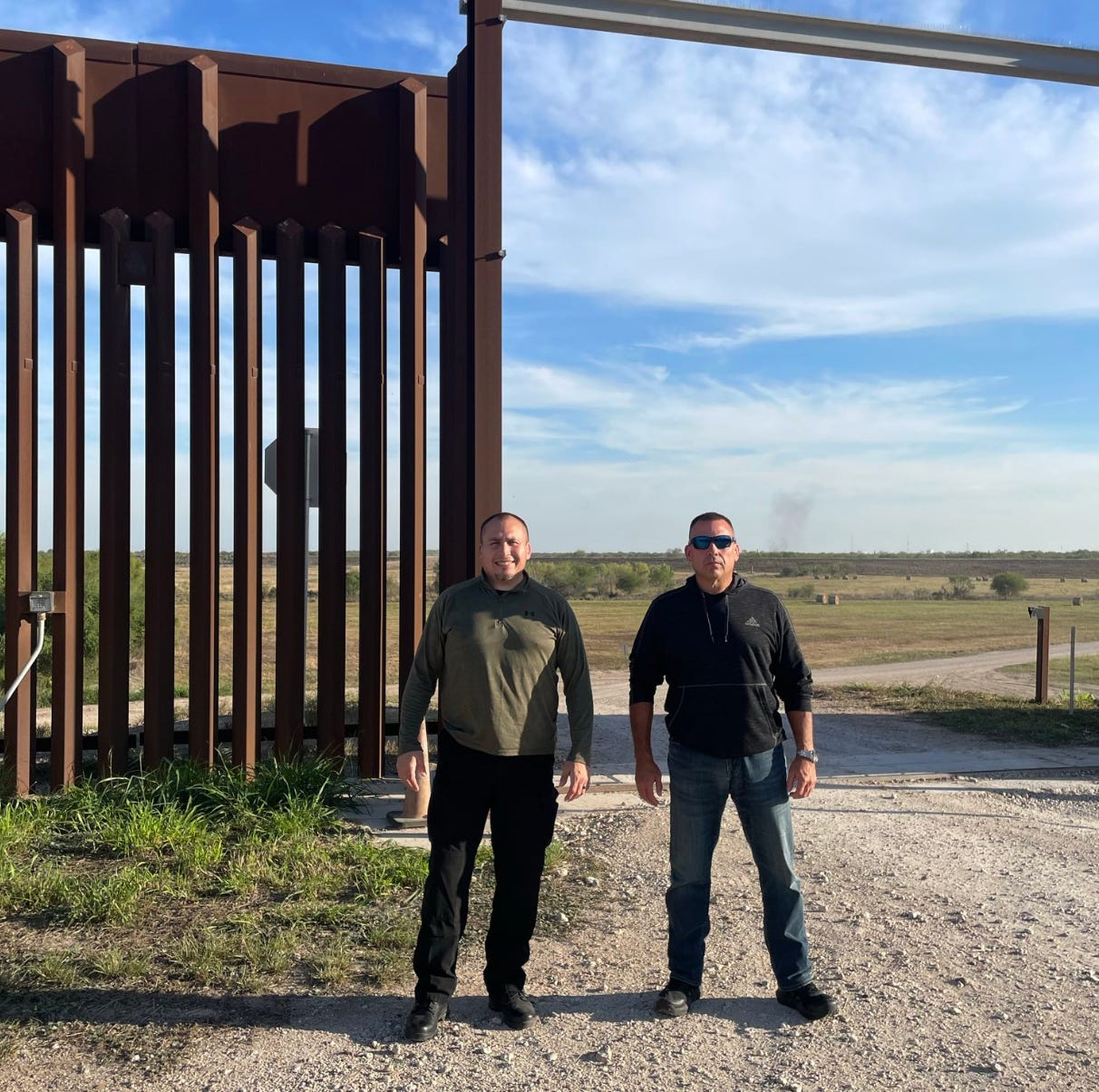
This week, those chiefs travelled south and joined sheriffs spearheading Texas border security efforts through a task force led by Goliad County Sheriff Roy Boyd. The task force was created at the height of the border crisis under Gov. Greg Abbott’s Operation Lone Star.
One of the chiefs who came to Texas, Akwesasne Mohawk Chief of Police Ranatiiostha Swamp, is responsible for a jurisdiction that has long been a corridor for cross-border smuggling. Transnational crime is occurring through the reserve lands, which straddle the St. Lawrence River in upstate New York and Canada.
Another leader who made the trip, Dwayne Zacharie, said that in his community, more than 130,000 commuters pass through First Nation territory to access Montreal. While provincial police receive more funding and wield greater political clout, Zacharie said they are not interdicting crime that directly impacts First Nation communities.
Canadian authorities also “don’t share information with us,” he told reporters in Texas.
“They don’t provide us with opportunities for training. They don’t provide us with resourcing that’s commensurate with our needs.”
Those needs involve confronting saturation in drug trafficking operations from cartels now designated as narco-terror organizations, and their Canadian proxies.
“We see MS-13, the Sinaloa Cartel, Hell’s Angels,” Zacharie said. “All of these organized crime entities come into our communities because in their minds, the picking is ripe because we don’t have the resources.”
Blair argues that what is happening at the southern and northern borders is part of a single failure of national systems to keep pace with transnational networks. Across the continent, he says, federal institutions have been outpaced by the speed, adaptability and strategic intent of the cartels and their state-linked partners.
In Canada, Blair notes, First Nations policing leaders consistently report limited resourcing, inconsistent federal engagement and structural barriers that prevent their agencies from countering the criminal networks using their territories as operational corridors.
Blair’s view is that the significance goes into the heart of North America’s geopolitical crisis.
From his perspective, Mexican cartels are no longer merely regional criminal groups; they function as part of a larger ecosystem that includes Chinese chemical and financial facilitators, Iranian-linked actors exploiting migration routes, and intermediaries tied to hostile state interests.
These networks operate across borders and jurisdictions, leveraging Indigenous territories, coastal corridors and high-traffic smuggling routes from Quebec to Texas. Their activities intersect with illicit trade, human trafficking, cyber operations, gray-zone political campaigns and money laundering.


“We see MS-13, the Sinaloa Cartel, Hell’s Angels,” Zacharie said. “All of these organized crime entities come into our communities because in their minds, the picking is ripe because we don’t have the resources.” Nope. It's because cartel members and other criminal elements, know how to exploit people living in poverty. It's how they operate in Mexico. Enter the small communities and throw mega dollars around. Too many chief's are taking money and NOT improving life on the reserve. WHERE is that money?
Yes…. and NOW these chiefs are going to work against the drug criminal element? PLEASE give us all a break.
Sounds as phoney as the recently appointed Fentanyl Czar that has admitted he “had no power” to do anything? It’s all window dressing folks.. don’t buy into any of it.
But thanks for reporting on it Sam and The Bureau