

BROOKLYN, New York — An FBI agent walked jurors through internal communications linking Huawei personnel in China and the United States on Wednesday, as prosecutors sought to establish that the company pursued technical secrets belonging to T-Mobile even after learning the American carrier would not willingly disclose them.
Assistant U.S. Attorney Matthew Skurnik spent hours questioning FBI Special Agent James Diclemis about email chains concerning “Tappy,” a proprietary robot developed by T-Mobile to automate smartphone testing.
The internal communications included a blunt acknowledgment of T-Mobile’s position: “TMO would not want to share the details about the robot technology/documents,” South China Morning Post reported.
Prosecutors identified approximately a dozen Huawei employees appearing in the communications, using company, payroll and immigration records to trace connections between personnel working in China and the United States.
Huawei’s lawyers, on the other hand, have argued that the alleged breaches at T-Mobile’s secured laboratory were isolated misconduct by individual employees.
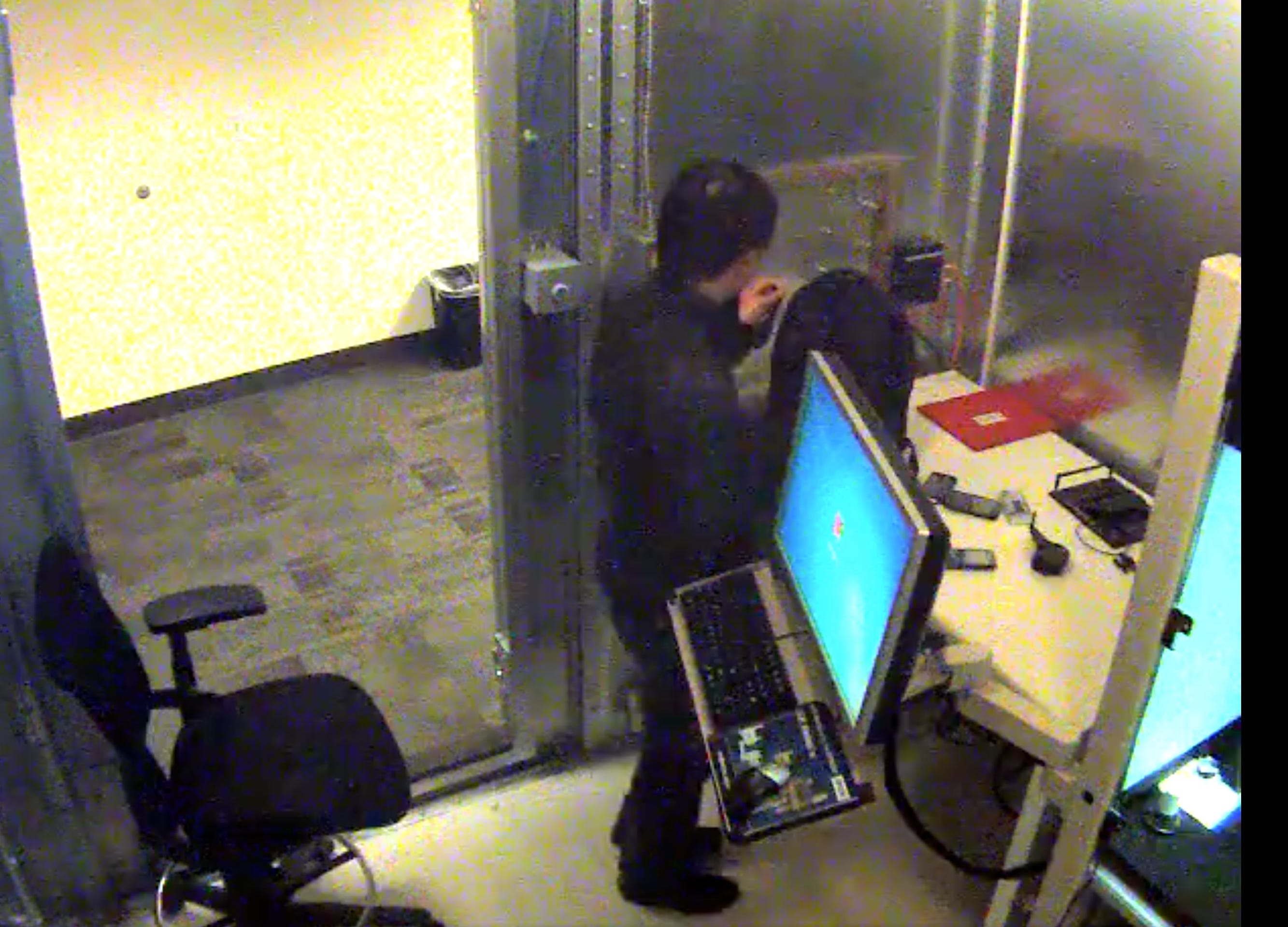
Jurors were also shown surveillance footage that prosecutors say captured a Huawei employee removing a component from the robot and placing it in a bag. A 54-second exhibit, shown to the jury Wednesday and later published by Inner City Press as part of its courtroom reporting, appears to show the employee reaching behind the robot, removing a part and zipping it into a black backpack he had carried into the laboratory.
A day earlier, on Tuesday, a former T-Mobile executive testified about three incidents in 2013 in which Huawei employees allegedly violated agreements controlling access to the laboratory. The episodes culminated in the removal of a key component from Tappy, courthouse media reported.
A Chinese-language account from New York’s World Journal reported that the T-Mobile witness described engineers improperly photographing the equipment, removing a component and transmitting information to Huawei’s headquarters in China. Prosecutors contend that the laboratory footage and email traffic document the path from requests originating in China to actions inside T-Mobile’s Washington-state facility.
Tappy used a mechanical arm and rubberized tip to reproduce human tapping, swiping and typing on smartphone screens, automating quality-assurance testing before devices were approved for sale. Its hardware and operating specifications were protected by confidentiality and laboratory-access agreements.
Huawei has pleaded not guilty. Its lawyers have argued that prosecutors are attempting to recast isolated employee misconduct as proof of a company-wide criminal enterprise. The government is using the emails, employee relationships and laboratory footage to attack that defence directly.
The trial is the culmination of a racketeering prosecution in which Huawei Technologies and three subsidiaries face 12 counts after the government dropped two sanctions counts shortly before trial. The remaining allegations include racketeering conspiracy, conspiracy to steal trade secrets, bank and wire fraud, money laundering and obstruction of justice. Prosecutors say the alleged conduct extended across roughly two decades.
The case is expected to last over three months.
Lead defence lawyer Brian Heberlig told jurors in his opening statement that the government had taken ordinary global commerce and the misconduct of a handful of employees and dressed it up as a criminal organization. “There was no blueprint for crime,” he said.
T-Mobile is one of five alleged corporate victims now at issue in the trade-secret case, alongside Cisco Systems, Fujitsu, Quintel Technology and CNEX Labs. Earlier indictments also alleged Motorola-related conduct, but prosecutors dropped that episode as a racketeering predicate before trial.
The fight over Tappy is one front in a broader pretrial contest over what these jurors would be permitted to see. As The Bureau reported from hundreds of pages of filings, prosecutors sought to introduce bank due-diligence records cataloguing alleged links between Huawei and China’s military and intelligence services. They also sought to use videotaped testimony in which government counsel asked a veteran banking-compliance executive about “general concerns about Huawei’s ties to the Iranian military.”
That disputed questioning involved an August 2010 Washington Times “Inside the Ring” column by Bill Gertz. The column reported on a letter from eight Republican senators, led by Arizona Senator Jon Kyl, concerning Huawei’s attempt to supply equipment to Sprint Nextel—a company that supplied goods and services to the U.S. military and law-enforcement agencies.
The senators addressed questions to Treasury Secretary Timothy Geithner, Commerce Secretary Gary Locke, Director of National Intelligence James Clapper Jr. and General Services Administration chief Martha Johnson. They warned that allowing Huawei into Sprint’s supply chain could pose “substantial risk” to American companies and potentially undermine national security.
The letter cited Huawei’s business dealings in Iran, alleged links to the Islamic Revolutionary Guard Corps and what the senators called the company’s “direct ties” to China’s military. The “most troubling” possibility, they wrote, was that a company allegedly acting at the direction of and funded by the Chinese military could obtain a critical position in supply chains serving the U.S. military, law enforcement and private industry.
In the pretrial evidence battle, its lawyers argue that such material is irrelevant, prejudicial or hearsay. Prosecutors maintain that the material was relevant to explaining how bank officials assessed the risks of retaining Huawei as a client.
Judge Ann M. Donnelly told prospective jurors that “China and the Communist Party … are not on trial.” Huawei’s alleged concealment of its Iranian business from banks and its use of the American financial system, however, remain central to the prosecution.
I was in Europe this summer, and I see so many people, especially young people, wearing a Huawei watch. It seems that the world is ignorant of what this company is, and what China really is - a country with no respect for intellectual properties. Whatever "innovations" China has today are stolen technology. Once again, I have to say that our universities accept the best and brightest students from China. They absorbed all we have to offer, and they go home and work for a country whose sole mission is to subvert and destroy our freedom and democracy, and our way of living.