


WASHINGTON — More than a year before the pandemic, in the autumn of 2018, coronavirus material was carried covertly out of a People’s Liberation Army medical academy toward the Minnesota laboratory of a federally funded virologist, a man named Fang Li, who was permitted to work on “bat coronavirus DNA.”
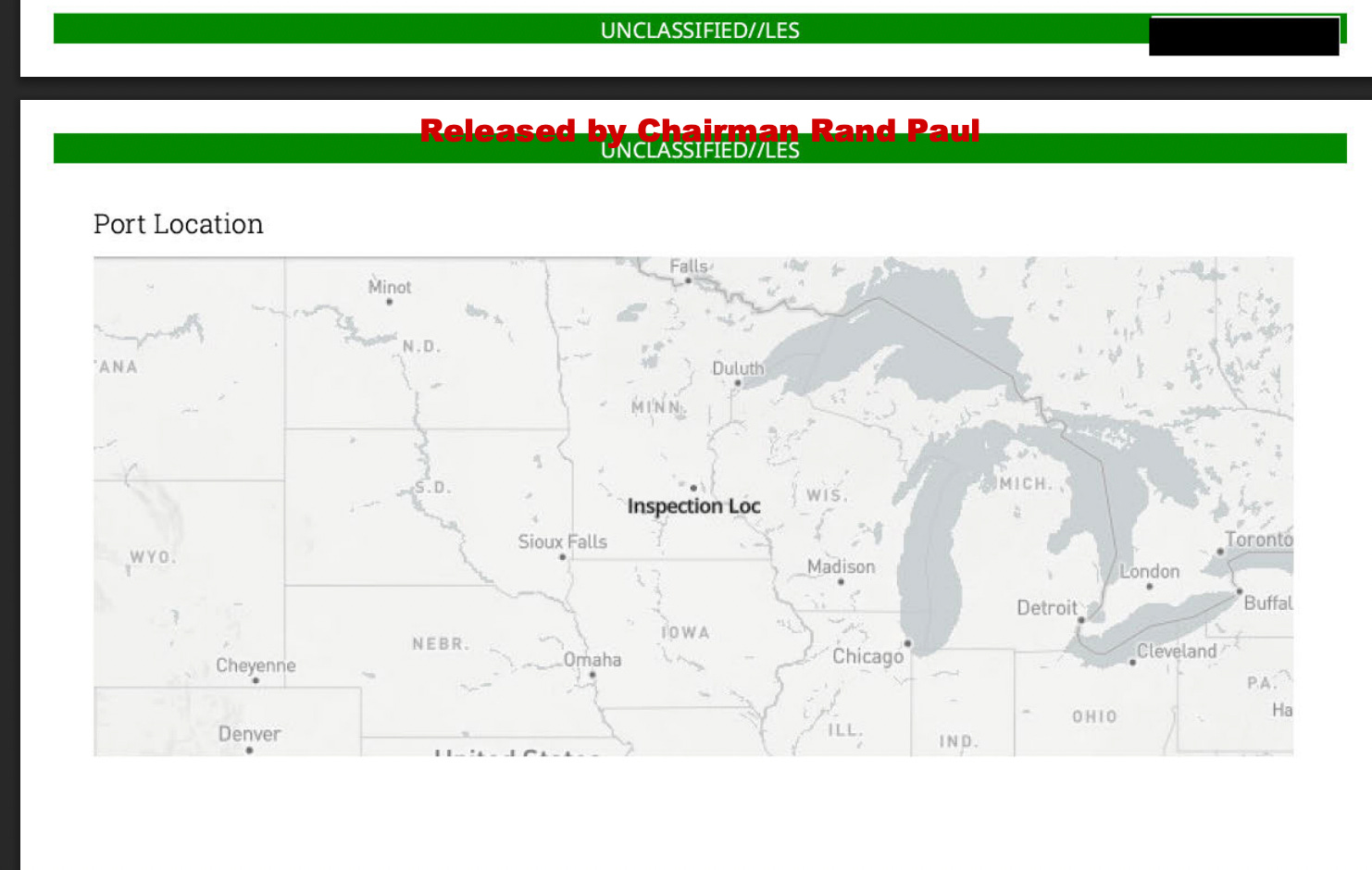
Border officers were so alarmed that the vials were handed to the FBI’s Weapons of Mass Destruction Directorate — in a case the government warned “may pose a risk to the national security of the United States,” according to a Department of Homeland Security field report released last Friday by Senator Rand Paul, who chairs the Senate committee on homeland security.
The disclosure, describing a network of Beijing “Thousand Talents” recruits and People’s Liberation Army-linked scientists, mirrors the Canadian intelligence The Bureau documented in 2024.
That same October of 2018, the same Chinese military research network — working on bat coronavirus gain-of-function research in Wuhan — tried to smuggle ten vials out of Canada’s highest-security laboratory in Winnipeg.
At the center of both cases is one institution and one scientist.
The American documents trace a network linking the University of Minnesota virologist Fang Li to Yusen Zhou of China’s Academy of Military Medical Sciences and to Shi Zhengli, the Wuhan Institute of Virology’s deputy director, known in the scientific press as the “bat woman.”
This is the same Shi who appears in the Canadian records as a senior figure in the Wuhan collaboration that drew in Dr. Xiangguo Qiu, the Winnipeg scientist Canada’s spy service found had covertly served Beijing — and to whose Wuhan institute Dr. Qiu, in March 2019, organized a shipment of Ebola and Nipah virus samples from Canada’s highest-security laboratory.
The releases from Senator Paul’s document probe also show Dr. Anthony Fauci dismissing concerns that Central Intelligence Agency officers raised about military activity and coronavirus research in Wuhan, including pangolin sampling.
Among the released records is a note on a postdoctoral researcher in Li’s Minnesota laboratory whose doctoral thesis — titled “Bat coronavirus receptor analysis” — listed Fang Li as principal investigator and, as the adviser in China, Zhengli Shi.
In plain terms, the relationship was the same on both sides of the border, and it is now confirmed in both American and Canadian intelligence reporting: Fang Li in Minnesota and Xiangguo Qiu in Winnipeg were each collaborating with Shi’s group in Wuhan on dangerous bat-borne viruses.
Both Li and Qiu were apparently asked to arrange for Chinese scientists to carry biological materials from North American laboratories to Wuhan. Both facilitated formal shipments. In Qiu’s case, this occurred after members of her laboratory were caught attempting to smuggle vials out of the Winnipeg facility.
The American documents show Shi and Li researched how bat coronaviruses recognize and enter the cells they infect — the mechanism at the center of the debate over where the pandemic began.
In April 2018, the documents say, Shi asked Li whether a student could hand-carry severe acute respiratory syndrome antibodies back to China.