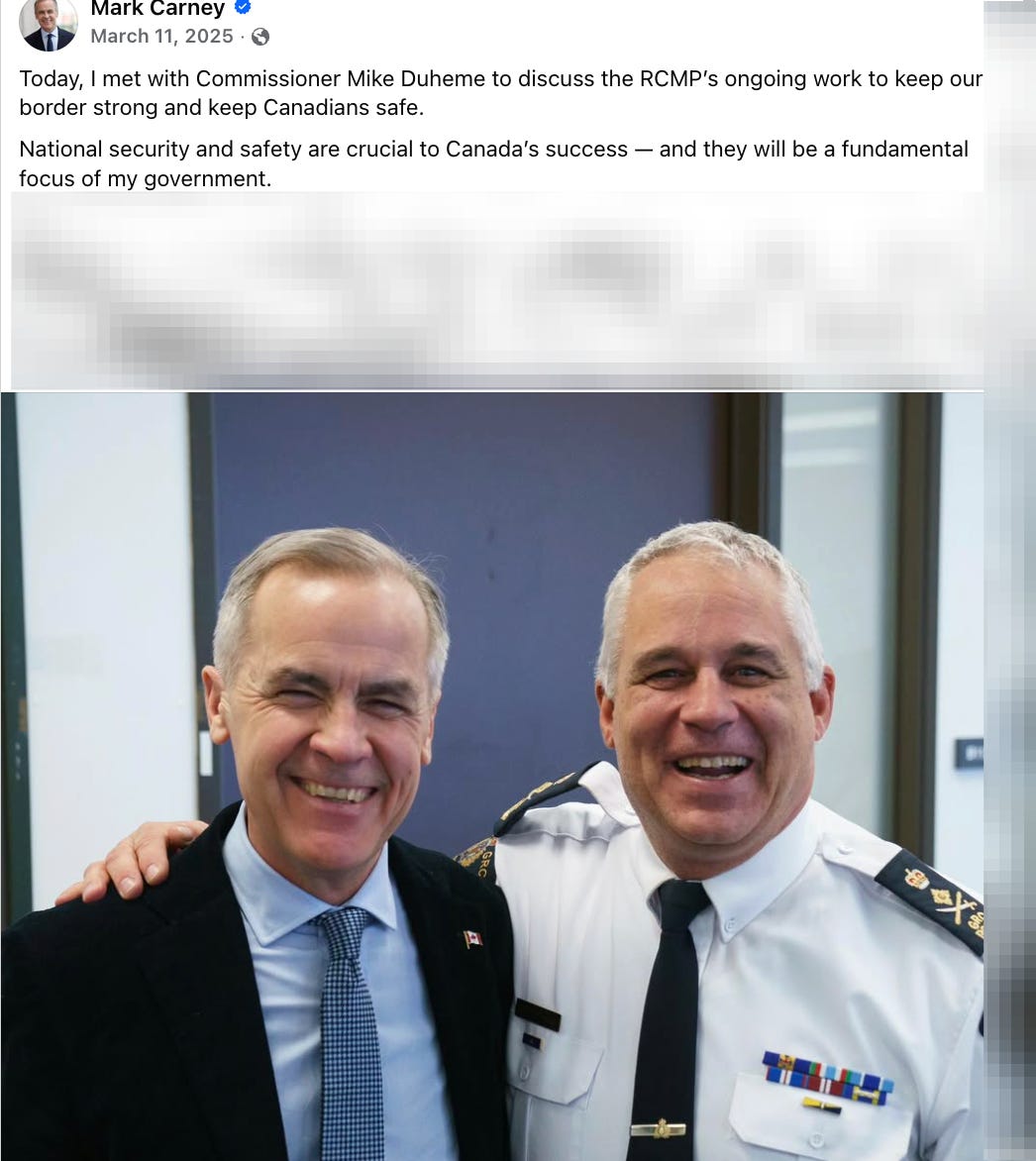
Commissioner Duheme’s Repression Denials Will Not Restore Public Trust
Op-Ed: Former Mountie Garry Clement argues that Commissioner Mike Duheme’s denials on foreign interference undermine diaspora trust.
By Garry Clement
OTTAWA — Commissioner Mike Duheme’s recent interview with Vassy Kapelos, in which he stated there is “no credible intelligence” indicating foreign interference in Canada, was likely intended to reassure Canadians. Instead, it risks doing the opposite — particularly for diaspora communities who have long warned that foreign state actors operate within Canada’s borders.
To many of these communities, blanket public assurances do not calm fears. They deepen them. When officials appear to dismiss or minimize concerns that have been documented through testimony, intelligence reporting, criminal investigations, and lived experience, the message received is not confidence, but distance from reality.
That gap matters. Trust in public institutions is not built through categorical denials. It is built through candour, precision, and a willingness to acknowledge what is known, what remains uncertain, and what is being done to protect Canadians.
For years, members of diaspora communities have described harassment, intimidation, surveillance, coercion, and threats linked to foreign regimes.
Some have reported pressure on family members abroad. Others have described efforts to shape political participation, silence critics, or manipulate community organizations and media spaces within Canada. These are not abstract fears. For many, they are part of daily life.
That is why broad statements such as “no credible intelligence” can sound less like reassurance than institutional retreat. Even if intended narrowly, such language can be heard as a dismissal of patterns that have already been recognized by commissions, security agencies, journalists, and affected communities themselves.
Public confidence requires something more careful.
Canadians deserve distinctions between election interference and broader foreign interference, between intelligence thresholds and lived patterns of intimidation, and between what can be said publicly and what authorities may know privately. Without those distinctions, official messaging can obscure more than it clarifies.
This is especially damaging in a country that has already struggled to communicate clearly about foreign interference. Over several years, conflicting statements, delayed disclosures, and bureaucratic caution have left many Canadians uncertain about the scale of the problem and unsure whether institutions are prepared to confront it honestly.
A credible public message would acknowledge both the limits of publicly releasable intelligence and the legitimate concerns of communities that have been warning about this issue for years. It would recognize that the absence of publicly discussed intelligence is not the same thing as the absence of activity. And it would avoid presenting certainty where the public record has already shown complexity.
Commissioner Duheme may have intended to lower the temperature. But in matters of foreign interference, overly broad denial does not restore trust. It can weaken it further.
Canadians are not looking for comforting language. They are looking for honesty, seriousness, and evidence that their institutions understand the threat in front of them.
Denial is not reassurance. In this context, it deepens distrust.
Former senior RCMP officer Garry Clement consults with corporations on anti-money laundering, contributed to the Canadian academic text Dirty Money, and wrote Undercover, In the Shady World of Organized Crime and the RCMP and Canada Under Siege: How PEI Became a Forward Operating Base for the Chinese Communist Party.


You and Gary Clement are brilliant sources of credible intelligence, Sam. The Liberal media lapdogs are a broom to sweep truth under carpets which are piled high with corruption!
I think it’s time for you and friends to do a few documentaries to get the truth out to larger audiences!
There is no credible evidence of foreign interference. That is because there is credible evidence of foreign co-operation with states like China, due to capture of the highest levels of the Liberal Party, gov't and Liberal oligarchs and their corporations, all made evident by Canada's recent strategic partnership with China, planned integration of Chinese police and transition to a centralized command style economy, social credit and censorship governance.