Carney’s Government Is Not Failing to See China’s Threat. It Is Choosing to Look Away.
The most dangerous threats are not the ones we fail to detect, a former Senior Mountie argues. They are the ones we allow to proceed.

By Garry Clement
OTTAWA — During my years in the RCMP, I dealt with organized crime, national security threats, and foreign actors who sought to exploit Canada’s openness. We understood something fundamental: threats rarely announce themselves plainly. They operate in the grey space—deniable, incremental, and often dismissed until it is too late.
What concerns me today is not just that foreign interference is happening. It is that Canada still seems reluctant to call it what it is—particularly when it involves the Chinese Communist Party.
That reluctance is becoming a liability.
Take the recent case of Joe Tay, a Canadian candidate targeted during a federal election by a campaign linked to Beijing. This was not vague influence or background noise. It was coordinated harassment, disinformation, and intimidation—classic transnational repression, exported onto Canadian soil.
In any other context, we would not hesitate to describe this as interference.
Yet Canadians were told the impact was “limited.”
More troubling still was the suggestion from RCMP Commissioner Mike Duheme that there was no evidence of foreign interference in certain contexts. With respect, that kind of statement does not align with what we now know from intelligence assessments, public reporting, and the testimony of those directly targeted.
When there is a gap between evidence and what is publicly acknowledged, confidence erodes—not just in institutions, but in the willingness to confront uncomfortable truths.
Justice Marie-Josée Hogue’s inquiry made something very clear: foreign interference linked to China is persistent, sophisticated, and strategic.
This is not random activity. It follows a pattern I recognized throughout my policing career — identify critics, apply pressure, amplify favourable voices, and shape the environment quietly, over time.
This is the operating logic behind United Front work—an influence system designed to build leverage without overt control.
And yet, in Canada, even discussing these dynamics has become fraught.
I find it deeply concerning that individuals who raise legitimate questions are often the ones put on the defensive.
Cheryl Yu’s rigorous reporting for the Jamestown Foundation documenting 575 United Front Work Department groups in Canada has been discredited in some quarters, including, as The Bureau reported, by Senator Yuen Pau Woo. But those attacks have not included any rebuttals with evidentiary merit or foundation. The attacks appear to be baseless.
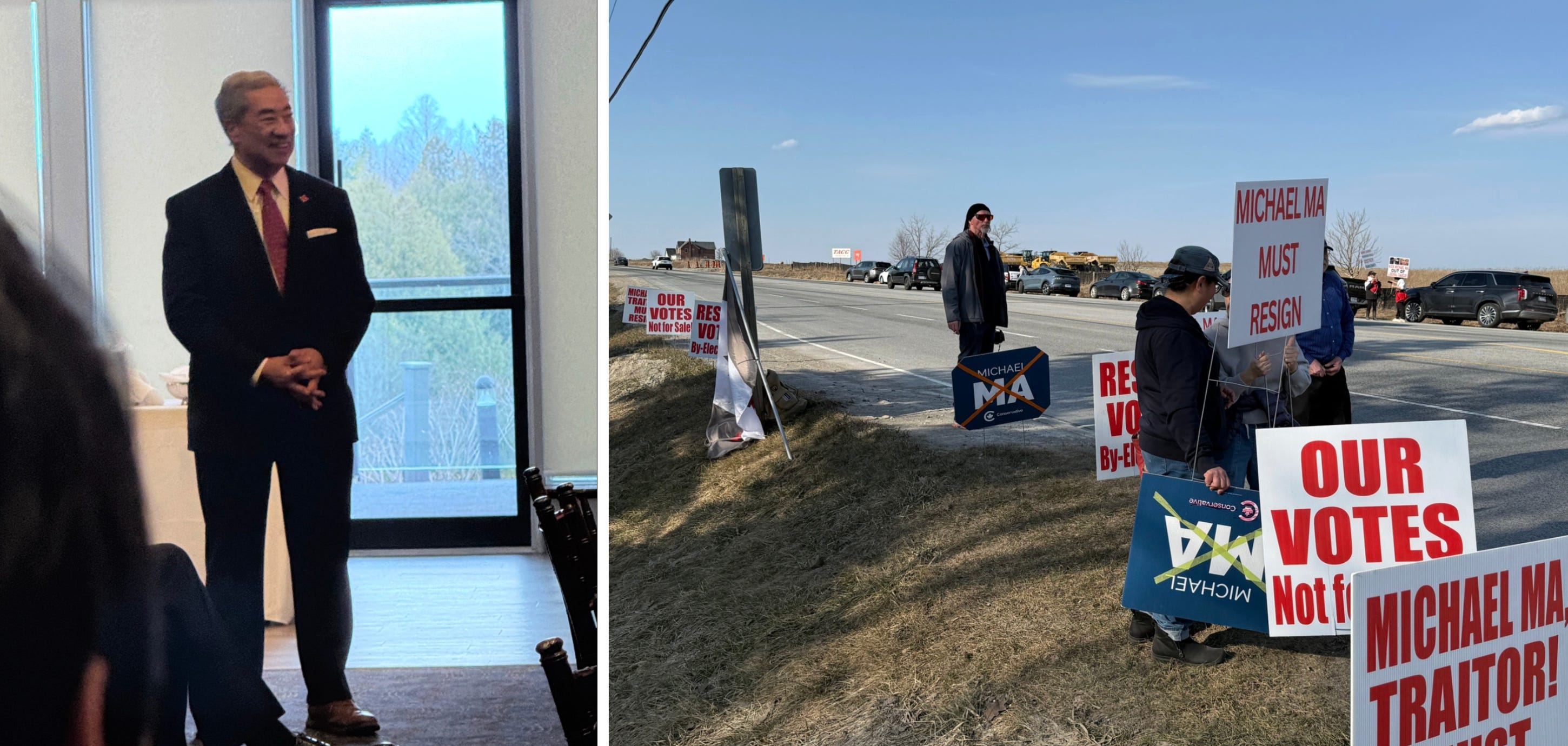
Margaret McCuaig-Johnston, a respected expert with decades of experience, has faced similarly aggressive challenges. Last week, Michael Ma used his position on a parliamentary committee to subject her to questioning that was arguably disrespectful and unfair, while appearing to align with Beijing’s foreign policy and trade objectives. Ma was not focused on the substance of the issue—forced labour in Xinjiang, as affirmed by numerous international bodies. He was focused on casting doubt, and his attacks were later amplified by Chinese state media.
I spent a career assessing evidence. When the focus shifts from facts to discrediting those presenting them, it is usually a sign that something more uncomfortable lies underneath.
The public debate around figures such as Senator Yuen Pau Woo has been marked by defensiveness and deflection.
Let me be clear: raising questions is not an accusation. It is a necessary part of democratic accountability.
In policing, we followed the evidence wherever it led. We did not avoid lines of inquiry because they were politically sensitive. If anything, those were the ones that mattered most.
Today, it feels as though Canada is doing the opposite—treating certain questions as off-limits.
That is not a security posture. That is avoidance.
Canada is not at risk of overreacting to foreign interference.
It is at risk of normalizing it.
We already know that candidates have been targeted, diaspora communities pressured, and information environments systematically manipulated.
Justice Hogue warned that the greatest harm may be the erosion of trust in our democratic institutions.
From my perspective, that erosion has already begun.
Because when Canadians see interference minimized, when officials contradict available evidence, and when those raising concerns are dismissed — they draw their own conclusions.
At the end of the day, this is not just a security issue. It is a question of who we are as a country.
Canada has always prided itself on fairness, openness, and the rule of law. But those values depend on something deeper: the willingness to defend them.
So we need to ask ourselves—plainly and without hesitation:
Are we so cautious, so economically dependent, or so politically uncomfortable that we are prepared to place the sensitivities of the Chinese Communist Party ahead of the integrity of Canadian democracy?
In my experience, the most dangerous threats are not the ones we fail to detect.
They are the ones we choose not to confront.
And right now, Canada risks doing exactly that.
Garry Clement is the author of Undercover, which he has revisited and expanded in a second edition retitled 50 Years of Dirty Money, Organized Crime and the RCMP. He also assisted in the writing of Canada Under Siege: How PEI Became a Forward Operating Base for the PRC.


The Liberal gov't is not choosing to look away, rather they are willing junior strategic partners to communist China. It is clear that like Trudeau, Carney admires the communist Chinese system of authoritarian governance, social credit system and hybrid fascist command style economy run by favoured Laurentian Liberal elites, examples being the Bronfmans and Demarais and their corporations Brookfield and Power Corp.
Not just the cumulative number of recorded, witnessed, and publicly evidenced Chinese Communist interference events--but their increasing frequency, makes your report urgently relevant. Maybe, the title for an upcoming essay? Urgently Relevant!