Carney’s China Reset Needs a Red Line: Free Jimmy Lai
A human-rights NGO leader and former senior U.S. correspondent in China argues Carney should make any Canada–China reset conditional on release of Jimmy Lai and other Hong Kong political prisoners.
By Shannon Van Sant
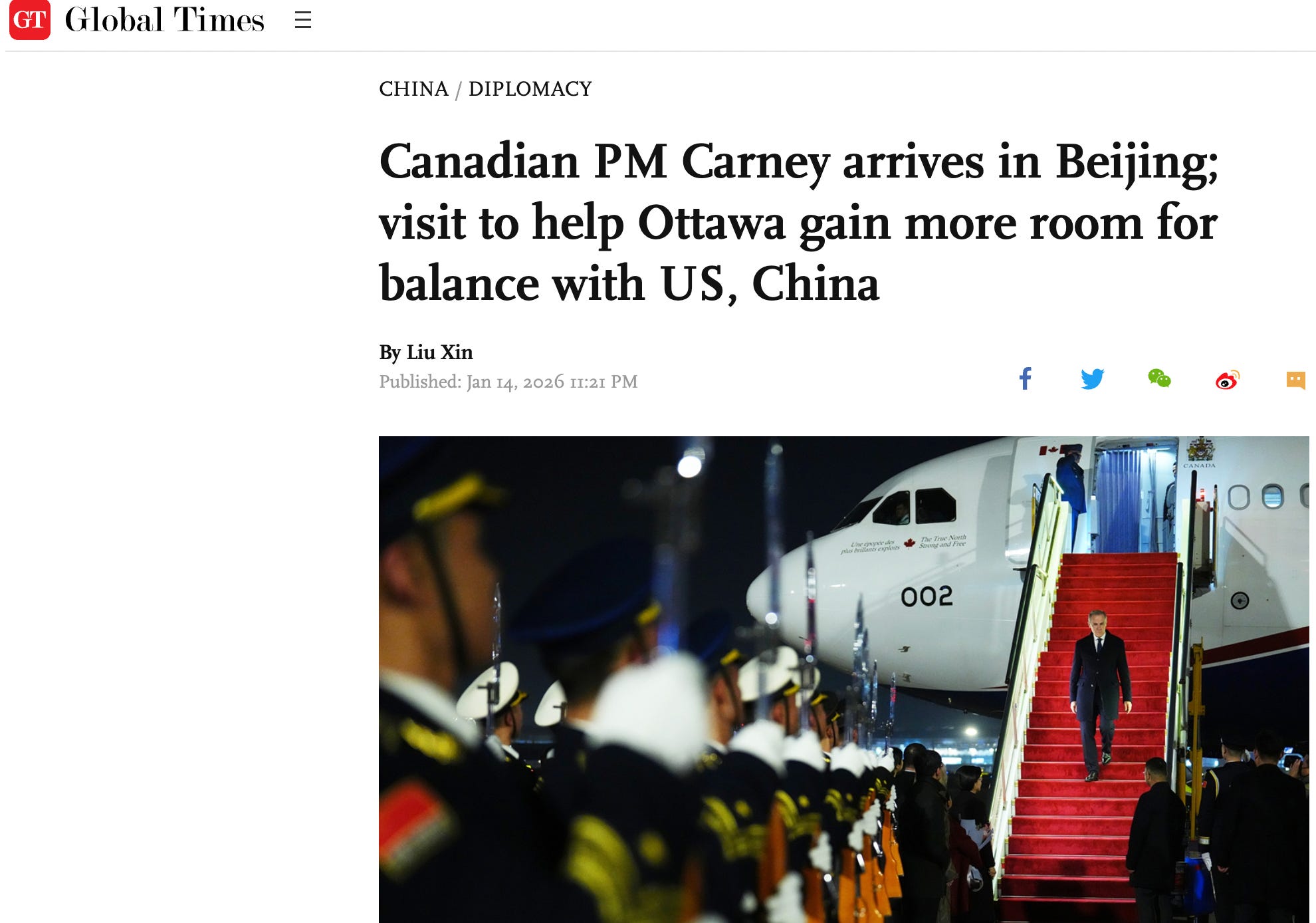
WASHINGTON — Prime Minister Mark Carney’s trip to Beijing this week — the first trip by a Canadian prime minister in more than eight years — signals a high-stakes attempt to reset Canada-China relations. This visit comes as pro-democracy publisher Jimmy Lai’s mitigation hearing comes to an end and as Ottawa looks to expand Canada’s oil exports to China. Carney has called this moment a “turning point,” but his Beijing debut will test whether that reset rests on principle — or veers toward capitulation.
Beijing is seizing upon tensions in the U.S.-Canada relationship to provide a fig leaf to the Canadian government — and much of the rest of the world — presenting itself as an alternative trusted partner in trade and investment. Carney shouldn’t accept that offer without conditions, including the release of the Hong Kong publisher Jimmy Lai, which he has already said he supports. Lai’s mother was a Canadian citizen, and his sister, nieces and nephews are Canadian citizens and residents of Ontario. Lai’s companies also employ more than 1,500 people in Canada.
Lai’s conviction last month for sedition and collusion with foreign forces was a shocking abrogation of rule of law in Hong Kong, once a trusted bridge between China and the rest of the world. Lai’s “crime” was running a newspaper critical of Beijing and advocating for democracy, for which he faces life in prison. Hong Kong authorities arrested Lai, now 78 years old, in December 2020. He has already spent nearly five years in solitary confinement, and Lai’s trial was a sham, with handpicked judges and no jury.
Prosecutors’ “evidence” of his crimes included tweets, newspaper articles, and his meetings with U.S. officials. If Canada won’t stand up for a 78-year-old journalist imprisoned for running a newspaper, what red line will Beijing have to cross for Ottawa to act? Lai’s case is also part of Beijing’s broader campaign of transnational repression, with Hong Kong issuing bounties on Canadian citizens and activists worldwide for speaking up in defense of democracy.
Carney’s leadership of Canada, and his former career in business and finance, should make him a tough negotiator, and his trip to Beijing will set the tone for the entire bilateral relationship.
Beijing wants Canadian investment and access to minerals essential for its technology sector. That gives Carney bargaining power—if he’s willing to use it. For decades the CCP has made trade and economic ties contingent on the world’s willingness to ignore its suppression of basic freedoms, and exerted coercion and pressure on business executives, political leaders, artists and writers, who don’t toe Beijing’s line.
In a time of global volatility, closer partnerships with China may seem appealing. But bending to Beijing allows the CCP to behave with impunity and emboldens the expansion of its transnational repression overseas.
The UK and U.S. are already pressuring Beijing for Lai’s release, and Canada will look weak if it stays silent.
Carney has spoken of building a “pragmatic and constructive” relationship with China, but Canada’s “turning point” on relations with the CCP shouldn’t require silence on Hong Kong.
Canada can use tools it has deployed elsewhere. Parliament has passed motions on the Uyghur genocide and imposed sanctions on officials in Belarus for human rights abuses and political imprisonment. Hong Kong’s crackdown on democracy deserves a similar response.
Canada should coordinate with the UK and U.S. at the G7 in June to present a unified front and not make any new concessions until Hong Kong political prisoners are released. The UK is already pursuing humanitarian release for Lai, who holds British citizenship. Canada should publicly support this effort and make clear that Lai’s release—along with other political prisoners—is a prerequisite for deeper economic engagement. This isn’t about severing ties with China; it’s about ensuring those ties don’t come at the cost of Canada’s values. Carney has something Beijing wants: access to Canadian markets, minerals, and investment. He should use that leverage.
Canada’s engagement with China should properly balance trade and fundamental values. Last October Carney said he supports Lai’s release on humanitarian grounds and because he believes in freedom of the press. Carney must now deliver a strong message to President Xi Jinping that any new trade deals with China should be conditional on freedom for Hong Kong’s political prisoners, including Jimmy Lai.
Shannon Van Sant leads the Committee for Freedom in Hong Kong Foundation’s work in Canada. She previously spent 11 years as a correspondent in Beijing and Hong Kong for CBS News and PBS Nightly Business Report.


Canada is a controlled state of China. Carney is in China to kiss the ring and be told what he must do. Carney is going to tell Xi Ping Pong how slowly he will do it not to have too much trouble from Trump. Xi tells Carney "do it or else". There is more to lose for Carney than canada, his wealth and future on political landscape in the New World Order. All these pawns think they will be kings, useful idiots!
Carney’s said W H A T ? That he “believes freedom of the press”.
Excuse me…….. I just “threw up”!
He believes it’s ok if HE is “free”…….to BUY …the “press”….. to suit his bs propaganda.
I’m still throwing up!