Canada Is Functioning Like Dubai — and the Unsealed Files on Ryan Wedding's Jailed Trucking Broker Show a Justice System Endangered by Networks Exploiting It
Op-Ed: Singh was Kidnapped by the Sinaloa Cartel over a $600,000 drug debt, linked to Dubai's Kinahan crime family, believed by the RCMP to have killed, new filings say.

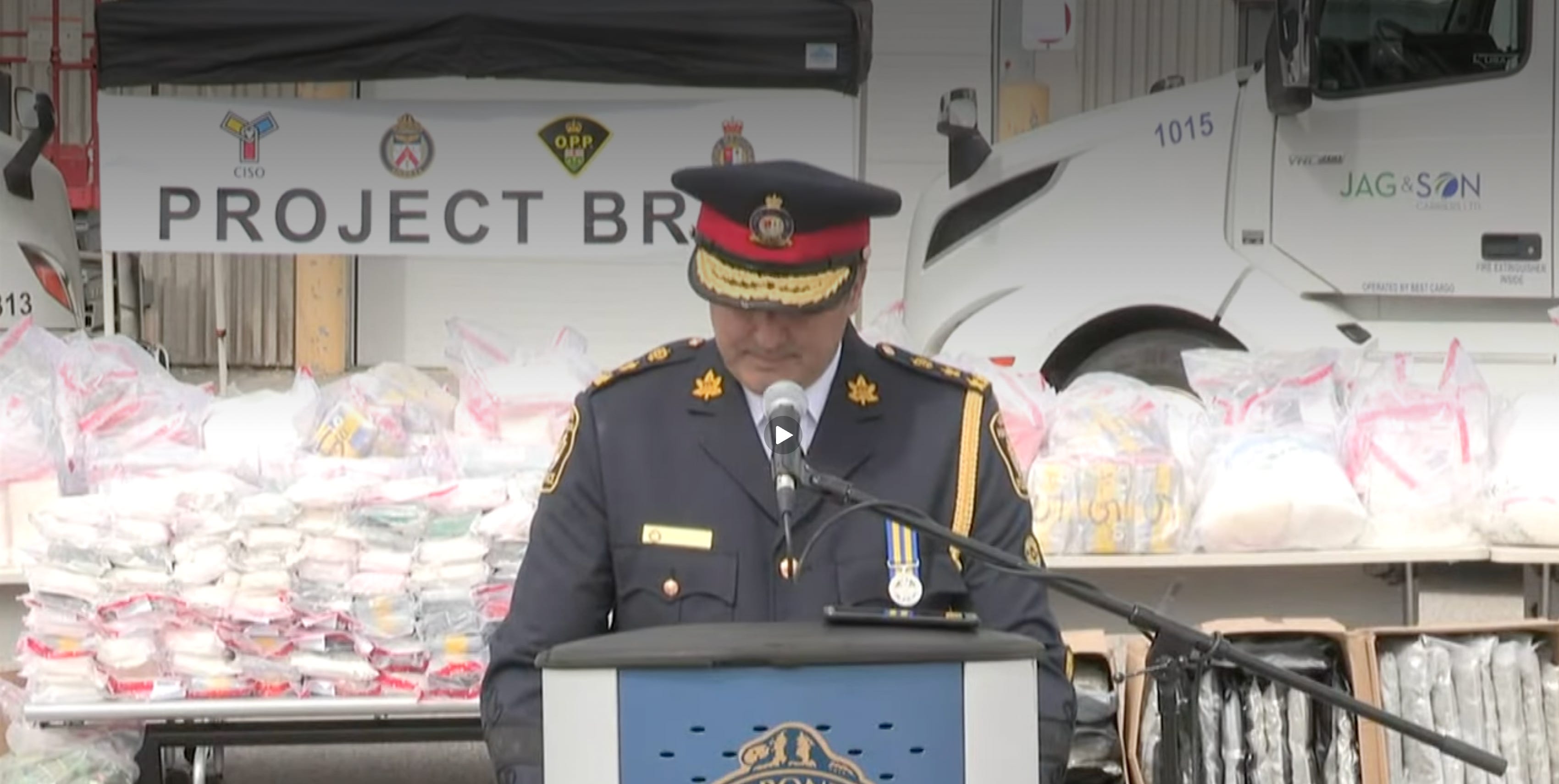
TORONTO — Citing newly unsealed police warrant documents, CBC News has added significant new details to the profile of the accused Ryan Wedding cartel member uncovered in York Regional Police’s explosive Project South investigation — which alleges that the suspect, Gurpreet Singh, was involved in a plot to assassinate a senior Ontario jail official. That alleged scheme, in The Bureau‘s analysis of the allegations, would have drawn on the same marketplace of teenage contract sicarios this publication has documented in the Greater Toronto Area.
CBC reporter Thomas Daigle has used newly unsealed 2024 police warrant filings to sketch Singh’s global criminal reach — and an eerie brush with Mexican cartel justice.
According to Ontario Superior Court records cited by CBC, Singh reported being kidnapped “and tied up” by Mexican cartel members during a visit to Sinaloa state in August 2024, purportedly over a $600,000 drug debt — a potentially lethal episode that Wedding himself claimed he had to personally intervene in to secure Singh’s release.
The newly unsealed documents illuminate the pressure behind that abduction, as the FBI closed in on Wedding’s western hemisphere operations, and as a senior U.S. source has told The Bureau, bodies started to drop across Ontario. Earlier that year, a confidential informant for the FBI reported Singh was under “a lot of pressure ‘from Mexicans’ to pay off his outstanding debts for cocaine loads they gave him in 2023.”
The documents — unproven allegations submitted to a Quebec judge in 2024, as the RCMP sought wiretap authorizations and permission to surreptitiously record a meeting — were ordered unsealed this month by Ontario Superior Court Justice Edward Morgan, following a disclosure request by the legal teams for Singh and his uncle and co-accused, Hardeep Ratte, as they fight extradition to Los Angeles. What they contain is the Canadian federal police’s own assessment of a man who, until his October 2024 arrest, moved through Brampton under the aliases “Popey” and “Farmer.”
Signed by RCMP Corporal Jonathan Hachey, the application alleges Singh is involved in “numerous” criminal activities and “knows all the major drug traffickers/transporters in Ontario and works with many groups” — including an unnamed “U.K. person … who is a very big player in the drug-smuggling business.” Singh, the RCMP alleges, is believed to have killed people.
The meeting the Mounties sought to record took place in February 2024 at a Brampton auto body shop. There, according to United States prosecutors, Singh and Ratte sat down with a Montreal-born Canadian-Colombian drug trafficker to discuss moving truckloads of cocaine on behalf of Wedding’s network — not knowing the man was an FBI informant wearing a recording device supplied by the RCMP.
The informant was Jonathan Acebedo-Garcia, a convicted Quebec fentanyl trafficker caught running synthetic narcotics across First Nations lands into New York state, as The Bureau has reported, who was later shot dead in Colombia — the assassination of a federal witness that sits at the center of the murder allegations against Wedding’s organization.
Justice Morgan ruled this month that the defense teams should receive a copy of the video recording, but declined to release it publicly.
The American indictment gives the business model a price: Singh and Ratte, it alleges, coordinated drug shipments to Canada for a flat rate of $220,000 Canadian per transport truckload. Both men were arrested in the Toronto area in October 2024 as the Department of Justice unsealed the first indictment against Wedding’s network, both were charged with drug-trafficking conspiracy, and both remain detained in Toronto as U.S. prosecutors demand their surrender to Los Angeles.
Then there is Dubai. When Singh sought bail early last year, Los Angeles-based prosecutors warned the Ontario Superior Court of Justice that he “presents a substantial risk of flight” — and laid out why. Singh, they alleged, was involved in a scheme to ship stolen high-end cars through the Port of Montreal to Dubai, and holds “extensive organized crime connection within Dubai,” including with members of the Kinahan organized crime group — the Irish mafia network, headquartered in the emirate, that United States sanctions and international law enforcement have identified among the most significant trafficking and money laundering organizations in the world.
The Kinahan group is a name The Bureau‘s readers will recognize.
In July 2025, this publication reported on the DEA sting that took down Opinder Singh Sian, a senior Indo-Canadian gangster and reported prominent member of British Columbia’s Brothers Keepers gang — a key Sinaloa Cartel proxy in Canada — who told an undercover DEA source known as “Queen” that he worked closely with Irish organized crime, specifically the Kinahan family, alongside Mexican and South American cartel suppliers and a Turkish kingpin.
The same probe captured alleged Chinese narco, Peter Peng Zhou, promising at a Vancouver coffee shop to ship 100 kilograms of fentanyl precursor chemicals per month from Vancouver to Los Angeles using his British Columbia trucking company fronted by an Indo-Canadian associate — the seamless pipeline of Chinese chemical supply, Indo-Canadian trucking logistics, cartel distribution, and Kinahan-linked brokerage that defines the ecosystem in which Singh allegedly operated on the eastern end of the country.
That convergence is the significance of the file, in The Bureau‘s assessment. A Brampton-born trucking broker, allegedly brokering for a Sinaloa-supplied network, held hostage in Mexico, connected into Dubai’s apex syndicate, moving stolen vehicles out through Montreal’s port and cocaine in through the trucking corridor — and, once jailed, investigated for allegedly seeking to eliminate an official who was reportedly too good at his job: blocking contraband from entering the jail.
The picture the documents paint, as Ontario court procedures inch forward, is one of mafia saturation and violence.
Canada is functioning the way Dubai functions: a platform jurisdiction where the world's highest-level criminal networks base logistics, bank proceeds, erect corporate structures, control ports, penetrate government and legal institutions, and resolve their disputes. The core allegations of Project South, after all, are that Toronto police officers not only served a trafficker's organization — with some alleged to have participated in significant drug trafficking themselves — but that some aided in a plot to assassinate a jail official whose offense was doing his job.
Dubai, at least, knows what it is. Canada has yet to acknowledge what it’s turning into.
The Project South probe remains the sharpest illustration.
As CBC and The Bureau have reported, search warrant documents from the York Regional Police corruption probe reveal that investigators examined whether Singh and a personal acquaintance — a guard at the Toronto South Detention Centre, where he is held — were involved in an apparent assassination plot targeting a senior official at the jail. That alleged murder attempt last year set off the sweeping Project South investigation itself. Neither Singh nor the guard has been charged in connection with Project South. Singh’s lawyer, Brian Greenspan, has previously said that the fact his client has not been charged with any offense in Canada more than four months after the warrants were executed “is the clearest response to the allegations in the information to obtain.”
The Bureau‘s assessment offers a respectful counter to Mr. Greenspan’s argument.
Repeatedly, The Bureau has reported that senior law enforcement experts in Canada point to Canada’s lack of an anti-racketeering law — the very statute now cited by British Columbia’s civil forfeiture director in actions targeting the same Indo-Canadian alleged cartel shipping networks in Vancouver-area cases tied to the FBI’s Operation Hard Ball. The absence of charges in Canada, in other words, may say less about the strength of the allegations than about the reach of Canadian law.
Similarly, The Bureau has reported that Canada’s Stinchcombe and Jordan rulings — the disclosure and trial-delay regimes that govern complex prosecutions — have become unintended impediments to numerous priority cases against the Indo-Canadian cartel trucking networks tied to Ryan Wedding’s organization, from Project Brisa in the same Toronto region to Project Cobra in Calgary.
The wiretap application’s allegations were submitted to obtain judicial authorizations and have not been tested in court; the American charges against Singh, Ratte, and Wedding are allegations, and all are presumed innocent.


And the hangman’s rope tightens around Canada’s neck.
My question Sam, is what kind of country do we exist in. Is it basically a global “ market hub” for a very effective well executed(pun intended) massive organization of drug manufacturing, distribution and monetary distribution.
No Ricoh laws. No well defined judicial policies. No vetting across the board in the justice system. A boarder free policy with no foreign registry in place.
Canada is a veritable playground for every and all illicit individuals and organizations.
Are we not suppose to coordinate with other likeminded (whatever that moniker means now) countries, with respect to security and various aspects of law enforcement.
Freedom apparently only applies to the criminal element.
Protection of Canada and Canadians is of a much lesser concern…if at all.
Why is this being allowed to happen on such a massive unobstructed scale? !