Brampton man pleads guilty to leading narco trucking scheme used by Ryan Wedding to flood Ontario with cocaine and methamphetamine
LOS ANGELES — A Brampton man who served as the leader of an Indo-Canadian trucking network at the heart of Ryan Wedding’s narco empire pleaded guilty this week in federal court to running a continuing criminal enterprise — a charge that carries a mandatory minimum of 20 years in federal prison.
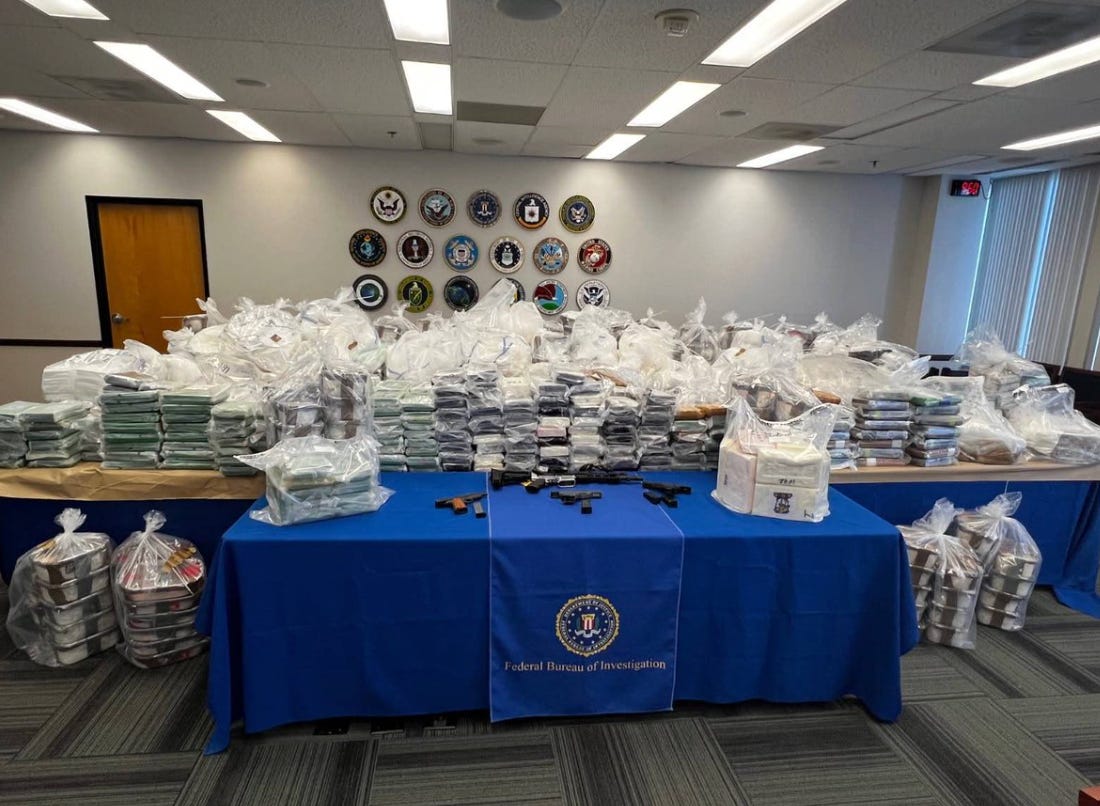
Guramrit Sidhu, 62, whose alias is “King,” admitted in a Los Angeles courtroom that he orchestrated eight separate drug loads over roughly six weeks in the fall of 2022, directing the shipment of approximately 523 kilograms of methamphetamine and 347 kilograms of cocaine — narcotics with an estimated wholesale value of between $15 million and $17 million — before law enforcement seized the shipments.
The plea marks a significant moment in a 23-count federal indictment handed down in January 2024 that targeted Sidhu’s organization, a prosecution that emerged from a cross-border operation dubbed Operation Dead Hand. Nineteen people were charged across two American federal indictments for their alleged roles in the syndicate, including Roberto Scoppa, a Montreal man alleged by authorities to be a large-scale Canadian trafficker and Italian Mafia figure.
“This conspiracy spanned three countries and involved drug suppliers connected to cartels in Mexico, drug distributors and brokers in Los Angeles, Canadian truck drivers and a network that exported drugs into Canada, and even an associate of the Italian Mafia in Montreal,” United States Attorney Martin Estrada said at a news conference in Los Angeles.
Estrada said one of the indictments alleges Sidhu purchased kilograms of methamphetamine from suppliers in Mexico and Los Angeles. “He then operated a network of truck drivers. They would use long-haul semi-trucks to move those drugs up through the United States and into Canada,” Estrada said.
Sidhu was extradited from Canada in October 2024 after being taken into custody, and is now the seventh defendant to resolve charges in the case.
According to court documents, Sidhu’s operation ran from September 2020 through February 2023. He purchased cocaine and methamphetamine in bulk in the United States, then arranged for the narcotics to be transported north into Canada concealed in long-haul semi-trucks. The transportation was coordinated by a network of drivers working with dozens of trucking companies who made numerous border crossings from the United States into Canada via the Detroit-Windsor Tunnel, the Buffalo Peace Bridge, and the Blue Water Bridge. Sidhu provided couriers with telephone numbers and serial numbers from bills of currency — used as tokens of identification during handoffs — before co-conspirators retrieved the shipments at Canadian locations for onward distribution.
Other defendants in the case have already received sentences ranging from 27 months to 108 months.
The Sidhu case fits a pattern The Bureau has documented across multiple investigations: Indo-Canadian organized crime networks serving as a critical logistics layer for Mexican cartels moving narcotics through the United States and into Ontario.
According to reporting published Thursday by Los Angeles Magazine, Sidhu was the leader of the Indo-Canadian trucking network at the heart of Wedding’s narco empire, moving cocaine and fentanyl from Los Angeles into Canada. His guilty plea marks the fall of yet another high-ranking member of what prosecutors describe as Wedding’s sprawling transnational criminal organization.
That organization — the subject of a sweeping American federal prosecution known as Operation Giant Slalom — has been described by the Federal Bureau of Investigation as the largest cocaine supplier to Canada in modern times. Wedding and his alleged second-in-command Andrew Clark, both Canadians, were charged in a superseding indictment unsealed in October 2024, accused of conspiring to ship hundreds of kilograms of cocaine from Southern California to Canada through an Ontario-based transportation network that relied on long-haul semi-trucks as its primary smuggling vehicle. The total number of people arrested and indicted in connection with Wedding has reached 36, with defendants drawn from Ontario, Quebec, and Alberta. Wedding was arrested in Mexico City in January 2026 and has pleaded not guilty.
The Ontario dimension of that investigation took on new urgency in June 2025, when Peel Regional Police announced what they described as the largest cocaine seizure in their agency’s history. Officers seized 479 kilograms of cocaine with an estimated street value of nearly $48 million, along with two loaded handguns. Nine men were arrested and charged with 35 combined counts related to drugs and firearms in an investigation dubbed Project Pelican — with the Drug Enforcement Administration and Homeland Security Investigations both involved, and investigators working to trace the supply chain back to its American origins. At the time, Peel Deputy Chief Nick Milinovich said it was “very likely” the Wedding network remained active in the region west of Toronto.
As The Bureau has previously reported, Brian Da Costa — the central narco-trafficking suspect in an explosive Toronto police corruption case that allegedly enlisted serving officers to traffic drugs and to help target a jail official for murder — has been connected to Gurpreet Singh, another Indo-Canadian figure that American prosecutors describe as a key cross-border smuggler in the Wedding trucking network. Singh is a separate individual from Sidhu, but alleged by prosecutors to have played a parallel role — running cocaine shipments into Canada for Wedding by the same long-haul semi-truck method. The connection between Da Costa and Singh appears on a bail no-contact list, drawing the clearest line yet between the highest-profile police corruption scandal in modern Canadian history and the networks of Wedding, and by extension the Sinaloa and Jalisco cartels.
A review of the first indictment against Wedding shows that Singh, Wedding’s co-accused, was part of a tight circle of cartel operatives communicating over encrypted channels — a command layer that included Jonathan Acevedo-García, the American federal witness later allegedly executed on Wedding’s orders. Deepak Paradkar was also allegedly part of that circle, and is now charged in the second American indictment with counselling the murder of Acevedo-García, facilitating bribery, and penetrating Canadian police systems on the cartel’s behalf.
Sidhu’s guilty plea now places a named, convicted figure at the operational center of that network — the man prosecutors say ran the trucks.


