Border Whistleblower's Warnings Unexamined Because Canada Never Activated Watchdog Approved By Parliament
“The oversight agency exists only on paper and has no operational authority,” legal report finds.
OTTAWA — A new report from a prominent Ottawa attorney has concluded that Luc Sabourin — the Canadian border intelligence whistleblower who says he was threatened at his Gatineau home by a Sinaloa cartel-linked gangster and later pressured out of his career after refusing an order to destroy roughly 1,000 foreign passports — faced “a pattern of workplace conflict and retaliation.” And his case remains unresolved, the report finds, for a reason that should alarm every Canadian: the independent oversight body Parliament created in 2024 to investigate exactly such allegations has still not been brought into force.
The report, prepared by Ottawa lawyer Brian Doody, was commissioned for Sabourin on the recommendation of Pamela Forward, president of the Whistleblowing Canada Research Society.
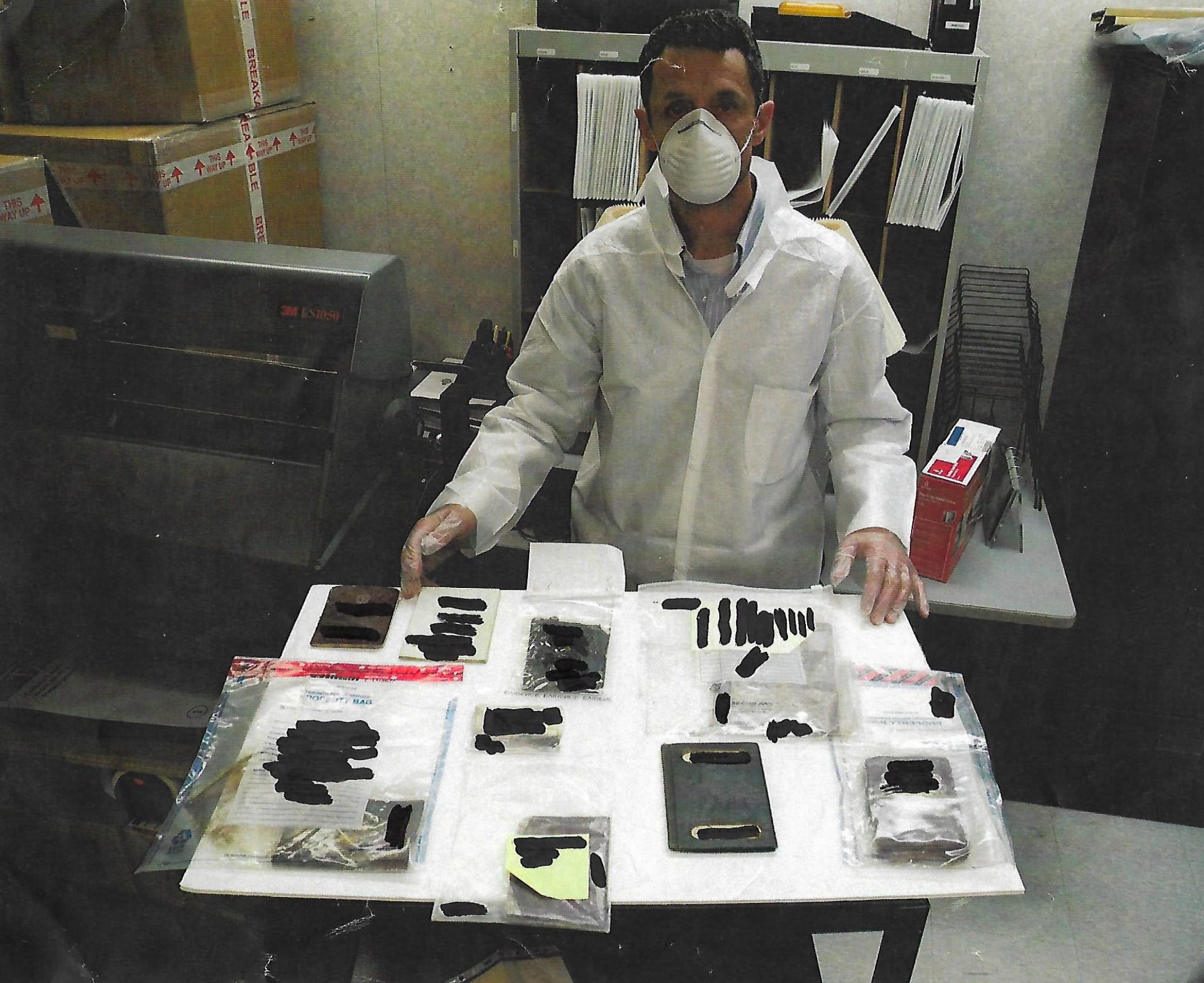
After reviewing several hundred pages of documentation — access to information extracts, internal agency records, union correspondence, medical files, and photographs relating to what the report describes as “alleged improper handling of foreign passports” — Doody concludes that Sabourin “consistently attempted to report concerns through internal and external channels,” and that no mechanism exists in Canada capable of independently reviewing what he reported.
“No independent investigation reports were found,” the analysis states, “suggesting that CBSA did not conduct — or did not disclose — any comprehensive review of the allegations.”
This is a border agency that, as The Bureau has separately reported, warned Canada’s public safety minister in 2019 of growing evidence that transnational criminal organizations were seeking to exploit its systems, processes and personnel.
The absence of oversight, Doody’s report finds, “is not merely a procedural delay — it is the central reason why [Sabourin’s] allegations remain unresolved and why similar issues may persist undetected within the CBSA.”
“Misuse of federal enforcement resources is not a historical concern,” the report concludes. “It is a present-day risk to border integrity, national security, and public trust.”
“What the facts reveal in the legal analysis of the Sabourin report is that at least six agencies or parts of government failed to not only fulfil their responsibilities — obligation to act — but also their obligation to account for how they fulfilled that obligation,” said Pamela Forward.
“Worse — what emerges is a picture of a system set up to facilitate the evasion of adequate acting and answering,” she added.
At the center of the report is a legislative failure that Doody calls “highly unusual.”
In 2024, Parliament passed the Public Complaints and Review Commission Act, which received Royal Assent on October 31 of that year. The law creates, for the first time, an independent review body with jurisdiction over the Canada Border Services Agency — an agency that, uniquely among Canada’s major security institutions, has operated for two decades with no external watchdog.
But the government has never proclaimed the law into force.
“The oversight agency exists only on paper and has no operational authority,” the report finds. “No Commission has been established, no members have been appointed, and no operational framework exists. The legislation remains dormant.”
The consequence, Doody writes, is that “Parliament’s work is effectively suspended, as legislation passed by elected representatives remains dormant” — and that allegations like Sabourin’s, involving what the report describes as potential “compromise of CBSA’s security mission,” cannot be reviewed outside the agency’s own internal processes.
The report also documents, for the first time in a formal legal analysis, the personal cost of Sabourin’s disclosures.
Drawing on a formal notice Sabourin sent to the national president of the Public Service Alliance of Canada on January 30, 2022, Doody records Sabourin’s account of a “malicious and frivolous harassment campaign by the employer CBSA HQ,” and his statement that management threatened to “take away my pension of the last 31 years if I spoke to the members of parliament or the media.”
The next day, January 31, 2022, Sabourin was — in his words, quoted in the report — “forced under duress to take medical retirement.”
After 31 years of federal service, including years handling top-secret records for Canada’s National Defence intelligence apparatus before joining the border agency, he now lives on a reduced pension. His union, the report finds, left his many requests for assistance “either denied or ignored or answered partially with no concrete demonstrated actions.”
The report recommends that Sabourin’s pension and the circumstances of his medical retirement be independently reviewed, and that the oversight commission, once operational, examine the allegations involving “improper handling of foreign passports, creation of false documents, and potential compromise of CBSA’s operational mission.”
“Canada cannot claim to value integrity and accountability while allowing whistleblowers to face financial ruin, professional destruction, and personal persecution for exposing wrongdoing in the public interest,” said Garry Clement, a spokesperson for Whistleblowing Canada and a former senior Mountie and anti-money laundering expert who is also a contributor to The Bureau.
“Strong whistleblower protection legislation is essential to ensure that individuals like Luc Sabourin are shielded from retaliation, intimidation, and career-ending reprisals when they courageously reveal misconduct. Without robust legal safeguards, corruption, abuse of power, and threats to national security remain hidden because those who know the truth are silenced by fear.”
For readers of The Bureau, Sabourin’s allegations will be familiar.
As this outlet first reported in August 2024, Sabourin and a colleague, Shannon Stinner, say a senior manager in their secure unit ordered the destruction of approximately 1,000 foreign passports in 2015, and that false entries were recorded in the international database Canada shares with its allies stating that the documents had been returned to their issuing embassies.
A junior employee began the shredding, they allege.
Roughly three hundred passports were destroyed before Sabourin intervened and photographed what remained, he says. From recovered documents, he verified that some belonged to people with active deportation orders, and suspected serious criminality.
“This mass shredding would have assisted countless wanted criminals by destroying intelligence and evidence against them,” Sabourin told The Bureau. The order, he said, was unprecedented in his experience.
“I don’t know the general intent, but it would definitely have assisted either organized crime or individuals that are involved in criminality or foreign actors. Because, like I explained to the members of Parliament in my testimony, those were people that were wanted by CBSA. We didn’t know their whereabouts in Canada. And the order was totally against every rule and policies that we had in place. I had never seen this in eight years doing that work. It was urgent. We were told that this needed to be done, now.”
The shredding was not an isolated episode, according to Sabourin’s account. Over roughly a decade in his secure unit, he described batches of critical international passport data going missing, records altered or destroyed, and a co-worker — a person he suspected of links to organized crime — seen entering cubicles without justification.
“On each occasion items of operational value were damaged or sabotaged, passports under investigative process or for enforcement went missing,” he told The Bureau. “And some were never to be recovered.”
He also described a unit report of armed men in combat fatigues apparently smuggling migrants across Quebec’s border — and what happened when he asked why provincial police and the national force had not been told. “I asked within the agency via email if there was any reason why the Quebec Provincial Police and the RCMP were not notified about this,” he said. “An hour later, the email disappeared from the generic mailbox and never reached top management.”
In a sworn statement submitted to members of Parliament in November 2024, and reported by The Bureau that December, Sabourin went further, linking the failures he witnessed in CBSA to a theft of more than 300,000 travel documents — including more than 283,000 blank passports ready for personalization — between May 2014 and March 2015.
Sabourin warned that the breaches likely facilitated illicit entry into both Canada and the United States by networks tied to Mexican and Iranian cartels, an issue of present concern to the Trump administration.
“I sincerely believe that today’s issues at the Canadian border — U.S. Border Patrol has stopped 358 suspects on the terror watchlist from Canada — that are being raised by Members of Parliament are possibly related to the events that I am describing below,” his statement read.
The border agency has denied wrongdoing. “Allegations made by Mr. Sabourin with regards to the destruction of passports have been thoroughly investigated by impartial persons who have all concluded that no inappropriate destruction occurred,” a spokeswoman told The Bureau in 2024. “It is legal and necessary to destroy identity documents, and there are procedures to guide this. There is no evidence that these procedures were not followed.”
Doody’s finding — that no comprehensive independent investigation report exists in any public record — now stands against that assurance.
And Sabourin himself, years before the attorney’s review, told The Bureau precisely how that gap operates in practice. “The system in place, the Public Service Disclosure Protection Act, and the internal disclosure process, are being weaponized by the people in positions of authority in government departments and agencies,” he said. “People are in damage control mode, using this to identify what they refer to as ‘problem’ employees, who are actually loyal.”
As The Bureau has reported, the agency’s own 2019 threat brief, prepared for then-Public Safety Minister Bill Blair, warned of “growing evidence of transnational criminal organizations seeking to exploit CBSA systems, processes and personnel and employing increasingly sophisticated concealment methods” — the same systems, processes and personnel Sabourin had been raising alarms about from inside.
“The public don’t understand the jeopardy our country is being placed in by the potential entry of bad actors due to the wrongdoing and inaction of responsible authorities, including Parliament,” Sabourin told The Bureau.
Jennifer Fraser, PhD, vice-president of the Whistleblowing Canada Research Society, said Sabourin’s experience strongly resonated with her own case as a whistleblower in British Columbia’s education system.
Fraser went public in 2015 with allegations that a private school, enabled by failures of the Commissioner for Teacher Regulation, had covered up psychological and some physical abuse of students. Fourteen students provided testimony concerning conduct spanning about five years, and the case was subsequently examined by the Toronto Star and CTV’s W5.
“Luc Sabourin’s speaking up about dangerous, corrupt conduct, only to be maltreated, threatened, retaliated against, felt painfully familiar. His finances are being eroded,” Fraser said. “My finances are being eroded. His children are threatened. My children are threatened. Canada is on a slippery slope where the electorate cannot trust our institutions. The abject failure of lawmakers to protect whistleblowers has led us to this vulnerability as a nation.”