


WASHINGTON — In the aftershock of the Trump administration’s special-forces extraction of Venezuelan President Nicolás Maduro, a new report from the Heritage Foundation advances a sweeping, Cold War–inflected thesis: that the real command post for much of Latin America’s authoritarian drift — and a significant driver of American street unrest since 2020 — is Havana.
Its most incendiary claim is also, arguably, the one most relevant to a Trump administration now tightening its focus on leftist heads of state from Mexico City to Bogotá: that Cuba’s communist regime, working through Venezuela and allied networks across Latin America, has sought to weaponize narcotics trafficking while also stoking social unrest inside the United States.
“Venezuela is rightly getting all the attention after the arrest of dictator Nicolas Maduro, but it is important to bear in mind that Cuba’s communist regime is the mastermind of Caracas’s plan to destabilize U.S. streets through narco-trafficking and political unrest,” Heritage senior fellow Mike Gonzalez writes, citing letters from two senior Venezuelan figures now imprisoned in the United States for their roles in “a narco-terrorism conspiracy,” who both portrayed the enterprise as part of a Cuban effort “to dismantle the moral fiber of America from within.”
In Gonzalez’s telling, the allegation is substantiated — though he is drawing heavily on witnesses whose motives, perhaps including bids for clemency, critics could question.
Hugo “El Pollo” Carvajal, a former Venezuelan intelligence chief, and Cliver Alcalá Cordones, a former senior Venezuelan military officer, both separately wrote to President Donald Trump, according to the Heritage report, accusing Cuba’s regime of masterminding narco and political conspiracies emanating from Venezuela.
The conspiracy, wrote Carvajal, “was suggested by the Cuban regime to Chávez in the mid-2000s,” and was “successfully executed with help from FARC, ELN [both Colombian guerilla groups cited in the DOJ’s indictment of Maduro), Cuban operatives, and Hezbollah.”
Gonzalez casts Cuba’s intelligence services as the hemisphere’s enduring “revolutionary operator”: training guerrillas, embedding security cadres inside allied states, and building political infrastructure designed to outlive the era of jungle insurgencies.
Venezuela under Hugo Chávez and Maduro, he argues, became Cuba’s richest proxy — financing Havana with oil, exporting the revolution’s methods, and, serving as a staging ground for narcotics and leftist terror networks that United States officials have cast as direct threats.
Moving to an element that many readers may find as implausible as any narco-conspiracy claim — and backing his argument with intelligence records and open-source material — Gonzalez writes that, “From training Marxist terrorists in the 1960s, to the pro-Hamas mayhem at U.S. universities in 2024 and 2025, to the spread of transnational crime syndicates in U.S. cities, Cuba’s rulers have long plotted America’s demise.”
Heritage can be viewed as an ideologically driven, controversial, strongly conservative-leaning institution, but its work can also carry added signaling value in a Trump-era Washington because it often functions as a personnel and policy pipeline.
CIA Director John Ratcliffe has had ties to Heritage and helped shape Project 2025-era thinking on intelligence reform—linking the report’s framing to currents inside the administration itself.
Heritage’s new Cuban influence report is framed as a 60-year flow chart, structured around a turning point in Havana’s own revolutionary mythology: the Tricontinental Conference.
In 1966, Fidel Castro convened revolutionary movements, party cadres, and aligned delegations from Africa, Asia, and Latin America in Cuba to coordinate what the regime cast as a global campaign against “Yanki imperialism” — and what Gonzalez depicts as a blueprint for exporting upheaval through training, financing, propaganda, and the patient building of transnational networks.
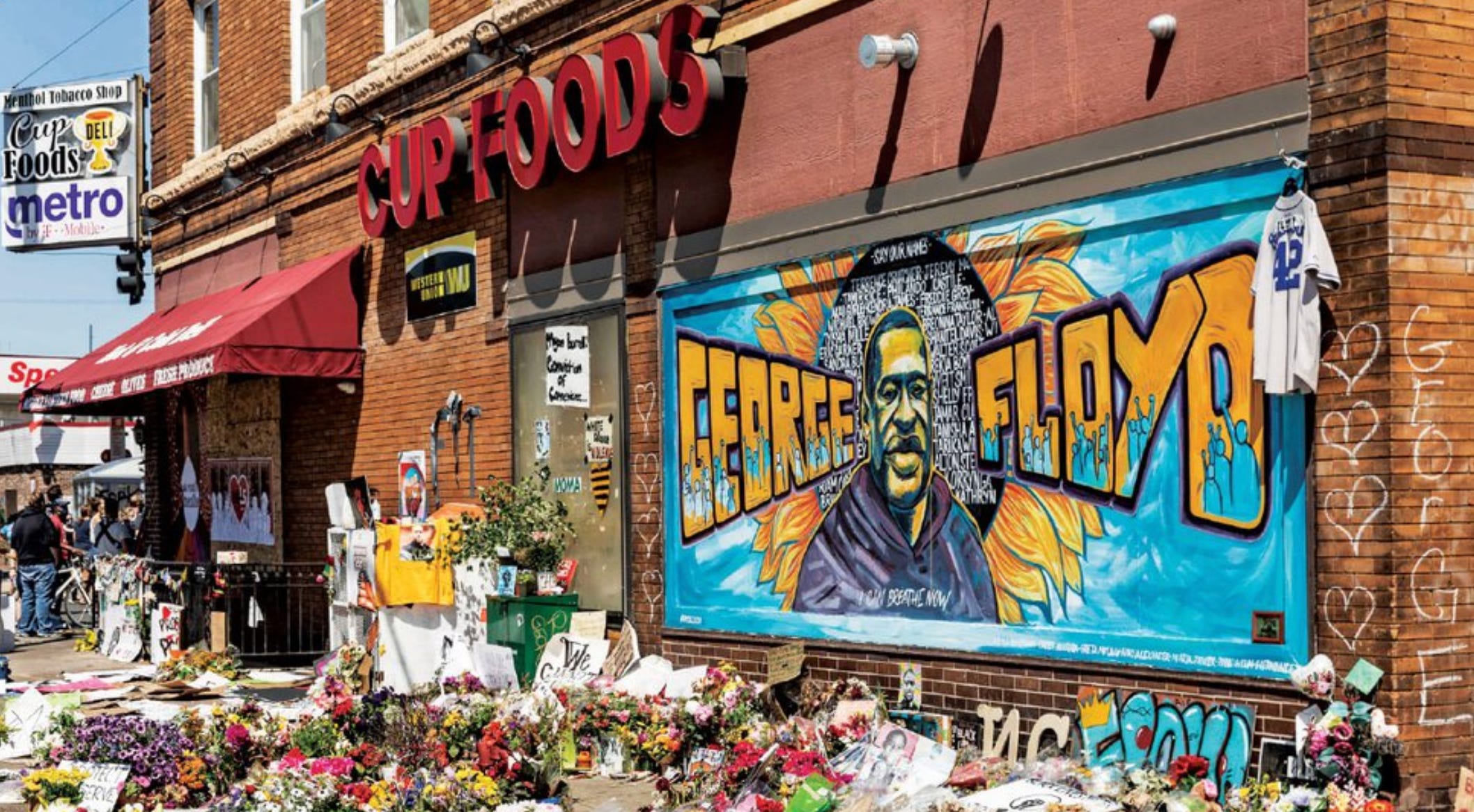
Most readers will seize on the report’s most recent — and most incendiary — contention: that Black Lives Matter and other leftist social-justice groups did not merely ride the wave of outrage after George Floyd died in May 2020, during a police arrest in Minneapolis, but helped accelerate and channel it in ways that, in Heritage’s telling, served a longer-running Cuban strategy of political destabilization.
To support that framing, the report points to what it describes as coordination across the Western Hemisphere — Chile, the United States, and Colombia — from 2019 to 2021.
It contends there is “much evidence of Cuba and Venezuela attempting to destabilize the United States and its allies in the Americas,” and coordinating those efforts through the Foro de São Paulo (the São Paulo Forum), which Heritage depicts as a Marxist convening infrastructure that reactivated in 2019, including a New York gathering attended by aligned activists and representatives of leftist political parties across Latin America.
“From that point on,” Gonzalez writes, countries in the Western Hemisphere “suddenly started experiencing street riots that led to political change.”
Chile and Colombia saw major protests in 2019; protests in Colombia were “repeated and magnified” in 2021. Both, the report says, contributed to electoral outcomes — with the election of Gabriel Boric in Chile and Gustavo Petro in Colombia.
In the United States, Gonzalez writes, the George Floyd riots in 2020 “almost came close to leading to societal overhaul.” He adds that, aside from what he describes as the long-standing relationship between BLM and Maduro — and between BLM and Bolivia’s Evo Morales — Black Lives Matter has “taken parts in Foro conferences,” including one in the Washington, D.C., area on July 17, 2017, where one of the stated goals was to create “strategic links” with groups inside the United States.