China’s Long Arm Is Reaching into Canada, And Ottawa Isn’t Ready
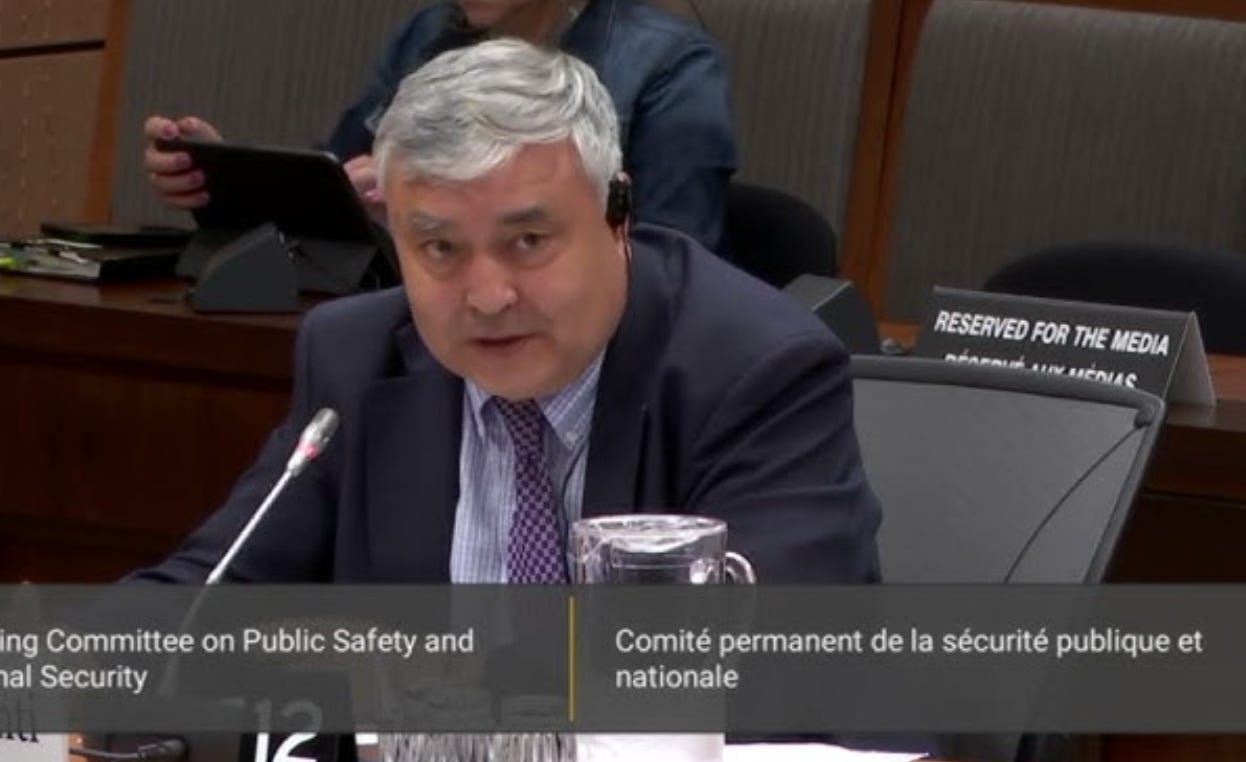
Mehmet Tohti has already been sanctioned by Beijing. Its new "ethnic unity" law makes it easier for the CCP to reach into states that cooperate with Chinese security agencies.
By Mehmet Tohti
OTTAWA — China’s new Ethnic Unity Law should not be viewed in isolation, nor should it be dismissed as inapplicable to foreign nationals or Canadians. It is the latest addition to an increasingly sophisticated legal architecture through which Beijing seeks to extend its political authority beyond its borders. Officially titled the Law of the People’s Republic of China on Promoting Ethnic Unity and Progress, the legislation was adopted by the National People’s Congress in March 2026 and entered into force on July 1, 2026.
Article 63 provides that “organizations and individuals outside the People’s Republic of China who commit acts targeting the People’s Republic of China that undermine ethnic unity and progress or create ethnic division shall be held legally accountable in accordance with the law.” Just a sweeping claim of jurisdiction over anyone, anywhere on the planet, with no nationality requirement or geographic limitation.
This law does not stand alone. Over the past several years, Beijing has enacted a series of laws with explicit or practical extraterritorial reach, including the Hong Kong National Security Law, Article 38 expressly applies to offenses committed outside Hong Kong by non-residents; the Anti-Foreign Sanctions Law; the amended Anti-Espionage Law; the Law of the People’s Republic of China on Promoting Ethnic Unity and Progress; and, most recently, State Council Decrees No. 834 and No. 835.
Decree 834, which took effect on March 31, 2026, authorizes Chinese authorities to investigate conduct deemed to threaten China’s supply chain security and to impose corresponding measures on foreign individuals and organizations. Decree 835, effective April 7, 2026, establishes mechanisms to respond to what China considers the improper extraterritorial application of foreign laws, including countermeasures against foreign persons and entities under China’s broader legal framework.
Taken together, these measures reflect an increasingly integrated legal architecture with expanding extraterritorial reach, thereby extending China’s ability to respond to perceived threats beyond its borders. Article 63 of the Ethnic Unity Law marks a notable evolution by expressly extending that jurisdictional logic beyond commercial and state-to-state disputes to organizations and individuals accused of undermining “ethnic unity and progress.”
The targets are not criminals or violent extremists. They are often people exercising rights that Canadians take for granted, including human rights defenders documenting abuses, Uyghur, Tibetan, and Hong Kong advocates speaking publicly about their communities, academics publishing independent research, journalists exposing state misconduct, lawyers representing victims, parliamentarians engaging with diaspora groups, and non-governmental organization (NGO) leaders advocating for accountability.
This is not a hypothetical concern for me.
On December 21, 2024, Beijing’s Ministry of Foreign Affairs invoked Decree No. 15 under the Anti-Foreign Sanctions Law to sanction two Canadian human rights organizations, the Uyghur Rights Advocacy Project (URAP) and the Canada Tibet Committee, and 20 individuals connected to them, myself included, as URAP’s executive director.
Our offense was documenting Beijing’s ongoing atrocity crimes targeting Uyghurs and Tibetans and pressing Canadian officials to respond. The sanctions froze any assets we might hold in China, barred us from entering China, including Hong Kong and Macau, and prohibited anyone in China from doing business with our organizations or us. I hold no property in China and have no wish to visit, so the practical effect on me personally was limited. But the message was unmistakable: Beijing considers ordinary human rights advocacy, conducted entirely within Canada, well within the rights and limits of Canadian law and norms, a punishable offense against the Chinese state, and it uses its own domestic law to say so.
What has changed since then is not Beijing’s hostility toward people like me. What has changed is the legal architecture behind it and the speed at which it is being built. In eighteen months, Beijing has moved from punishing individual advocates through sanctions decrees to constructing a comprehensive statutory framework that claims jurisdiction over what Canadians say, publish, and organize while standing entirely on Canadian soil. The sanctions against my colleagues and me in December 2024 were a warning.
Consider the sequence of events. Decree 15 under the Anti-Foreign Sanctions Law was a discretionary, case-by-case instrument. Beijing selected specific individuals and organizations for retaliation, largely in response to Canadian parliamentary motions and to Magnitsky-style sanctions against Chinese officials implicated in atrocities committed against Uyghurs in China’s Uyghur region.
What has emerged since is categorically different.
Through 2025 and into 2026, Beijing issued State Council Decrees No. 834 and No. 835, instruments explicitly designed to counter what China calls “improper extraterritorial jurisdiction.” In practice, a retaliatory framework aimed at Western forced-labor import bans, supply-chain due diligence laws such as Canada’s Bill C-35, and corporate accountability mechanisms that have made it costlier for multinational companies to sever ties with the Uyghur region. These decrees do not target activists directly; they target the compliance officers, auditors, and general counsel at companies who might otherwise act on the evidence that people like me spend our careers compiling. The effect is to make Western due diligence itself a liability under Chinese law.
As of July 1, 2026, Beijing has closed the loop with the Law on Promoting Ethnic Unity and Progress. This is a sweeping statute that, on its face, governs domestic ethnic policy in China. However, Article 63 contains an extraterritorial-liability provision explicitly extending Chinese legal jurisdiction to “organizations and individuals outside China” whose conduct is deemed to “undermine ethnic unity” or “incite ethnic separatism.” Chinese officials have been direct about what this means. Vice Justice Minister Hu Weilie told reporters in Beijing that the provision is “legitimate, lawful, necessary and feasible,” explicitly defending its reach beyond China’s borders. Human Rights Watch’s Yalkun Uluyol was also equally direct in naming it: “That is what you call transnational repression.”
Read together, the Anti-Foreign Sanctions Law, Decrees 834/835, and Article 63 of the Ethnic Unity Law form something Beijing has never possessed before. This is a complete, self-contained legal system asserting that Chinese domestic law applies to Uyghur, Tibetan, and other diaspora advocates wherever they go, and to the companies and institutions that work with us as well. What began as an ad hoc campaign of harassment now has statutory teeth. Armed with this new legal power, Beijing has moved from improvisation to legislation, flashing its teeth at anyone who dares criticize the regime.
Canadians must not mistake this for a distant problem or one confined to exiled activists in Ottawa and Toronto. The infrastructure to enforce this new legal framework on Canadian soil is already in place, and Canadian institutions have already documented it.
In 2022, Safeguard Defenders identified at least three so-called Chinese “overseas police stations” operating in the Greater Toronto Area, with additional sites investigated in Montreal, Brossard, and Vancouver. The Royal Canadian Mounted Police (RCMP) confirmed it was investigating criminal activity linked to these sites described by the Ministry of Public Security as service centers for the Chinese diaspora, but documented by human rights researchers and Western law enforcement as instruments used to pressure dissidents. This includes “persuasion to return” operations aimed at coercing individuals back to China to face prosecution. The RCMP has stated that it “continues to investigate the transnational repression activity” connected to the so-called Chinese overseas police stations and has confirmed that its national response has disrupted illegal activity in Ontario, Quebec, and British Columbia.
Canadians continue to be personally targeted. Conservative Member of Parliament Michael Chong’s family became the target of a Beijing-directed intimidation campaign after he sponsored and voted in 2021 to recognize China’s treatment of the Uyghurs as genocide. That has been confirmed by Canadian intelligence reporting.
During the 2025 federal election, Conservative candidate Joe Tay was also the subject of an active arrest warrant issued by the Hong Kong Police Force and a documented online repression campaign, prompting Canadian security officials to publicly confirm that a “repression operation” was underway against a candidate for federal office. A Liberal candidate withdrew from that same race after suggesting someone should collect the bounty Hong Kong had placed on Tay, an episode that speaks for itself about how normalized this kind of transnational pressure has become in Canadian public life.
Huseyin Celil, a Uyghur-Canadian citizen, has been denied consular access by China for two decades. Canada’s own 2024–25 Public Inquiry into Foreign Interference concluded, in plain terms, that China is “the most active perpetrator of state-based foreign interference targeting Canada’s democratic institutions.”
None of this required Article 63. Beijing was already operating this way in Canada under a patchwork of informal pressure, intelligence operations, and the sanctions decree that named me personally. What Article 63 adds is a formal domestic legal predicate for conduct which requires no legal justification at all. Now it has written one into law, and it has told the world, through its own vice justice minister, that it intends to use it.
Why this escalation matters for every Canadian, not just the diaspora? It would be a mistake to read this as a story about Uyghurs, Tibetans, or Hong Kongers policing their own communities from exile. The architecture Beijing has built is explicitly designed to reach beyond ethnicity and nationality, targeting anyone whose conduct it deems hostile.
Article 63’s language explicitly states: “organizations and individuals,” with no citizenship qualification. This sweeps in Canadian parliamentarians who vote on genocide motions, Canadian journalists who report on Uyghurs, Canadian academics who study China’s ethnic policy, Canadian companies conducting supply-chain audits under Bill C-35, and Canadian NGOs, like mine, that were already sanctioned under an earlier instrument for doing exactly the work Article 63 now criminalizes by statute. Amnesty International’s assessment is blunt: peaceful advocacy for minority rights in China, “by anyone and anywhere,” could be framed as undermining ethnic unity. There is no carve-out in the law for the fact that this advocacy is entirely lawful. Indeed, constitutionally protected, where it actually takes place.
This is the pattern that democratic states are only now beginning to name correctly. Authoritarian states are not simply violating the sovereignty of countries like Canada through espionage or covert influence operations, which is bad enough. They are attempting to establish a rival legal order that operates in parallel to Canadian law on Canadian territory, enforced not through Canadian courts but through visa denials, family intimidation in China, commercial pressure on Canadian businesses, and, as the overseas police station cases demonstrate, direct coercive contact with individuals inside Canada’s borders. Canada’s Public Inquiry into Foreign Interference has already established that this activity reaches into our elections. Article 63 poses the serious risk of now claiming legal authority over our courts, our parliament’s votes, our newsrooms, and our universities as well.
Canada is a particular, and frankly attractive, target for this kind of legal warfare, for reasons that are structural rather than accidental.
Unlike the United States, the United Kingdom, and Australia, Canada still lacks a functioning foreign agent registry with the enforcement authority to compel disclosure of Beijing-directed activity before it causes harm. The Foreign Influence Transparency Registry created under Bill C-70 remains in early implementation, and analysts have repeatedly identified the absence of a mature registry as a major impediment to countering overseas police stations and similar operations. Canada has extradition arrangements and practical law-enforcement relationships with jurisdictions that Beijing can lean on. Canada is home to large, established Uyghur, Tibetan, Hong Kong, and Falun Gong diaspora communities, who are precisely the “Five Poisons” that Chinese state security services have named as priority targets for overseas suppression. And Canada, unlike the United States, has so far treated confirmed instances of transnational repression as matters for quiet investigation rather than public deterrence. There have been no closures, no arrests, no expulsions of related diplomatic personnel, except for one, that have followed any of these confirmed cases to date.
Article 63 was written for exactly this environment. It need not be enforceable in a Canadian courtroom to do its work. Its function is to provide a legal veneer for Chinese officials, Chinese state media, nervous family members inside China, and diaspora Canadian community organizations that depend on maintaining relationships across the border. For pressure that used to look like naked intimidation, it can now be described as law enforcement. That distinction matters enormously for how effectively it will chill Canadian speech, research, journalism, and advocacy over the next several years.
What needs to happen? Canada’s response to this moment must move beyond well-intentioned expressions of concern; it demands concrete action. A law that formally claims jurisdiction over Canadian citizens for lawful conduct performed entirely inside Canada is a direct assault on Canadian sovereignty, and it should be treated by Ottawa with the same seriousness Canada has extended, rightly, to Russian and Iranian transnational repression campaigns.
At a minimum, that means full implementation and adequate resourcing of the Foreign Influence Transparency Registry with specific attention to entities connected to the United Front Work Department and the Ministry of Public Security. A public, not merely investigative, response to confirmed activity, such as the overseas police stations, including expulsions where warranted. Formal protection mechanisms for Canadians named or plausibly exposed under Article 63 and the broader architecture of Chinese extraterritorial law. Followed by a clear public statement from Global Affairs Canada that Article 63 has no force or legal effect in Canada. This can be accompanied by a coordinated diplomatic response with the United States, the European Union, the United Kingdom, and Australia, all of whom have already raised formal objections, to ensure Beijing pays a genuine diplomatic cost for asserting it.
I, with my other sanctioned colleagues, have lived with China’s sanctions naming me personally for a year and a half now, and it has not silenced me, nor will Article 63 in that sense. But the calculation Beijing is making is not really about people like me, who made this choice with our eyes open. It is about the researcher who decides not to publish, the professor who quietly drops the Uyghur course, the company that shelves the supply-chain audit, and the young Uyghur-Canadian or Tibetan Canadian who stops calling relatives at home because a phone record might now carry statutory legal risk under a law passed nine thousand kilometers away. That is what a rival legal order arriving on Canadian soil actually looks like in practice. Transnational repression rarely announces itself with an arrest. Instead, it advances through a chilling effect, one decision not to speak at a time. Canada still has time to ensure that this strategy does not succeed.
Mehmet Tohti is the executive director of the Uyghur Rights Advocacy Project, based in Ottawa. A co-founder of the World Uyghur Congress, where he twice served as vice-president, he was born in Kashgar and taught biology at Kashgar University before leaving his homeland. He led the campaign that resulted in the Canadian House of Commons voting in February 2021 to recognize China's treatment of the Uyghurs as genocide, and in March 2025 he received the King Charles III Coronation Medal for his human rights advocacy.


It's good that there are brave individuals who stand up for human rights against Chinese government (CCP) repression.
Third World War will start when the Liberals really open Canada up to the CCP and the US will Blow Hopefully the Shit out of them.
Solution get rid of them NOW (Liberals) vote in a Conservative Government and form a strong North American Alliance with the US. I'm 81 years old and have never seen so much corruption.