Canada’s Criminal-National Security Crisis Has Claimed a Police Officer, As Lethal Threats Multiply
Op-Ed: Canada owes Marc Pinizzotto and his family more than condolences. It owes them legal system reformatory actions.

By Garry Clement
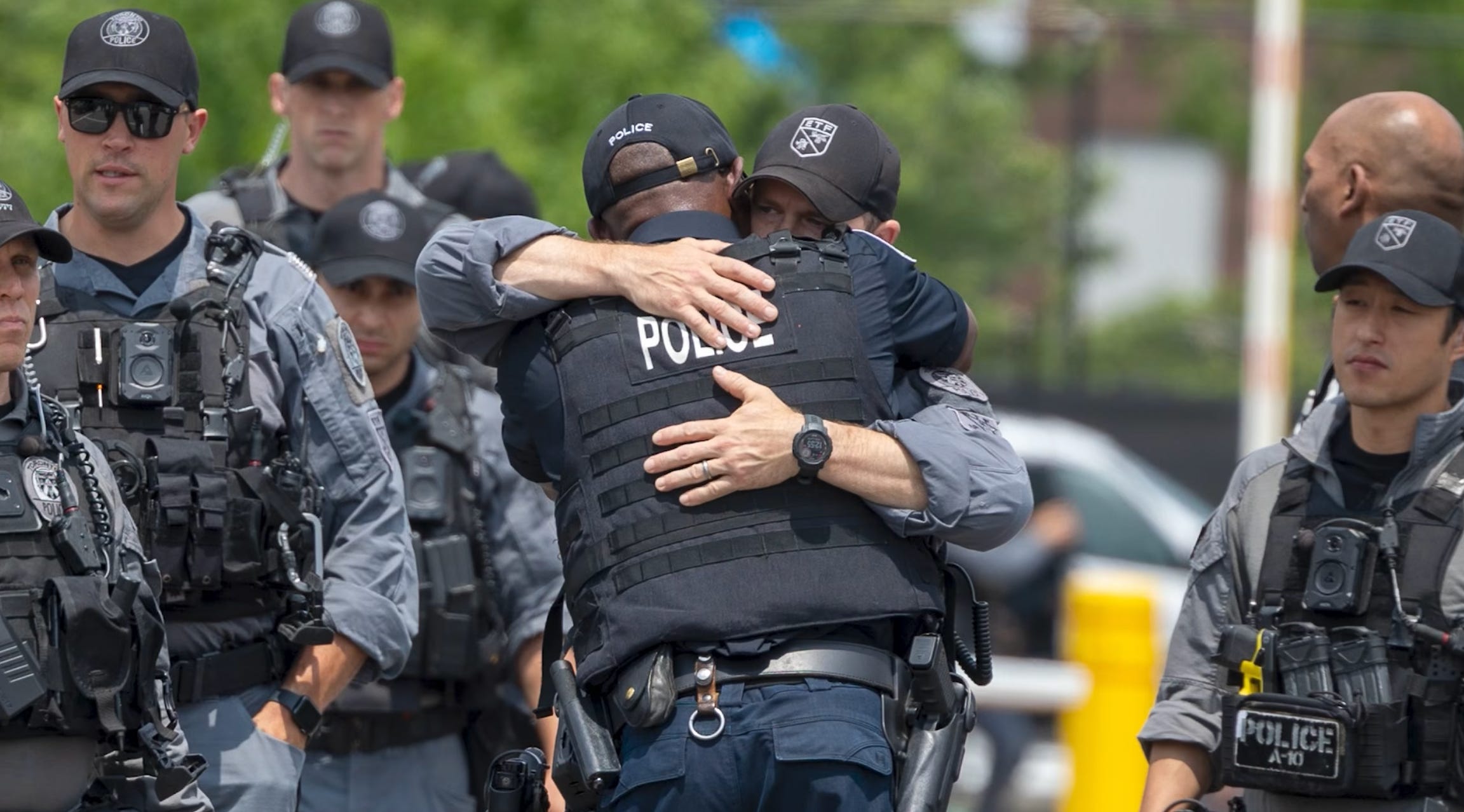
The death of Toronto Police Constable Marc Pinizzotto should not be viewed solely as another tragic line-of-duty death. It should be understood as a warning that Canada has become dangerously vulnerable to the convergence of transnational organized crime, foreign state actors, money-laundering networks, and domestic criminal enterprises.
For decades, I investigated organized crime, financial crime, terrorist financing, and corruption. Those experiences, chronicled in my book Undercover: 50 Years of Dirty Money, Organized Crime and the RCMP, taught me a lesson Canadian governments have repeatedly ignored: organized crime follows money, and hostile foreign actors increasingly follow organized crime.
The shooting death of Constable Pinizzotto during a raid connected to investigations involving attacks on the U.S. Consulate and synagogues in Toronto should force Canadians to confront a reality that law enforcement officers, intelligence agencies, and financial crime specialists have understood for years. Canada has become an attractive operating environment for criminal organizations and foreign influence networks because the risks remain low and the rewards extraordinarily high.
The Bureau’s analytical report on Pinizzotto’s death outlines a disturbing but increasingly familiar pattern. Iranian proxy organizations, Mexican cartels, outlaw motorcycle gangs, corrupt facilitators, money-laundering networks, and young contract shooters are all operating within the same criminal marketplace. While the public often views these threats separately, investigators know they are increasingly interconnected.
At the recent Canadian Institute Anti-Money Laundering and Financial Crime Conference in Toronto, a topic that surfaced repeatedly was the growing international concern regarding Canada’s effectiveness in combating money laundering and organized crime. More than one participant suggested that Canada may ultimately require placement on the Financial Action Task Force grey list before meaningful reform occurs.
That suggestion would have been unthinkable a decade ago. Today, it reflects growing frustration among experts who have watched Canada struggle to address persistent deficiencies in beneficial ownership transparency, professional money-laundering networks, sanctions enforcement, terrorist financing investigations, and organized crime prosecutions.
The FATF grey list is not reserved for failed states. It is designed to identify jurisdictions with strategic deficiencies in anti-money-laundering and counter-terrorist financing regimes. While Canada remains far from the world’s most problematic jurisdictions, the fact that respected financial crime professionals are openly discussing grey-list status should alarm every Canadian.
The underlying issue is not simply drug trafficking or gang violence. It is the financial infrastructure that enables criminal and hostile-state activity to flourish. Every fentanyl shipment, every contract killing, every foreign influence operation, every sanctions-evasion scheme, and every terrorist-financing network depends on moving and laundering money.
Iran understands this.
For years, I have publicly warned about Iran’s growing use of criminal proxies. Increasingly, the Iranian regime outsources operations through criminal intermediaries, allowing it to maintain plausible deniability while leveraging existing organized crime networks. Recent American indictments involving Iranian-directed plots, cartel-linked actors, and Canadian-based criminal associates demonstrate that the distinction between national security threats and organized crime threats is rapidly disappearing.
The United States has recognized this convergence. American prosecutors routinely employ the Racketeer Influenced and Corrupt Organizations Act, or RICO, to target entire criminal enterprises rather than simply arresting expendable foot soldiers. Canada still lacks an equivalent legislative framework capable of systematically dismantling sophisticated criminal organizations and their financial ecosystems.
Instead, we continue to arrest shooters while leaving the architects, financiers, facilitators, and professional enablers largely intact.
That approach is failing.
The deaths of police officers, the targeting of synagogues, attacks on diplomatic facilities, corruption investigations involving public officials, cartel-linked trafficking operations, and foreign-sponsored intimidation campaigns are not isolated incidents. They are symptoms of the same underlying disease.
Canada’s response must begin with acknowledging the scale of the threat.
We need stronger anti-money-laundering enforcement, expanded intelligence-sharing, enhanced terrorist-financing investigations, meaningful beneficial ownership transparency, stronger sanctions enforcement, and legislative tools comparable to RICO that allow prosecutors to target entire criminal enterprises.
Most importantly, we need political leadership willing to tell Canadians the truth.
Constable Pinizzotto died serving the public in an environment shaped by decades of underestimating organized crime and its growing relationship with hostile foreign actors. His death should serve as a national wake-up call.
If Canada continues treating these threats as separate issues rather than components of an integrated criminal and national security ecosystem, more lives will be lost.
The warning signs are already here. The question is whether our political leaders are prepared to act before Canada becomes known internationally not merely as a money-laundering concern, but as a jurisdiction where organized crime, foreign adversaries, and terrorist proxies have discovered that the risks of doing business remain far too low.
Constable Pinizzotto paid the ultimate price confronting that reality. Canada owes him more than condolences. It owes him action.


Long standing Liberal policy of ethnic, cultural and religious balkanization helps minimize national political opposition to Liberal Party rule, however, it also facilitates the formation of gangs and organized crime along cultural and ethnic lines, and provides safe haven for terrorists, both domestic and international, examples being Hamas and Hezbollah terrorists, and Mexican, Chinese, Indian, Pakistani, Sudanese, First Nations and motorcycle gangs etc and their criminal activities like money laundering and drug manufacturing and distribution. This also makes police work much more difficult to disrupt and catch these criminals as special ethnic, cultural and language skills are required, and when one organization is shut down, the others expand to fill the void. Over the last decade, published photos of senior crime figures with Canadian politicians, the lack of arrests and lengthy jail sentences and confiscation of assets, corruption of customs and police officers and leaking of police operations, sends the wrong message to terrorists and organized crime. The message sent is that Canada provides safe haven and open for domestic and international operations.
This will not change until we have a return to accountable governance.
The current government fails on all fronts - economic, international relations, crime, justice, transparency, engagement with its citizens, immigration, etc, etc ad nauseum.
And they continue to amass this horrid record with zero accountability. They simply do not respond to the daily scandals, or, increasingly, they spend our money advertising to us how well they're doing. It becomes Kafkaesque. We are no longer on the verge of authoritarian rule, we're there.
It is impossible to not believe they are 'witting' participants in the criminality.
And as a pro forma reaction to this latest tragedy, they offer us Gary Anandasangaree's response.
And speaking of absurdisms, Gary is our Public Safety Minister. His response was fractured, halting, with frequent glances at a written script, presumably on how to virtue signal on demand. He did all but squint at the document or prompter. It was embarrassing. You'd think our Public Safety Minister would at least take the time to get Constable Pinizzotto's name correct - Melissa Lantsman did. Not too much to ask. But twice, during that brief response, while quickly glancing at a document, he referred to him as Constable Pinziotto.
Another cringeworthy performance from a Liberal politician.